Author: Jack Chapman

  • Best LEGO Star Wars Sets of 2025: My Top 10 Rankings

    Best LEGO Star Wars Sets of 2025: My Top 10 Rankings

    2025 has been another huge year for LEGO Star Wars, with plenty of exciting releases, long-requested remakes, and of course, some inevitable controversies. From massive UCS flagships to smaller battle packs and helmets, this year really had the potential to go down as one of the greatest ever. But with rising prices, downsized builds, and a few questionable design choices, the line-up has split opinion across the community.

    In this post, I’ll be counting down my Top 10 LEGO Star Wars sets of 2025—the ones that stood out to me as the best of the bunch, whether for their design, minifigures, display value, or just that nostalgic spark they gave me. Some of these were easy picks, others more controversial, but all of them earned their spot on this list.

    So let’s dive in and take a look back at the highs (and lows) of LEGO Star Wars in 2025.

    10. Republic Juggernaut – 75413 – £139.99 

    Man, I was so excited when I first heard the rumours for this set. I’ve wanted a Turbo Tank for years, ever since I missed out on the original 7261 during my dark ages. Sadly, what could have been one of the highlights of the year has turned out to be a bit of a disappointment. 

    Let’s start with the positives. We finally got Galactic Marines! Not quite in the form I expected, but they’re here at last and LEGO did a solid job with the design. Short of adding cloth kamas, there’s not much more they could have done, and we even get three of them. The line-up is boosted further with Commander Bacara, another Clone general to add to the collection. He’s a brand-new minifigure complete with a new helmet mould. It looks a little strange at first glance, but when compared to the source material it’s surprisingly accurate. Throw in some great looking box art and a nicely designed turret at the back for added playability, and on the surface this sounds like a winner. 

    Unfortunately, the biggest issue is the build itself. The Juggernaut has been heavily downsized, and it really shows. Compared to the original 7261, this version is almost a third smaller, and that compromise has gutted the interior. Aside from one small pit designed for a minifigure, you simply can’t stand troops up inside—which defeats the purpose of such a large troop carrier. Even when you compare it to the AT-TE from 2023 (75337), which is roughly a similar price point, the Juggernaut just feels shrunken and awkward. 

    The design choices don’t help either. The brick-built wheels were a poor call in my opinion; LEGO has so many wheel moulds to choose from, and this option just doesn’t capture the look or feel of the vehicle. Then there’s the price: £139.99 for 813 pieces. Outrageous. I don’t mind paying a premium when a set delivers on detail or comes with a truly standout figure selection, but this feels like paying more for less. Downsized, overpriced, and worse looking—it’s a triple hit that’s hard to swallow. 

    As a side note, while the minifigure line-up is excellent, it feels like a strange match for this vehicle. Early rumours suggested a UT-AT was coming paired with the Galactic Marines, which would have been a dream set. Given how underwhelming this Juggernaut turned out, part of me is relieved that LEGO didn’t go that route—it could have been an even bigger let-down. 

    In the end, I’ll still pick this set up, but only when it sees a serious discount. There are some great things here (mainly the minifigs), but it’s impossible to overlook the compromises. 

    Score: 5/10 – full of potential, but ruined by poor design choices and greed. 

    9. 327th Star Corps Battle Pack – 75431 – £34.99 
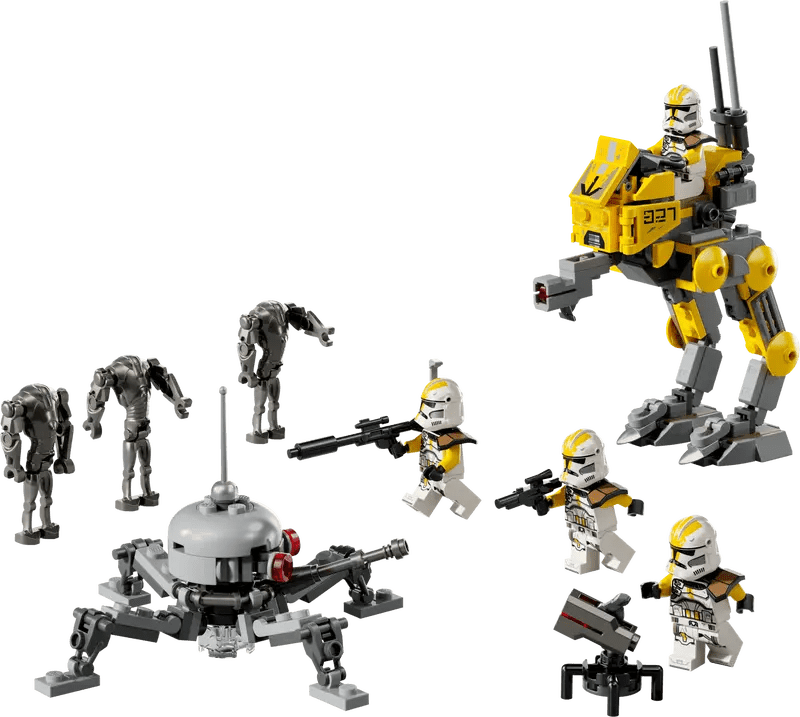
    The latest Battle Pack continues a worrying trend we’ve been seeing with LEGO: price hikes. Retailing at £34.99 for 258 pieces, that works out at around 13.5p per piece. For comparison, last year’s Clone Trooper & Battle Droid Battle Pack came in about 2p cheaper per piece, so this is a noticeable bump. 

    But pricing aside, let’s talk about what’s good. First off—more Clones! Fans have been asking for the 327th Star Corps for years, and it’s great to finally see them in an affordable set. The inclusion of new plastic pauldrons is a nice touch, and with four troopers included as the new standard, it makes army building a lot easier. The set also includes a walker, which I think is a slight improvement over the version we got with the 501st Clone Troopers (75280). It’s been scaled down to look more accurate, and that makes it a better companion piece for display and play. 

    Now for the downsides. Aside from the obvious issue with pricing (which everyone’s already sick of hearing about, but it’s still a factor), the Spider Droid build is pretty underwhelming. It feels too blocky and clunky, and I don’t think it lives up to LEGO’s usual design standards for vehicles. It’s also worth noting that in the original leaks for this set, there was a small foliage build included—maybe 20–30 pieces at most. For whatever reason that didn’t make it into the final release, yet the price tag stayed the same, which definitely doesn’t help things. 

    Overall, it’s an okay set that’s mainly carried by its figures. On its own it feels a little lacking, but it does pair nicely with the Battle of Felucia Separatist MTT (75435), which also released this year and which I’ll cover later in this list. I’ll still pick up one or two of these eventually, but only once they’ve been discounted. 

    Score: 6/10 – Great figures, but the set design and price let it down. 

    8. Jango Fett’s Helmet – 75408 – £69.99
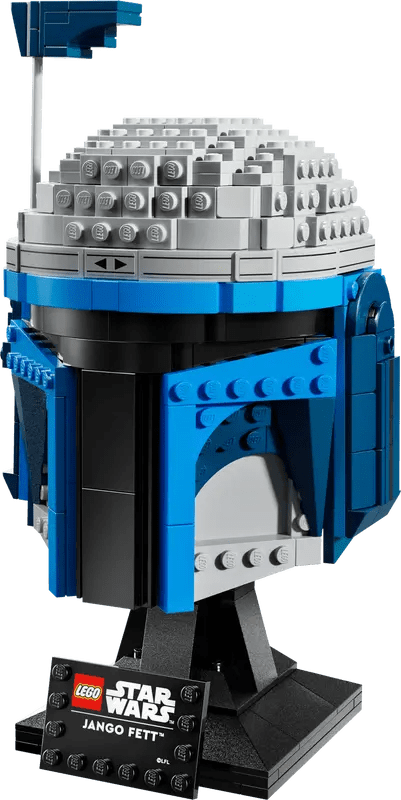
    This one didn’t come to much of a surprise to me when this was announced, the Helmet lineup has been incredibly popular since the first wave, with them being affordable and a great display piece, and Jango Fetts version has kept this going. At X it contains X pieces, which makes it the highest priced helmet from this line.   

    It looks great, very similar to Boba Fett’s (set number) and the Mandalorian (set number) versions, with minor cosmetic changes. There is nothing standout about this set, but I image it would look great displayed with the other helmets or the UCS Jango Fett’s Firespray-Class Starship released at the same time.  

    Score: 7/10 – Nothing remarkable, but still a good set, even though its overpriced. A good addition to the collection if bought discounted 

    7. ARC-170 Starfighter – 75402 – £59.99 

    Another downsized set—but this time, done quite nicely. The ARC-170 has returned in a smaller, sleeker form compared to its previous releases, and while it may not be as imposing on a shelf, it’s a smart redesign that makes sense for modern LEGO. 

    I own the 2010 version (8088 ARC-170 Starfighter), and side by side the differences are clear. The new version is noticeably smaller and simpler in design, but it still manages to capture the look and feel of the ship without overcomplicating things. In fact, the reduced size actually improves playability, making it easier to swoosh around and use as a proper playset, rather than just a chunky display piece. 

    Minifigures are a definite highlight here. We get three new Phase II Clone Pilots, each with unique helmet markings, plus a brand-new astromech: R4-P44. That’s a really strong line-up for a set at this price point. The box art is also worth a mention—it looks fantastic, and LEGO have been stepping up their packaging design in recent years, which makes these sets pop even more on a shelf. 

    For context, the ARC-170 has had a couple of outings before: the original 2005 version (7259), which was big and bulky but felt ahead of its time, and the 2010 version (8088), which refined the design but still leaned towards being oversized. This latest release is the first time LEGO has really leaned into a downsized approach, prioritising accessibility and playability over sheer size. 

    The only real drawback is the pricing. At £59.99, it does feel steep for what you get in terms of size and piece count. That said, on discount, it’s a brilliant set to pick up—especially if you’re looking to round out your Clone Wars-era collection. 

    Score: 7/10 – A sleek, well-designed downsizing with excellent figures. Overpriced at retail, but a great buy on sale. 

    6. UCS Death Star – 75419 – £899.99 

    What was supposed to be the most impressive LEGO Star Wars set of the year has instead become one of the most controversial. Rather than a traditional spherical model, LEGO has opted for a fresh approach: a modular, diorama-style build that showcases iconic scenes from across the original trilogy. It’s a bold choice that follows the popularity of the Diorama Collection—and not everyone is convinced. 

    At 9,023 pieces, this is the largest Star Wars set ever produced and the fifth largest LEGO set overall. It’s absolutely huge too, standing 27.5 inches tall and 31 inches wide, making it an undeniable display piece. Packed inside are multiple recognisable locations including the Emperor’s Throne Room, the Trash Compactor, the detention block, and of course the Superlaser—which, in my opinion, is the best designed version we’ve had so far. 

    The set also breaks another record with 38 minifigures and droids, the most ever in a Star Wars set. Among them are several highly sought-after new characters, including Admiral Motti, General Tagge, and Galen Erso, which give collectors a real reason to be excited. 

    I’ll give LEGO credit: after two previous spherical UCS Death Stars (10143 and 10188), another round design would have felt repetitive. This new modular style at least tries to bring something different to the table, even if parts of it feel reminiscent of the smaller Diorama sets like 75339 and 75352. 

    However, the elephant in the room is the price. At $1,000 (£849.99), this is LEGO’s most expensive set ever. While that comes with the piece count and minifigure line-up to back it up, it still feels out of reach for most fans. For me personally, that makes it hard to justify. It’s impressive, but also a little underwhelming for what should have been the flagship set of the year. 

    Overall, I think it looks good, I like the format, and I love the minifigure line-up. But with the high price tag and design that doesn’t quite wow me, it’s not one I’ll be rushing to add to my collection. 
    Score: 7/10 

    5. V-19 Torrent – 75432 – £59.99 

    I was unlucky enough to miss out on the original V-19 Torrent back in the day, so when I saw the leaks earlier this year I was genuinely excited for its return. At 567 pieces, this set is another example of LEGO downsizing, and while the build feels a little stubby compared to the 2008 version (7674 V-19 Torrent), it still looks really cool. I’m a big fan of the yellow cockpit canopy, and the ship looks fantastic with the wings folded down into flight mode. 

    One disappointment is that this version drops the wing deployment feature that the original had, which was one of the best play functions of that set. While this new model still looks good in landing mode with the wings folded up, it does lose a bit of that mechanical charm and uniqueness that made the 2008 version stand out. 

    Where this set absolutely shines, though, is in the minifigure line-up. We get three completely new figures: 

    • Clone Pilot with a brand-new helmet mould and print 
    • Obi-Wan Kenobi in Clone Wars armour with printed arms (the standout of the set) 
    • Asajj Ventress, complete with her two curved-hilt lightsabers 

    For me, Obi-Wan is the highlight here, and Ventress is a close second as she’s a character I’ve not had in my collection before. The fact that LEGO has brought her back with her correct unique hilt design is a pleasant surprise. Fun fact: the last time Ventress appeared in a LEGO set was back in 2011’s 7957 Sith Nightspeeder, so it’s been well over a decade since we’ve seen her in minifigure form. 

    All in all, this is a robust build with fantastic playability and an outstanding minifigure selection. Even with the downsized design and loss of the wing function, it’s easily one of the highlights of 2025. 

    Score: 8/10 – A solid build and excellent figures make this a must-have, even without the full functionality of the original. 

    4. UCS AT-ST Walker – 75417 – £179.99 

    I’ll admit, I wasn’t all that excited when rumours of this set first started circulating. I already had the AT-ST Walker (75322) from 2022, which I thought was the best version LEGO had released up to that point—even better than the original UCS AT-ST from 2001 (10018). 

    But seeing the images of this latest UCS release completely changed my mind. In my opinion, it has now taken the crown as the definitive AT-ST. The scaling is spot on: it’s large enough to show off the detail, but not so oversized that it loses the essence of the vehicle. The build feels modern while still capturing the gritty styling of the original trilogy design, and it looks sturdy enough to hold up as a proper display model. 

    The cockpit interior is a real highlight—it’s far more detailed than I expected, with a clever build that captures the look of the on-screen version. The set also includes a unique minifigure, simple but polished, which adds a nice exclusive touch without feeling forced. 

    What I love most about this set is how it shows that LEGO doesn’t need to overcomplicate things. By keeping it clean, accurate, and well-scaled, they’ve produced a fantastic model that feels both impressive and approachable. At £179.99, it’s also one of the more affordable entry points into the UCS line, which makes it accessible to a wider range of collectors. 

    The AT-ST also pairs brilliantly with the UCS AT-AT (75313). While the two don’t scale perfectly to one another in terms of size, they still look fantastic displayed side by side. The AT-AT is the massive flagship with over 6,700 pieces, while the AT-ST works as its smaller—but equally detailed—counterpart, recreating the feel of the Battle of Hoth on a UCS display shelf. 

    Overall, this is a brilliant set that combines smart design with great value for the UCS range, and I’m definitely looking forward to adding it to my collection. 

    Score: 8/10 – The best AT-ST yet. Simple, accurate, and a great entry-level UCS set. 

    3. Battle of Felucia Separatist MTT – 75435 – £139.99 
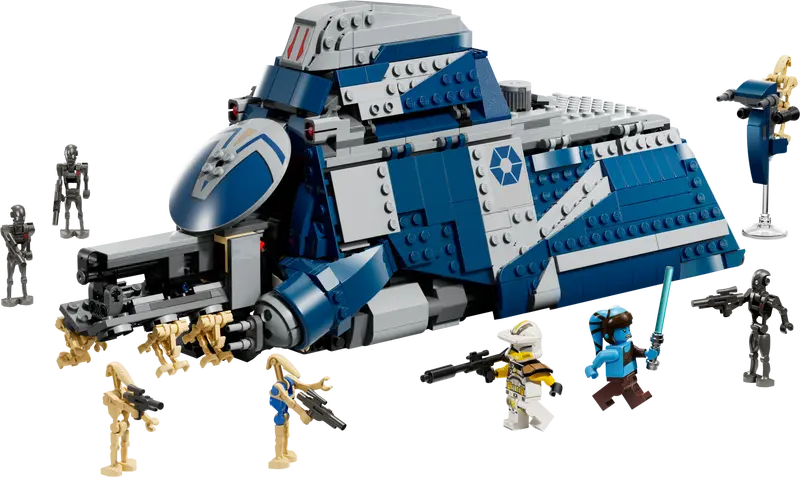
    A somewhat controversial entry into my Top 10—I know a lot of fans won’t agree with me on this one—but for the most part, I’m really happy with what LEGO has delivered. 

    I was incredibly excited when I first heard we’d be getting a new MTT. I’ve never owned one before, but I’ve always wanted to after seeing the original 2007 variant (7662) with its iconic battle droid rack. That play feature alone made it one of the most memorable Clone Wars–era sets. This new release captures some of that magic, even if it is a little smaller. 

    The minifigure selection is a big win here. The return of Commando Droids, this time in a new gunmetal grey, is brilliant—we get three of them, and they look fantastic. I still have the pair from the Elite Clone Trooper & Commando Droid Battle Pack (9488) in dark brown, which remain some of my favourite droids, so it’s great to see them back in a new colour. On the Clone Trooper side, we finally get Commander Bly, complete with detailed torso and leg printing. It’s just a shame LEGO didn’t go the extra mile and give him printed arms, as that would have taken the figure to the next level. We also get another Aayla Secura—not the most exciting inclusion, but she’s a fitting Jedi for a Felucia-themed set. 

    The build itself is very sleek and well-shaped. Like many sets this year, it’s downsized compared to older models, but it still manages to pack in some nice detail. The battle droid rack is included, though it’s noticeably smaller than I’d have liked—it doesn’t have quite the same wow factor as the 2007 version. 

    If I had one big complaint, it’s the lack of a Tactical Droid. This would have paired perfectly with the Separatist line-up and made the set feel more complete. Including one would have really elevated the overall package. 

    That said, I’m still very excited to add this to my collection. I’ve wanted an MTT for years, and to finally get a Separatist-coloured variant is even better. With solid figures, a sleek design, and a good mix of Clone Wars and Felucia-specific content, it stands out as one of my favourites of the year. The MTT has had a couple of notable versions before: the 2007 release (7662), which came with over 1,300 pieces, 20 battle droids, and a huge extending rack, and the 2014 variant (75058), which cut the piece count to under 1,000 and featured a smaller, less satisfying rack mechanism. This new 2025 version sits somewhere between the two, offering a sleeker exterior design and better figure line-up, even if the rack is smaller once again. 

    Score: 8/10 – A sleek redesign with excellent droid and Clone inclusions. Downsized, but still one of 2025’s highlights. 

    2. AT-AT Driver Helmet – 75429 – £69.99 
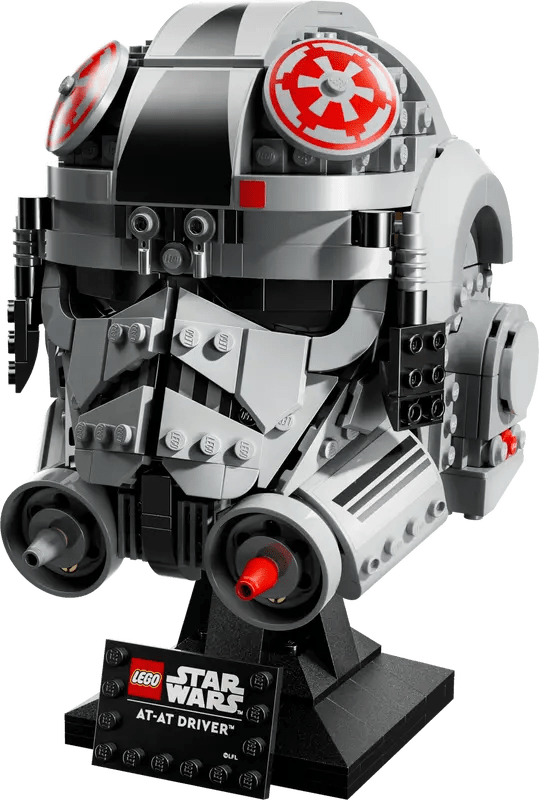
    This was a surprise entry to my Top 10. While I’ve always liked the Helmet Collection from the last few years, none have really stood out enough to tempt me into collecting them—until now. The AT-AT Driver Helmet instantly grabbed my attention and has quickly become my favourite of the entire range. 

    The design is absolutely fantastic, with clever shaping, excellent use of colour, and well-placed printed parts that elevate it above many of the earlier helmets. The red Imperial insignias pop against the grey and white, the black visor shaping is spot-on, and the smooth curves give it a very polished finish. I actually said “wow” out loud when I first saw the images—rare for this theme. 

    At £69.99, it’s on the pricier end for helmets, but in this case I think it’s justified. Some sets at the same price point felt a bit dear for what they offered; here, the detailing and overall presentation make it one of the few I’d happily pay full price for. As a display piece, it pairs brilliantly with the now-retired UCS AT-AT (75313)—and even alongside the UCS Snowspeeder—to create a tidy Hoth-themed shelf. 

    AT-AT Driver vs Jango Fett’s Helmet: Both released this year at £69.99 and both look great on display. Jango’s has that striking metallic blue colour blocking and a clean, symmetrical silhouette that mirrors Boba/Mando, but it doesn’t push the design language much beyond what we’ve seen before. The AT-AT Driver, by contrast, feels more intricate: the layered greebles, tubing cues, and sharp insignias give it extra depth and texture. If you’re choosing one at full RRP, I’d lean AT-AT Driver for the richer detailing; if you’re collecting the character trio (Boba/Mando/Jango), Jango’s still completes that look nicely—ideally picked up on discount. 

    Overall, this is by far the best helmet LEGO has produced to date in my opinion. It looks fantastic, it’s distinctive, and it feels like a genuine step forward for the Helmet Collection. 

    Score: 9/10 – The standout helmet of the entire line, and one of the best display sets LEGO released this year. 

    1. Jango Fett’s Firespray-Class Starship – 75409 – £259.99 

    This set was easily the best of the year for me, and I knew it would be the second I saw it. It looks absolutely fantastic, with colouring that’s been handled really well and a detailed, sturdy-looking build. I actually almost ended up buying this on release during the May the 4th promotion, and only skipped it because the UCS Sail Barge was on offer. For what it is, it’s surprisingly affordable: a big set with a solid piece count, but without the inflated price tag we’ve seen on a lot of 2025’s other releases. 

    It comes with two new minifigures, the highlight being the updated Jango Fett with printed arms and a brand-new rangefinder mould. The upgrade is considerable—the new piece is far more accurate to the film compared to the older chunky style. Boba is included too, though nothing particularly special here, but let’s be honest—he was never going to be the star of the show in this set. 

    At 2,970 pieces, it’s a sizeable build and LEGO has done a brilliant job of capturing the Firespray’s iconic shaping. From every angle it looks sleek and impressive, with strong detailing across the wings, cockpit, and hull. Even the back holds up well for accuracy, which is often overlooked on large Star Wars ships. The inclusion of a seismic charge play feature is a fantastic touch—an iconic nod to Attack of the Clones that fans will love. 

    It does include a display stand, which is fairly basic. It works, but I would have liked something with a bit more presence or detail—though that’s honestly nitpicking on an otherwise superb build. 

    Compared to the earlier UCS Boba Fett’s Slave I (75060) from 2015, the differences are striking. The Slave I had around 1,996 pieces and, at the time, was one of the best UCS ships ever made—praised for its shaping, detailing, and standout minifigure line-up (Boba Fett with arm printing, Han Solo, Bespin Guard, and Carbonite block). Jango’s version pushes the design further, with almost 1,000 more pieces, smoother shaping, sturdier construction, and updated building techniques. While Boba’s ship remains an all-time classic, this new Firespray feels like a modern refinement—bigger, bolder, and a true flagship set of the current LEGO Star Wars era. 

    I honestly don’t have much negative to say here. Maybe the stand could have been a little more polished, but that’s really scraping for criticism. I can’t wait to get this set—I’ve already cleared space on my display shelf for it. 

    Score: 9.5/10 – An almost perfect build, a standout of the modern era of LEGO Star Wars, and a must-have for any fan. 

    2025 LEGO Star Wars – Year in Review 

    Overall, this year had the potential to be one of the best of all time, but price hikes and downsizing dragged it down considerably. The biggest disappointments—most notably the Republic Juggernaut and the 327th Star Corps Battle Pack—have been review-bombed into oblivion, with both sitting at under two stars at the time of writing. 

    That said, there have still been some real highlights. Sets like the V-19 Torrent, UCS AT-ST Walker, and of course Jango Fett’s Firespray-Class Starship show that when LEGO gets the balance right between design, figures, and value, the results can be absolutely fantastic. Even some of the smaller releases, like the helmets, really impressed me this year and helped round out the line-up. 

    So while 2025 may go down as a mixed bag, I’d still say it delivered enough standout sets to make it a memorable year for LEGO Star Wars collectors—just not quite the golden year it could have been. 

    And now I’ll throw it back to you: 
    👉 What was your favourite set of 2025? 
    👉 Which ones did you end up picking up (or passing on)? 

  • Life Lessons I Want to Teach My Kids (That I Wish I’d Learned Sooner)

    Life Lessons I Want to Teach My Kids (That I Wish I’d Learned Sooner)

    We all hit moments when we think, “Blimey, I wish I’d learned this sooner.” That’s part of growing up—collecting lessons as we go. But some lessons feel so foundational that I’m writing them down now to make sure I teach my kids (if and when I have them). Think of this as a living list of life lessons I wish I’d picked up earlier—about money, careers, learning, habits, manners, health, family, reading, and simply becoming more resilient.

    None of this is rocket science, and some of it won’t surprise you. But timing matters. The right idea, heard early enough, can change the way you move through the world. I’m sharing what’s actually helped me—simple, honest, UK‑leaning advice learned the long way round—in case it helps another parent, future parent, or anyone passing on practical wisdom.

    1. Finances: Saving – LISA, pensions, emergency funds
    2. Career: pick a direction, build proof, stay adaptable
    3. Studying: make learning small, daily, and social
    4. Habits: discipline, systems, and 1% gains
    5. Manners: small courtesies, big impact
    6. Exercise: move your body, protect your mind
    7. Family & socialising: show up in real life
    8. Reading: fiction, non‑fiction, and winding down well
    9. DIY skills: confidence through doing
    10. Final thoughts: a living list, not a rulebook

    Finances: Saving – LISA, pensions, emergency funds

    Savings jars with pound coins on a wooden desk beside a budget notebook, calculator and calendar — UK personal finance planning.
    Savings jars for an emergency fund, LISA and pension — keep money simple and planned.

    I learned most of my money lessons the hard way. I wish someone had sat me down earlier and explained the basics: why we save, how to budget, and what smart saving does for future you. Teaching kids about money isn’t “don’t spend too much”—it’s “use money to buy freedom, reduce stress, and open choices.”

    Start with goals (the why) It’s easier to save when you’re aiming at something. Set short, medium and long‑term targets: a console or trip (months), a car or moving out (1–5 years), and a first‑home deposit or financial cushion (5+ years). Once the goal is clear, the plan writes itself.

    Where to put savings There are loads of accounts, but a few do most of the work: a high‑interest easy‑access savings account (great for emergencies and near‑term goals), fixed‑rate bonds (better rates if you can lock money for 1–3 years), and for first‑timers a Lifetime ISA (LISA).

    LISA explained (UK) You can contribute up to £4,000 a year and the government adds 25% (up to £1,000), within your overall ISA allowance. Use it for a first home (up to £450k) after 12 months or keep it for retirement. Example: £4,000 a year for 10 years = £50,000 before interest (£40k you + £10k bonus). Not everyone can max it, but knowing what’s possible helps you plan. Rules change—always check current UK guidance.

    Pensions and compounding (your future’s best friend) Compound interest is interest earning on interest. £1,000 at 5% becomes £1,050 in year one; in year two you earn 5% on £1,050, and so on. Starting earlier gives your money longer to grow, so the same monthly amount from 18 vs 25 can mean a much larger pot by retirement. In the UK, workplace pensions help: auto‑enrolment, tax relief (salary sacrifice can also reduce National Insurance), and often an employer match—free money that compounds. As a rule of thumb, aim for 12–15% combined (you + employer) across your career if you can.

    Emergency fund (rainy‑day buffer) Keep 1–3 months of essential outgoings in a high‑interest easy‑access account, then build to 3–6 months. The interest is a bonus; the real win is avoiding high‑cost debt when life happens.

    Spending within your means (in a social media world) Ignore other people’s highlight reels. Automate savings on payday, pay credit cards in full, treat BNPL as debt, and bump your saving rate when your income rises. The essentials for me: know why you’re saving, pick the right accounts (LISA, pension, high‑interest savings), and let time and compound growth do the heavy lifting.

    Simple starter plan

    • Pick one short, one medium and one long‑term goal.
    • Open a high‑interest easy‑access account (emergency + near‑term).
    • If eligible, open a LISA and set a monthly amount you can stick to.
    • Join the workplace pension and contribute at least enough to get the full employer match; increase a notch with each pay rise.
    • Review every 3–6 months. Automate where possible.

    Quick FAQ (SEO‑friendly)

    • Is a LISA worth it in the UK? Often yes for first‑time buyers because of the 25% bonus, but check fees, eligibility, and current rules.
    • How much should I keep in an emergency fund? Start with 1–3 months of essentials; build towards 3–6 months as you can.
    • What’s the minimum I should put in a pension? At least enough to get your employer’s full match; aim for 12–15% combined over time if affordable.

    Note: This is general info, not financial advice. UK rules and rates change—double‑check current guidance before acting.

    Career: pick a direction, build proof, stay adaptable

    Laptop, CV pages, notebook and calendar on a tidy wooden desk — UK career‑planning workspace.
    Plan your next step: choose a direction, build proof and prep for interviews

    Choose a direction, then build towards it. This one’s easy to say and harder to do, but picking a direction sooner really helps—you get more time to progress and it keeps you focused. You don’t need a perfect plan or a fixed job title; start with a rough idea of where you want to end up and break it into steps. Run small experiments—taster courses, shadow days, volunteering, side projects—to see what sticks. Direction → skills → proof → people.

    Turn that into a simple plan: a three‑year target role you’d like to be capable of, a few skills or certifications to tackle this year, and monthly actions that actually move the needle (ship one project, learn one skill block, speak to one person doing the job you want). Get real‑world reps early—part‑time work, internships, work experience, freelancing, or UK routes like apprenticeships, degree apprenticeships and NVQs. University is great for some paths, but it’s not the only one.

    Make yourself easy to find with a clean, results‑focused CV, a useful LinkedIn headline and a small portfolio that proves what you can do—outcomes beat buzzwords every time. Learn to interview with clear stories (what you did and the result), ask for feedback, find a mentor if you can, and don’t be shy about negotiating once you’ve checked salary bands. Most importantly, don’t treat your first choice like a life sentence—if the path isn’t what you expected, pivot and update the plan. Small, consistent steps compound into opportunities.

    Studying: make learning small, daily, and social

    Open notebook, stack of flashcards, wireless headphones and phone with audio waveform beside a 20‑minute timer and mug of tea on a tidy desk — studying setup
    Small, daily learning—20‑minute sessions, notes and active recall.

    When I say “studying,” I mean always learning. Curiosity keeps your mind sharp, your life interesting, and your confidence growing. It doesn’t have to look like school—follow what you enjoy and add small blocks of knowledge over time. You don’t need to master everything; learning a little about a lot makes you more rounded, and depth can come later.

    The easiest way to build a learning habit is to keep it tiny and daily. Ten to twenty minutes is enough, especially if you use dead time well—a podcast on a walk, an audiobook while cooking, a short video on the commute. Keep a simple “curiosity list” in your notes app and pick one thing a day to explore. I like the 1–1–1 idea: learn one thing, write one sentence about it, share it with one person. Tiny wins stack fast.

    Mix “useful” with “fun” so you stay engaged. Practical life skills (a few great meals, basic first aid, bike or car maintenance, simple home repairs) pay off forever. Money basics (budgeting, compound interest, pensions, investing) reduce future stress. Digital skills (spreadsheets, coding basics via freeCodeCamp, design tools like Canva or Figma) are handy in almost any job. Balance that with creativity (photography, drawing, music production, writing), a few phrases of a new language each week, and wellbeing—sleep, habits, mindfulness, strength training. There are loads of free UK‑friendly resources: FutureLearn, OpenLearn, Coursera and edX for courses, and Libby for free library ebooks and audiobooks.

    Learn smarter, not harder. Instead of re‑reading, test yourself from memory and summarise what you learned—active recall beats passive review. Revisit key ideas over days and weeks (spaced repetition apps like Anki help). Teach someone else or post a short explanation; teaching exposes gaps and cements understanding. Build small projects so learning turns into something real—a budget template, a short video, a simple app, a photo series. Focus on just‑in‑time learning tied to a project; it’s easier to stay motivated when you need the skill right now.

    Make it social because learning compounds with people. Join a club or community—a book or podcast club, coding group, maker space, sports team, or local class—and ask good questions. Volunteer to learn new skills while meeting people you wouldn’t otherwise meet. For kids and teens in the UK, great options include libraries, Duke of Edinburgh, Scouts/Guides, school clubs, hackathons, youth theatre and local workshops. Aim for T‑shaped growth: broad across many areas so you’re adaptable, with one or two deeper spikes that make you especially valuable.

    Don’t over‑engineer the tools. Notion or Obsidian for light notes, Pocket or Instapaper to save articles, Libby for audiobooks on the go. Start small, keep it daily, and let the habit do the heavy lifting. Continuous learning builds confidence, creates opportunities, strengthens connections, and makes you more resilient when life changes.

    Habits: discipline, systems, and 1% gains

    Open notebook, stack of flashcards, wireless headphones and phone with audio waveform beside a 20‑minute timer and mug of tea on a tidy desk — studying setup.
    Small, daily learning—20‑minute sessions, notes and active recall.

    This is something we could all do better at, and teaching it early pays dividends for decades. One of my favourite books on the topic is James Clear’s Atomic Habits—the idea that small actions compound really stuck with me. You don’t need superhuman willpower; discipline is mostly about systems and environment. Aim to be a little bit better most days; those tiny gains add up. (If you did 1% better every single day for a year, the maths works out to roughly 37x—numbers aside, the point is that small wins compound.)

    The basics that work for me are simple. Stack a new habit onto an existing one: after X, I do Y. Make good habits obvious and easy (gym kit by the door, book on your pillow) and bad habits a touch harder (phone in another room during study, junk apps off the home screen). Use the two‑minute rule to make starting friction‑free: read one page, do one push‑up, open the notes doc. Track your streaks lightly (a calendar tick or notes app), use “never miss twice” when you slip, and do a quick weekly reset to line up the next seven days.

    Keep examples boringly practical. Do the housework or homework before gaming. Pack your bag the night before. Put an automatic transfer to savings on payday. Set app limits if you need them. For kids and teens, link chores to pocket money, read a few pages after dinner, or spend 10 minutes tidying before TV. For adults, try a 10‑minute walk after logging off, stretch while the kettle boils, or run one load of laundry after your morning coffee. Remove friction for the right things (healthy snacks visible, guitar on a stand) and add friction for the wrong ones (website blockers in the evening, sweets out of sight). Over time, tiny actions done consistently build confidence and momentum—discipline is just the habit of making those small, smart choices on repeat.

    Manners: small courtesies, big impact

    Person holding a shop door open for someone entering — simple act of good manners on a UK high street.
    Small courtesies matter — please, thank you, hold the door.

    It might sound old‑fashioned, but I genuinely think manners have slipped over the last decade. There’s a noticeable lack of basic courtesy and respect, and it shows up in little moments—the “please,” “thank you,” “excuse me,” or a simple smile. Those tiny gestures matter. People treat you with more respect when you’re polite, and that goes a long way—especially with first impressions. Manners aren’t about being posh; they’re about showing you see the person in front of you.

    The basics are simple and powerful: say please and thank you, hold doors, make eye contact, and be on time. In the UK, respect a queue and let people off the train before you get on. Lower your voice on public transport, offer your seat if someone needs it, and put your phone away when someone’s speaking. Learn and use people’s names. After someone helps you, send a quick thank‑you message or note—it’s tiny effort for a big impact. And when you mess up, apologise properly: “I’m sorry I [did X]. I can see that [impact]. Next time I’ll [do Y].” No excuses, no deflection.

    Online manners count too. Start messages with a greeting, don’t fire off one‑word replies, and avoid ALL CAPS or sarcasm that won’t translate. Be generous with clarity—use paragraphs, not walls of text. Don’t ghost people; if you can’t do something, reply with a polite “no” and a quick reason. Before you hit send, read it like a stranger would.

    Teach kids by modelling it in everyday life: eye contact, a friendly hello to shop staff, a proper thank‑you, holding the door, offering help when someone’s juggling bags. For teens, practise email intros, respectful disagreement, and follow‑ups after work experience or interviews. These little habits cost nothing but compound into trust, opportunities, and kinder interactions.

    Exercise: move your body, protect your mind

    People jogging and brisk‑walking on a tree‑lined path at sunrise in a UK park — everyday exercise for physical and mental health.
    Aim for 150 minutes a week plus two short strength sessions — consistency beats intensity.

    You only get one body, so look after it. That doesn’t mean living in the gym—it means building simple, sustainable habits that keep you healthy. Start early and make it part of your routine; moving your body regularly lifts your mood, reduces stress, boosts energy and focus, and does wonders for mental health. And you don’t need a gym: pick active things you actually enjoy—football, dance, swimming, cycling, hiking, climbing, a brisk walk with a podcast, or Parkrun with a friend. Walking absolutely counts.

    As a rough guide, aim for around 150 minutes of moderate activity a week (that’s 20–30 minutes most days) plus a couple of short strength sessions—bodyweight is fine. Consistency beats intensity. Keep it social if that helps—join a class, a five‑a‑side team, or a walking group—getting out of the house and being around people makes it easier to stick with. UK‑friendly starters: NHS Couch to 5K, Parkrun on Saturday mornings, beginner yoga/Pilates at your local leisure centre, or a home routine with a resistance band.

    Make it easy to start. Lay out your trainers the night before, put sessions in your calendar, go with a buddy, and use a “just 10 minutes” rule on low‑motivation days—once you’re moving, you’ll often do more. Anchor it with simple, healthy basics: decent sleep, plenty of water, mostly whole foods, a bit of stretching, and some daylight each day. You don’t have to be perfect; you just have to keep showing up. Your future self will thank you.

    Family & socialising: show up in real life

    Family and friends sharing a phone‑free dinner at a kitchen table — real‑life connection and conversation.
    Show up in real life — shared meals, conversation and small rituals.

    Socialising might come naturally to some, but in an age of constant scrolling and DMs, we have to make a deliberate effort to show up in real life. I’m always happier after a coffee with a friend than an hour of doomscrolling. Face‑to‑face time teaches things you can’t learn on a screen—reading body language, timing a joke, handling awkward pauses, resolving disagreements, building empathy. It boosts confidence too. Being able to hold a conversation, listen well, and maintain steady eye contact are real‑world skills that shape first impressions and long‑term relationships. Family is your first team: the people who celebrate you, challenge you, and have your back.

    Make it part of the routine with small, repeatable rituals. Shared meals without phones. A Sunday walk. Movie night. Phoning grandparents. Showing up to each other’s events. Say yes to things that put you around people: join a club or local class, volunteer, go to community events, invite friends round for a simple dinner. Keep tech in its place with gentle boundaries like no phones at the table or a nightly downtime window. Small acts keep connections alive—send a quick “thinking of you,” drop off soup, remember birthdays.

    Give kids and teens social reps. Let them order their own food, pay at the till, answer the door politely, and chat with adults as well as peers. Practise a friendly hello, eye contact, and a few conversation starters (“What’s been the best part of your day?” is a good one). If conflict happens, model how to apologise properly and repair the relationship. Encourage them to host—game nights, study sessions—because creating spaces for people builds confidence and community.

    If you’re rebuilding your social muscle as an adult, start low‑pressure. Walk‑and‑talks, a class where you’re doing something with your hands, or a monthly book club are easier than loud nights out. UK‑friendly places to meet people include Parkrun on Saturday mornings, volunteering sites like Do‑it or local charity shops, adult‑ed classes at your council college, community sports leagues, choirs, climbing gyms, faith groups, or Meetup groups for hobbies. For teens, great options include libraries, Duke of Edinburgh, Scouts/Guides, youth theatre, coding clubs and local workshops. Find “third places” (not home, not work) like libraries, cafés and parks where it’s easy to bump into the same faces.

    Bottom line: relationships are a life support system. In‑person connection teaches the human stuff—kindness, courage, communication—that opens doors and gets you through the tough bits. Treat people like a priority and protect your relationships; the rest gets easier.

    Reading: fiction, non‑fiction, and winding down well

    Open book, e‑reader and phone with audiobook beside a mug of tea on a bedside table — bedtime reading routine in a UK home
    Wind down for 10–20 minutes — fiction for empathy, non‑fiction for ideas. Audiobooks count.

    Reading feels like a skill that’s at risk of being lost, and that’s a shame because it’s a genuine superpower. Fiction and non‑fiction both matter—and a mix of the two is best. Fiction builds empathy, imagination, vocabulary and focus; it lets you live a hundred lives and understand people unlike yourself. Non‑fiction gives you tools you can use—ideas from history, science, money and psychology. Together they sharpen your mind, calm your nervous system, and make you a better conversationalist.

    One of the best times to read is in bed as you wind down. Swap TV or doomscrolling for 10–20 minutes with a book; it’s gentler on your brain than a bright screen and helps you switch off. The easiest way to read more is to keep something handy—a paperback, Kindle or audiobook—and grab small pockets of time on the commute, over a cup of tea, or while cooking. Audiobooks absolutely count.

    To keep things interesting, I try to read one non‑fiction book for every three fiction books, and I mix the themes so I stay engaged—maybe a mystery, then some sci‑fi, then a memoir, then a psychology or history pick. Visit the library, try a book swap with friends, or join a low‑pressure book club. For kids, let them choose (graphic novels and series are great gateways) and read together sometimes, even if it’s just a chapter.

    Give yourself permission to quit books that aren’t clicking, note a favourite quote now and then, and chat about what you’re reading—half the fun is sharing it. The goal isn’t to finish the most books; it’s to keep curiosity alive and make reading a simple, daily habit.

    DIY skills: confidence through doing

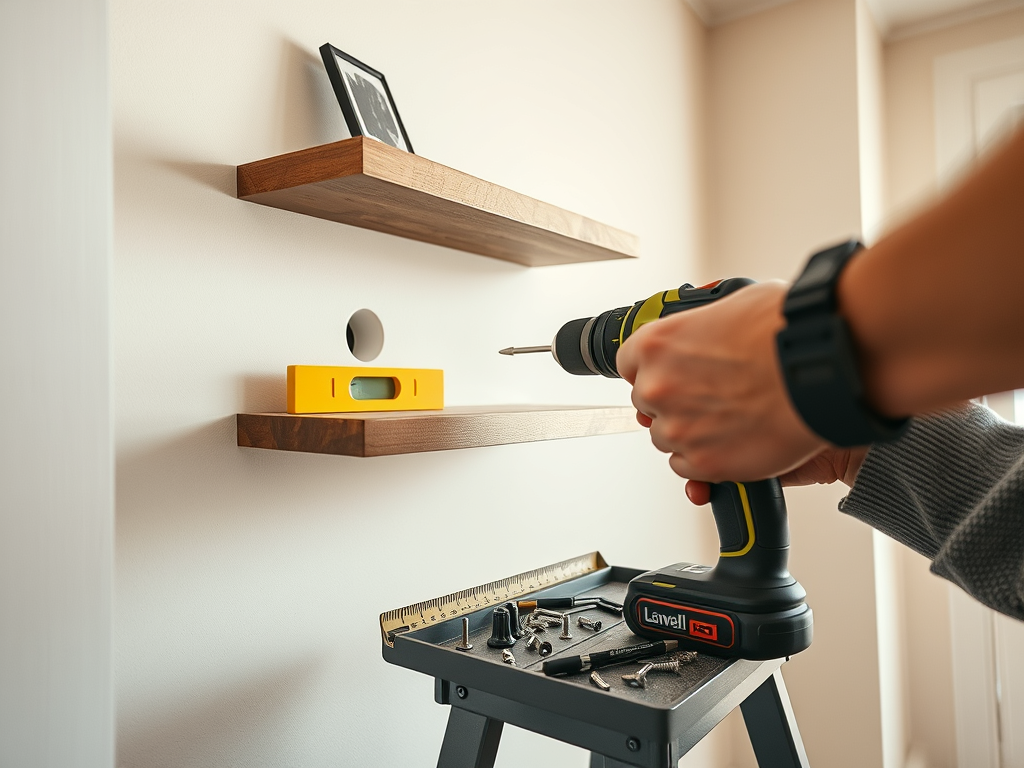
    Hands installing a floating shelf with a drill and spirit level; wall plugs and screws on a tray — DIY skills in a UK home
    Start small — measure, drill, use the right wall plugs, and work safely.

    This is something I wish I was better at. I wasn’t involved enough in DIY growing up, and it’s harder to learn as an adult—which is exactly why I want to make it normal for my kids. Knowing how to fix small things isn’t about being “naturally handy”; it’s confidence, problem‑solving, and not waiting weeks for a tiny repair. Plus, there’s nothing like the feeling of “I fixed that.”

    Start small and involve kids early: torch‑holding, reading instructions, measuring and marking, handing over screws. Little jobs build competence—changing a lightbulb, tightening a hinge, building flat‑pack, filling a small hole, touching up paint, resealing a bath, hanging a picture with the right wall plugs. As confidence grows, try drilling, putting up a shelf, swapping a door handle, changing a tap washer, bleeding a radiator, or basic bike maintenance. If you’re renting, check your agreement; stick to reversible fixes (Command hooks, filling tiny holes properly) and always restore to the original condition.

    A simple starter toolkit (UK): tape measure, Phillips and flat screwdrivers, hammer, spirit level, utility knife, pliers, adjustable spanner, Allen key set, stud finder, assorted screws and wall plugs (rawl plugs), sandpaper, filler and caulk with a gun, masking tape, and a decent drill/driver with wood/masonry bits. Keep a small “fix‑it” list on the fridge and a house notebook with paint codes, measurements, filter sizes, and photos as you take things apart.

    Safety first, always. Turn off power at the breaker, shut off the water at the stopcock, wear eye protection, and read the manual before you start. Know your limits: gas work, boiler issues, consumer‑unit electrics, and anything structural are for pros. That judgment is part of being competent.

    Final thoughts: a living list, not a rulebook

    This isn’t an exhaustive checklist or a set of hard rules—just a living list of ideas I’ve been thinking about lately and want to pass on. The common thread is simple: start small, keep it daily, and let time do the compounding. Save early (LISA, pensions, an emergency buffer). Pick a direction, build proof, and stay adaptable. Learn in tiny, social bursts. Build habits with systems, not willpower. Mind your manners. Move your body to protect your mind. Show up in real life for the people who matter. Read to widen your world. Try DIY to build confidence through doing.

    If even one of these lands early, it can change the way a young person moves through the world.

    Over to you: what’s missing? What do you wish someone had taught you 10 years sooner—and what do you want to teach your kids that isn’t on this list? Drop a comment or message me; I’d love to include your best lessons in a future update.

  • The Constant Struggle of Productivity: How I Manage Focus & Guilt

    The Constant Struggle of Productivity: How I Manage Focus & Guilt

    The Productivity Paradox 

    The other day, I sat staring at my to-do list — not a neat, minimal one, but the sprawling, chaotic kind that makes you feel like you’ve already failed before you’ve started. My phone buzzed, I checked it “just for a second,” and somehow 15 minutes later I was watching a video of a man building a miniature log cabin out of matchsticks.

    Does any of this sound familiar? If you’ve ever struggled to stay productive or felt frustrated by your own distractions, you’re definitely not alone.

    Why do we put so much pressure on ourselves to always be productive? 

    Everywhere we look, there’s a message about maximising output: “Wake up at 5am,” “Plan your day the night before,” “Never waste a minute.” The modern world seems obsessed with squeezing every last drop of efficiency from our time — but the more I try, the more I realise how exhausting it is. 

    We live in a culture that celebrates being busy as a badge of honour. It’s almost as if saying “I’ve been swamped” is proof that we’re doing life right — a signal to others that we’re pushing forward, achieving, and making the most of every minute. Social media only adds to this pressure, serving up endless highlight reels of people who seem to achieve more before lunch than I manage in a whole week. 

    For me, the guilt often creeps in when I take time to do something purely for myself. If I spend an evening watching Netflix or getting lost in a game instead of working on my business, writing a blog post, or tackling something on my to-do list, there’s a nagging voice in the back of my mind telling me I’ve wasted the day. 

    That guilt usually hits hardest at night, when I’m getting into bed and my brain starts its review of the day. I think about all the things I should have done and could have done, and it’s frustrating because I know that I could have been more productive if I’d just stayed focused. Instead, I replay the hours that slipped away on small distractions, wondering where my discipline went. 

    It’s a vicious cycle — my interest locks onto something new, my attention drifts, and before I know it, the day has gone. I can’t help but think my ADHD plays a part in this, because my brain needs genuine interest to stay engaged, and my interests are quick to hop from one thing to another. And so the pressure builds, not just from the outside world, but from myself. 

    The Downside: When Productivity Becomes Stressful 

    The truth is, constant striving comes with a cost. When you’re always chasing the next task, the next goal, or the next “hack” to squeeze more out of your day, you start to lose sight of the point of it all. It can leave you burnt out, anxious, and oddly dissatisfied, even when you’re getting things done. 

    Lately, my motivation has been at an all-time low — partly because I’m not enjoying my job. When the thing that takes up the biggest chunk of your week brings little to no joy, it’s hard not to let that drain your energy for everything else. And when motivation slips, distractions find their way in more easily. It becomes a snowball effect: the less I do, the more frustrated I feel, which makes it even harder to get back on track. 

    Living with a very productive partner adds another layer to this. She’s brilliant at getting things done, and while I admire it, I can’t help but compare myself. I often find myself measuring my day against hers, wondering if I’ve pulled my weight or done enough. Sometimes this is particularly hard because I don’t always notice when things need doing — my memory isn’t amazing, and if I don’t write something down, there’s a good chance it will slip my mind entirely. That means my focus tends to be narrow and linear, fixed on whatever is already on my list, rather than on the broader picture of what could be done. 

    The irony is that the harder I push myself to be “on” all the time, the less I seem to achieve. Instead of feeling accomplished, I’m left with this lingering sense that I’m falling short. That constant mental pressure — from myself, from the world, and from the silent comparisons I make at home — can be exhausting, and it doesn’t always leave much room for joy in the things I once loved. 

    Finding Your Own Way: What Productivity Means to Me 

    Over time, I’ve realised that being productive isn’t just about ticking boxes for the sake of it. For me, it’s about making progress in ways that feel meaningful — whether that’s finishing a blog post, making a bit of headway on a home project, or even tackling a list of small but necessary chores. 

    One thing I’ve noticed about myself is how much better I feel at the end of a day when I’ve got a lot done. It’s not just about big wins — in fact, I often feel more satisfied after completing lots of small tasks than I do from finishing one or two large ones. There’s something about seeing a long list with plenty of ticks that gives me a real sense of achievement. Because of that, I’ve made a conscious effort to break bigger jobs down into smaller steps, so I can keep building momentum throughout the day. 

    I’m also trying to take a wider view of what “being productive” means in my life. It’s not only about work or chores — it’s about getting more out of life overall. I want to strike a balance between achieving the things I need to and having the time and space to enjoy the things that make me happy. For me, that might be spending an evening gaming, diving into a new interest, or simply relaxing with my partner. 

    I think the sweet spot lies somewhere between productivity and satisfaction — getting enough done to feel accomplished, without becoming so focused on output that I forget to enjoy the present. That’s the balance I’m aiming for, even if it’s still a work in progress. 

    Strategies That Actually Help 

    These aren’t magic “productivity hacks” or guaranteed solutions — they’re simply methods I’ve found that genuinely help me. I’m not an expert by any means, and I’ve learned that the most important thing is to experiment until you find what works for you. Some of these ideas might click instantly, others might not suit you at all, and that’s okay. 

    • The “5-minute rule” — If something can be done in under five minutes, do it immediately. It stops little jobs from piling up and creating a mental backlog. 
    • Breaking things down — I tackle bigger goals by dividing them into small, manageable steps. It makes it far easier to start, and it also means I get that extra boost from ticking more things off my list. 
    • Two to-do lists — One shared with my partner for household tasks and anything that affects both of us, and one personal list for my own day-to-day reminders. I even have an end-of-day reminder to check both lists. 
    • Journalling for motivation — I covered this in a bit more detail in this blog post, but then I’m struggling to get going, I’ll write out a goal — sometimes just the end result I want — and let myself imagine what it will feel like to achieve it. That little spark of excitement often gives me the push I need to take the first step and get the ball rolling. 
    • Limiting my phone’s pull — Social media and short videos can easily eat up my time, so I try to keep my phone out of sight whenever I can. My smartwatch lets me handle calls and messages without needing my phone right next to me, which helps more than I expected. 
    • Music as a focus tool — Playing the right kind of music helps quiet the background noise in my head and keeps me moving. Something upbeat works best for me when I need to power through. 

    These aren’t foolproof — I still have off days — but when I put them into practice, I notice a real difference in how much I get done and, more importantly, how I feel about it. 

    Embracing Imperfection 

    If there’s one thing I’ve had to remind myself over and over again, it’s that nobody is perfect. It’s completely normal to have good days and bad days — the aim isn’t to somehow eliminate the bad ones entirely, but to try and increase the number of good ones over time. 

    Some days, I’m in the zone, ticking things off my list left, right, and centre. Other days, I can barely muster the motivation to do the basics. And that’s okay. It’s the same with anything in life — there will always be peaks and troughs. The more productive I can be on some days, the more freedom I have to enjoy slower, lazier days without feeling guilty about it. 

    And lazy days aren’t necessarily a bad thing either. We only get one life, and while getting things done is satisfying, it’s just as important to make sure we’re still living — spending time on hobbies, relaxing with people we care about, or simply doing nothing if that’s what we need. Being productive should enhance our lives, not consume them to the point where we forget to actually enjoy them. 

    For me, embracing imperfection means letting go of the idea that every day needs to be optimised. Some days will be a write-off, others will be wildly productive, and both are part of the bigger picture. The key is to recognise that balance matters more than perfection. 

    Conclusion: It’s a Journey 

    If there’s one thing I’ve learned about productivity, it’s that there’s no single “right” way to do it. What works brilliantly for one person might be completely useless for someone else, and that’s fine. Productivity is personal — it depends on our priorities, our focus, our environment, and the season of life we’re in. 

    For me, it’s about understanding my own habits, identifying distractions, and using simple systems to manage them. But it’s also about remembering that productivity isn’t the only measure of a good day. Sometimes a productive day is one where I’ve completed my goals — and sometimes it’s a day spent resting, recharging, or doing something that genuinely makes me happy. 

    If you’ve ever found yourself lying in bed at night thinking about all the things you should have done, you’re not alone. We’re all trying to strike a balance between progress and peace, ambition and rest. Maybe the goal isn’t to be productive every single day, but to create enough productive days that the less active ones don’t matter as much. 

    At the end of the day, life isn’t just about getting things done — it’s about living. And if you can find a rhythm that lets you achieve your goals while still enjoying the things you love, that’s true productivity. 

    What about you? How do you define productivity in your own life? Do you have any tips or routines that help you find the right balance? Share your thoughts in the comments — I’d love to hear them. 

  • RuneScape: Why It’s My Favourite Game of All Time

    RuneScape: Why It’s My Favourite Game of All Time

    When I put RuneScape at number one in my “Top 10 Games” blog post, I realized a paragraph could never capture what this game truly means to me. So, here it is—my dedicated love letter to the most influential game of my life.

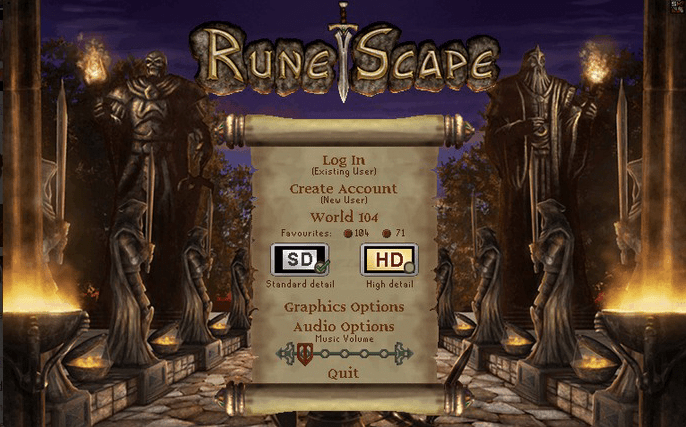
    RuneScape HD Client from 2006

    The Origins: A Rainy Day in 2006

    Ah, RuneScape. The black hole that has swallowed over 5,000 hours of my life (yes, really). The game I’ve always found my way back to, no matter how many times I try to quit—Its probably more addictive than crack (I assume anyway).

    I genuinely can’t remember how young I was when I started playing. All I know is that my main account is now over 14 years old, which still blows my mind.

    My first RuneScape memory is vivid as ever: it was around 2006, pouring with rain, visiting a friend who lived far away. Our parents and siblings were watching TV downstairs. We snuck upstairs to their family computer so he could show me this new game he had discovered. From the second he logged in, I was hooked. We wandered around Lumbridge, picking up cabbages and potatoes until I found a dagger and took down my first goblin, who dropped a goblin mail. I was convinced I managed to wear it (spoiler: definitely not possible), but the excitement was real—a core memory forever unlocked.

    Rediscovering RuneScape—and the True Adventure Begins

    Back then, I didn’t even have access to a computer, so that first experience faded. Until, that is, late 2008, when RuneScape hit a wave of popularity thanks to the new HD client. Suddenly, all my school friends were playing. I distinctly remember huddling round another friend’s screen as a group of us fought our first green dragon together, armed with Dragon Daggers. It was thrilling—we cheered as if we’d conquered the world when that dragon finally fell.

    But it wasn’t until Christmas a year later, when I finally got a laptop of my own, that I dove in properly. While most of my friends drifted away, I found myself drawn deeper and deeper into Gielinor. I tried (and abandoned) a lot of different accounts at first, but finally, in October 2011, I created the one account that would become my digital home for over a decade. Fast forward to today, and—wait for it—I’ve logged an insane 5,666 hours on RuneScape.

    More Than Just a Game

    What turned RuneScape from a pastime to a lifelong passion? The community, for one. Playing with friends and building clans, sharing goals, and even rivalries. I loved leveling my skills (maxing them all for the first time was a personal triumph!), chasing wealth, and diving into boss fights.

    I was always setting myself challenges: killing 10,000 of each dragon type (I only managed two before admitting defeat—there are A LOT of dragons), or collecting every possible boss drop. I nerded out over the in-game economy: flipping items on the marketplace, timing my buys and sells during Double XP weekends. Oddly enough, I picked up real-life lessons about trading, money management, and persistence while playing this “silly” online game.

    My RuneScape journey wasn’t limited to the game itself. I even joined the RuneScape Instagram community for a while, posting edited screenshots of my in-game milestones. It was a great way to meet other fans—and find inspiration for new goals.

    Of course, not all experiences were positive. I had my first brush with gambling at the Duel Arena: I made 100m one night, only to be scammed and then lose it all—plus another 60m—just as quickly. That sting stuck with me, and honestly, put me off gambling in real life too.

    A Real-World Community

    Some of my best RuneScape memories happened outside the game. In 2017, I flew to London for RuneFest with friends. We hit the pre-party, geeked out with famous streamers like Mr Mammal, Woox, and Boaty, and got to play the RuneScape Mobile Beta before anyone else. The whole event felt electric—plus, we made new friends and wandered the city together after. Those are memories you can’t buy.

    Through the game, I also met one of my best friends, who lives in another country—our friendship now spans over seven years (and multiple games together). I’ve even flown across borders to hang out IRL.

    RuneScape 3 vs. Old School—Finding My Niche

    I’ve always been a RuneScape 3 player at heart. I’ve tried Old School RuneScape, especially since most of my friends made the switch, but it just never clicked for me. OSRS is more click-intensive, the XP rates are lower, and—let’s be real—I wasn’t keen on starting from scratch after years of progress. RuneScape 3 has become more of a “second screen” game for me, something casual to grind while watching TV or playing something else. Still, I have huge respect for the OSRS community and would absolutely recommend it to anyone looking for a challenge (and a vibrant, nostalgia-soaked community).

    Giving Back: The Golden Party Hat Drop

    About six months ago, I felt the urge to “retire” in a memorable way. I wanted to give back to the community that had given me so much. So, I started stockpiling Golden Party Hats—managed to save up 15! I took them to the Grand Exchange in a free-to-play world and hosted an impromptu drop party, scattering hundreds of millions of GP worth of items for anyone to find. People absolutely lost their minds. For an hour, I handed out wealth, in the hopes of sparking that same feeling someone once gave me when they gifted me a Robin Hood hat as a newbie. It was my way of paying it forward—a small legacy.

    Of course, even giving everything away didn’t keep me away for good (as I write this, I’m literally AFK farming Green Dragons… old habits die hard).

    Why RuneScape Still Matters

    Even though I stopped playing “seriously” about three years ago, I’ll always come back for a nostalgia hit. Over 11 years, I maxed my account, hit 120 in five skills, and forged friendships that have lasted far beyond the game. I have zero regrets for a single hour spent in Gielinor.

    If you’re considering giving RuneScape a go—do it. RuneScape 3 is fantastic for a more relaxed experience and epic boss battles. If you want a hardcore grind with an active, tight-knit community, Old School might be your new home. Either way, there’s a blast waiting for you.

    Have you played RuneScape before? What’s your favourite memory from the game? I’d love to hear your stories!

  • Why I Journal: More Than Just Writing Things Down 

    Why I Journal: More Than Just Writing Things Down 

    If you’d told me a year ago that I’d be someone who journals almost daily, I probably wouldn’t have believed you. But since January 1st, 2025, journaling has quietly become a regular part of my mornings. I don’t have an exact routine—sometimes I’ll jot something down right after waking up, other times it happens after breakfast or just before I start my workday. It all depends on how busy the morning is, but at some point between 7am and 11am, I always manage to fit it in. What started as a typical New Year’s resolution to organize my thoughts has grown into a habit that grounds me, motivates me, and helps make sense of everything going on in my life. 

    How It All Started 

    Journaling wasn’t a totally new idea to me. I’d always liked the sound of it, but I’d never wanted a physical diary—too risky for prying eyes! Still, that new year, I thought maybe it could help me declutter my mind and boost my productivity. I tested out a few different journaling apps (there are loads), but eventually landed on Journey.Cloud, which I’ve ended up really liking and have stuck with for the past seven months. 

    To be honest, those first entries? Awkward. I had no idea what to write, and even found myself googling “journal entry template” just to get started. But after a few weeks, something shifted: the words started coming more easily, and I realized I could write about literally anything—my goals for the week, what I was thinking about, how my day went, or what I’ve got planned next. It became a structure that helped me reflect, plan, and keep my life organized in a way nothing else ever has. 

    What Journaling Does for Me 

    The biggest surprise has been how much journaling helps me actually get things done. I use it to keep myself motivated as I work toward different goals, and to track everything from work progress to finances. Sometimes, when my partner points out something I could do better (as partners do), I write it down—making myself accountable for the next day. When I journal again, I check in: did I actually do what I said I would? 

    It’s become a great tool for reflection, especially for someone like me with a not-so-great memory. Life moves fast, and I realized I want to have a record—a way to look back at all the places I’ve been, things I’ve done, and everything I’ve achieved in a year. Whether it’s a career win, a memorable weekend, or just a string of good days, the process of noting it down helps me actually appreciate it. 

    Another unexpected bonus? Scratching my writing itch. I’ve always wanted to write a fantasy or sci-fi book (I’ve got pages of half-baked ideas), but fiction is tricky, and I only enjoy it when inspiration actually strikes. Journaling has been a way for me to explore that side of myself in a low-pressure way. Sometimes, when a story idea pops into my head, it goes straight into my journal. If nothing else, it keeps me writing, and I’m convinced that practicing in any way I can—journaling included—brings me one step closer to finally tackling that book on my bucket list. 

    How I Journal (and Why It Works for Me) 

    When it comes to how I journal, I’ve found that digital is the only way that really works for me. I’ve never been interested in a handwritten diary—partly because I just don’t enjoy writing by hand, but mostly because I like knowing my entries are private and safely tucked away where nobody’s going to stumble across them. After trying several journaling apps, I landed on Journey.Cloud, which I use on both my phone and laptop, and it’s become my go-to for the past seven months. 

    My journaling “schedule” is pretty flexible, but I do aim for entries most mornings during the week. For example, I might sit down on a Thursday and write about how I handled a difficult conversation at work, or use my entry to break down a financial target and list out the actual numbers I’m aiming for. If my partner mentioned something I need to improve, I’ll jot it down as a specific reminder, and make sure to check in the next day about whether I acted on it. Sometimes I’ll brainstorm about a goal I’m working toward—like saving for a holiday, or prepping for a big project. 

    On Mondays, I tend to write a little more, catching up on whatever happened over the weekend since I usually skip journaling on Saturdays and Sundays. I’ve also found myself using my journal to record creative ideas, especially when I’m struck with inspiration for a story or some world-building for the sci-fi book I hope to write someday. There are even days when my entry is literally just a bullet list of what’s on my mind. What matters is that it’s a space where my thoughts and plans can flow, see the light of day, and not just spin around in my head. 

    Misconceptions & What I’ve Learned 

    A lot of people (my old self included) worry that journaling “the right way” means you have to write every day, or pour your heart out, or fill pages with beautiful prose. The truth is, you can set your own rules. Your journal doesn’t have to have a set length or frequency—it just needs to work for you. The more you do it, the more natural it gets. At first, it might feel forced, but if you stick with it, you’ll find your own rhythm. 

    What I’ve discovered most is that journaling is about being honest with yourself and giving yourself the space to reflect, dream, and improve. It’s not always deep—sometimes it’s just what you had for lunch or your to-do list for the week. But gradually, through these small entries, you get a clearer sense of who you are and where you’re headed. 

    Thinking of Starting? Here’s My Advice 

    If you’ve been thinking about journaling, my advice is: start simple. Write what you feel—don’t stress about eloquence or structure. Try different apps or methods until you find what feels the most comfortable. And don’t worry if you miss days or weeks. It’s not about being perfect. It’s about capturing your journey in a way that makes sense to you. 

    So, Why Do I Journal? 

    It began as a resolution, but journaling has become a daily act of self-care and self-improvement—a place for goals, accountability, memories, and ideas big and small. Maybe you’ve thought about trying it, too. If so, what’s held you back? Or if you already journal, what’s been your biggest discovery? Let’s talk in the comments—I’d love to hear your thoughts. 

  • From Childhood Builds to Collector’s Shelves: My Lego Star Wars Story

    From Childhood Builds to Collector’s Shelves: My Lego Star Wars Story

    Lego Star Wars isn’t just a hobby for me—it’s a treasure trove of memories and experiences that have shaped my love for both Lego and the Star Wars saga over the years. From the thrill of building my very first X-Wing as a kid to late-night sessions piecing together intricate sets with friends, each Lego Star Wars model holds a special place in my heart. Through every brick and minifigure, I’ve not only recreated epic scenes from a galaxy far, far away but also built lasting memories that I cherish today. 

    In this blog post, I want to take you on a journey through my personal history with Lego Star Wars—sharing the sets that marked important moments, the lessons I’ve learned as a collector, and the stories that make this hobby so meaningful to me. Whether you’re a fellow enthusiast or just curious about the magic behind Lego Star Wars, join me as I look back on the experiences that have made this adventure unforgettable. 

    Looking back, I honestly can’t pinpoint exactly when my Lego journey started—it feels like these colorful bricks have always been a part of my life. My earliest Lego memory goes all the way back to building a car with my dad, using his own childhood set. The box was filled with a nostalgic jumble of mismatched yellow and red bricks, plus some big, chunky wheels. There were no instructions, no pressure—we just let our imaginations take the wheel and enjoyed the simple act of building something together. Sometimes, we’d run out of bricks mid-build, and I’d wish for an even bigger box, dreaming up future creations. 

    Lego wasn’t just about building for me; it was about bonding, creativity, and even venturing into new worlds of play. I was obsessed with making cars—especially ones from Formula 1 —in every shape and size, adapting my designs depending on what caught my interest that day. My love for Lego even spilled over to the digital world with Lego Racers on PC, where I could design my own kart and race Mario Kart-style. These early experiences built the foundation of fun, creativity, and nostalgia that still fuels my Lego Star Wars hobby today. 

    Some of my best childhood memories revolve around long afternoons spent building with my brothers. Together, we’d lose ourselves for hours, each of us adding to sprawling custom worlds inspired by whatever sparked our imagination that day. Sometimes we’d design high-tech sci-fi bases, complete with robot guardians; other times, we’d craft grand fantasy castles filled with rival knights and horses. It was all about teamwork, storytelling, and letting our creativity run wild. 

    The first Lego theme I truly fell in love with was Lego Knights’ Kingdom, which launched back in 2004. While I can’t remember every set I owned, I have vivid memories of their buildable action figures. One that stands out was when my parents surprised me with the King Mathias set (8786) at the pub to keep me entertained—looking back, it’s wild to realize how long ago that was! 

    Lego Knights Kingdom 8781
    Lego Knights Kingdom 8781 – The set I always wanted but never got!

    Birthdays and Christmases were always filled with the hope of receiving Lego sets. Every year, I’d painstakingly circle my wish-list in the Argos catalogue (if I’m honest, it was pretty much every set). On gift-giving days, I’d eagerly shake every present for that unmistakable Lego rattle. As I grew older, my attention shifted fully to Lego Star Wars, fueled by my obsession with both the movies and the games. (Check out my top 10 games here! ) Special traditions made the hobby even more magical. A birthday trip to Legoland was always the ultimate treat, and I was lucky enough to visit a few times. Exploring the incredible Lego buildings, riding the themed attractions, and earning proud batches of Lego driving licenses (I collected three or four over the years!) are memories I’ll always cherish—and ones I can’t wait to share with my own kids. I still remember the excitement of buying a foam sword and shield from the Lego Knights’ Kingdom market, then racing home with my brother to spend days on end play-fighting and letting our fantasies come to life. 

    There are so many stories I could tell, and if you want to read more of my favorite Lego memories, be sure to check out this post here!  

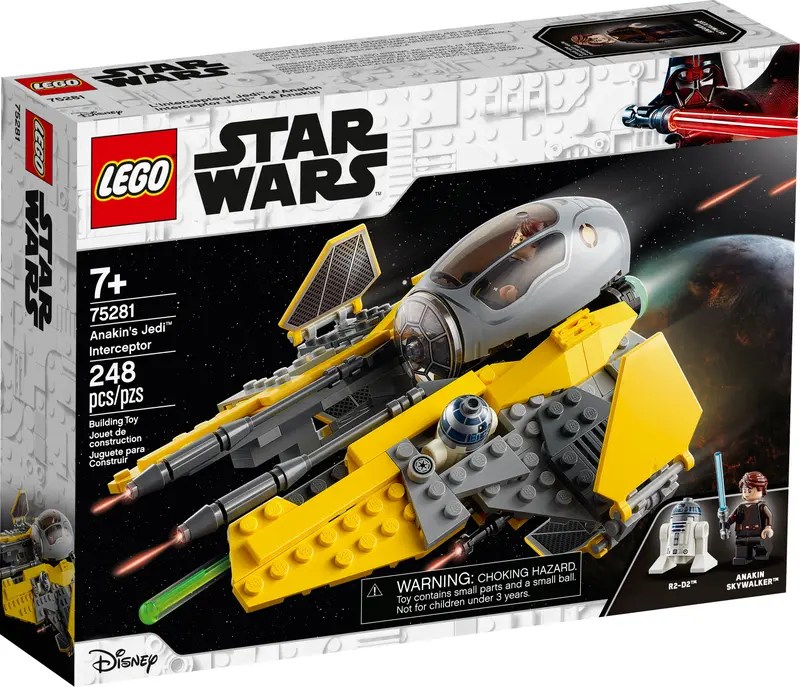
    Like many lifelong fans, I went through the infamous “dark ages” where I hardly touched a single Lego brick. But everything changed a couple of years ago, just before Christmas, thanks to my girlfriend. During the first Covid Christmas, with the world in lockdown, she gifted me Anakin’s Jedi Interceptor (75281) so we could build it together. It was the perfect way to spend time when we couldn’t go out, and it reignited all those childhood feelings I’d nearly forgotten. I built the set within hours of receiving it—the rush of excitement was so real, it felt like my childhood was coming back in full force. (Still a bit sad I misplaced the set during a move, but the spark was definitely lit again!) 

    Lego Star Wars Anakin’s Jedi Interceptor 75281

    A year later, the 501st Legion Clone Troopers (75280) became part of my collection—a set that’s practically legendary among Star Wars fans. Soon after, I stumbled across a sealed but battle-worn Kashyyyk Trooper battle pack being sold locally and couldn’t resist picking it up for my growing clone army. With these sets, I suddenly found myself reminiscing about all the Lego Star Wars boxes gathering dust in my parents’ attic. I called them up, asked if I could finally dig them out (which I’m sure they were grateful for), and coming home to rediscover all those old pieces and minifigs was just such a wave of nostalgia. It felt like reconnecting with an old friend. 

    At first, I was a bit self-conscious about being an adult who builds Lego—worried what others might think, and hesitant to share much about my hobby. But my partner was super supportive, and as I started opening up, I discovered that several friends were secretly Lego fans too! It turns out, there’s a massive community of adult Lego fans (AFOLs) out there, and the more I shared, the more connections I made. Now whenever one of us grabs a cool new Star Wars set or finds a great deal, we can’t wait to share it in our group chat. Sometimes friends will come over, and while some of us watch TV or do puzzles, I’ll build a Lego set and we’ll catch up, chat, and just hang out. Every time a new wave of releases drops, we’re all sharing our favorites and nerding out together. Honestly, it’s been such an unexpected source of fun and connection as an adult—I wouldn’t trade it for anything. 

    I’ve been back in the Lego Star Wars hobby for almost four years now, and my collection has grown far more than I ever imagined. Through a mix of buying awesome new releases and rebuilding old favorites, I’ve managed to assemble a total of 71 different Lego Star Wars sets—ranging from classics released in 2009 all the way up to sets dropping in 2025. I even have a few duplicates stashed away, ready to trade with friends or maybe keep for my kids someday. 

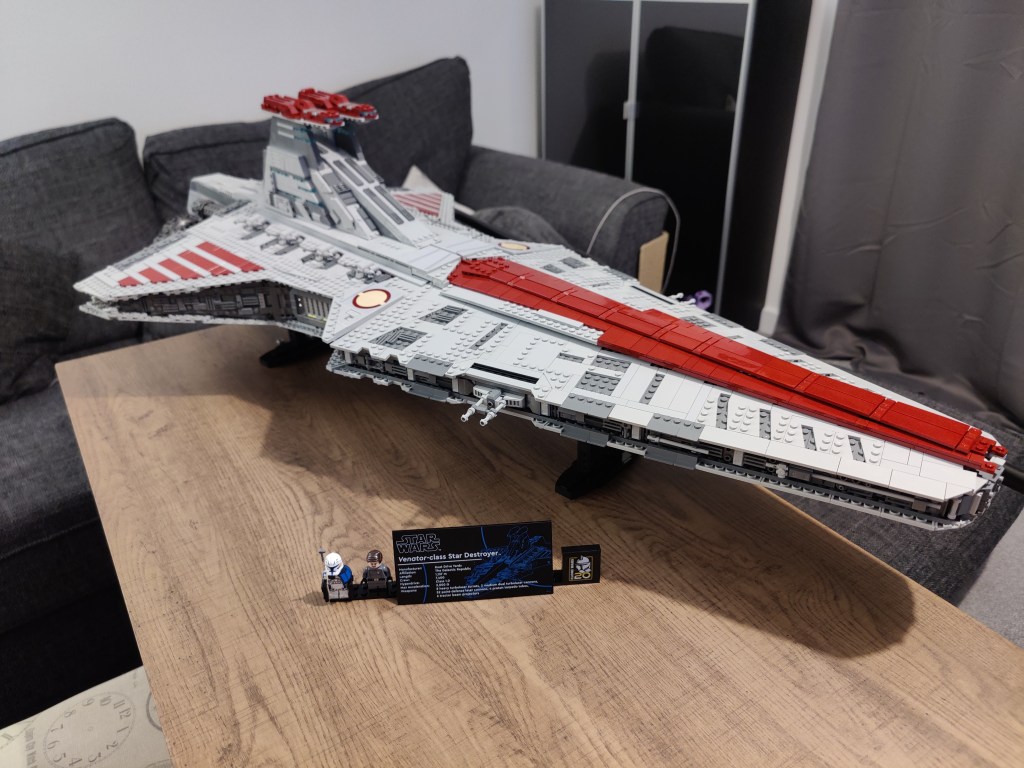
    A full tour of my collection deserves its own blog post, but here are some of my absolute highlights. The UCS Venator is probably my crown jewel—it was my very first Ultimate Collector Series set and it feels epic seeing it on display. Another standout is my Sith Fury Interceptor from 2012. As I mentioned in my post on my top 10 Star Wars games, Star Wars: The Old Republic is a game I adore, so owning sets from that era means a lot. I was lucky enough to grab the Fury Interceptor when it first came out, even before I played the game! In 2023, I started the mission to hunt down every single SWTOR-inspired set. I’m nearly there—just two elusive minifigs from the Jedi Defender Class Cruiser remain on my wishlist. They’re the most expensive, of course, but collecting wouldn’t be as fun without a little challenge! Those Old Republic ships have been on display ever since I got them. 

    Most of my Lego sets are proudly displayed across three sets of shelves scattered around the house. I’ve even crafted a custom display frame to showcase my favourite minifigures when I run out of shelf space! I usually theme each shelf—matching sets from similar Star Wars eras or planets—so things look tidy, organized, and a bit like a mini Star Wars museum. I love to swap things around, especially when a new release comes out, to keep everything fresh and exciting. The only downside? Keeping sets dust-free! Right now, I spend two or three hours every couple of weeks cleaning them, so I’m definitely planning on updating to sealed glass displays soon. I’ve got my eye on those custom WickedBricks acrylic cases for Ikea shelves—they’re high on my ever-growing Lego collector wishlist. 

    While Lego Star Wars is really the only theme I’m seriously collecting, I have to admit the new Lego Formula 1 sets are incredibly tempting. F1 was a huge part of my childhood, and I’m a longtime Red Bull Racing fan, so I had to grab the RB21 Speed Champions set when it came out—it has pride of place in my living room! The larger Technic sets look phenomenal, but with limited space (and budget), I’ve managed to resist for now. I’m also eyeing some of the new medieval Lego sets, since those classic knights and castles bring back great memories, but for now, I’ll just admire them from afar. Having “adult money” is fun—and a little bit dangerous—but the Lego wishlist always seems to stay one step ahead! 

    One of the things I’ve loved most about my return to Lego Star Wars is finding a whole community of fans who share the same passion. There’s something really inspiring about seeing other people’s custom builds, sharing collecting tips, and keeping up with the latest Lego Star Wars news. I’m active on a few great Lego subreddits like r/Lego, r/LegoStarWars, and r/LegoLeak—they’re perfect for discovering incredible MOCs (My Own Creations), catching sneak peeks of upcoming sets, and finding the occasional bargain. 

    When it comes to video content, MandRproductions is my go-to Lego YouTuber. His vlogs always have a fun mix of collection updates, unboxings, and set reviews. Even though I’m not someone who’s on social media every day, I always look forward to checking in and catching up on the latest videos and community discussions. 

    A real highlight of being part of the Lego Star Wars community is the annual Lego May the 4th Promotion. Each year, Lego celebrates all things Star Wars with some of the year’s best discounts and exclusive gifts-with-purchase (GWPs)—a true event for collectors! For me, May the 4th is the one time I let myself go big, usually picking up several discounted sets all at once to take advantage of the deals and free collector’s items. I don’t usually buy the newest sets right on release; I find it’s smarter to wait a year or so, when they’re more affordable. Right now, I’m still working my way through sets from 2024, and no doubt I’ll be chasing the 2025 releases a year from now. It takes a little patience, but it makes collecting much more sustainable—and let’s be honest, Lego can get expensive pretty fast! 

    Whether it’s through online forums, YouTube content, or community events like May the 4th, connecting with other Lego Star Wars fans has added a whole new layer of enjoyment to the hobby. There’s just always something new to see, learn, or get excited about. 

    As I’ve grown older, my love for building Lego has taken on a whole new meaning. Beyond the nostalgia and the fun of collecting Star Wars sets, building Lego has become a genuine form of relaxation and mindfulness in my adult life. With a busy schedule and an ADHD brain that never really switches off, sitting down with a new Lego set helps me slow down, focus, and just enjoy the process—one step at a time. It’s almost meditative. I’ve learned to savor the experience too—whereas I used to rush through a set in one sitting, now I tend to build just a few bags at a time, stretching the enjoyment out over several evenings. 

    Lego isn’t just a solo hobby, either. My collection has actually turned out to be a great conversation starter whenever people visit. Guests love to check out what’s new on my shelves, and the collection always sparks fun (and sometimes surprising) discussions. For anyone who finds small talk awkward (like me!), sharing a passion like Lego makes connecting with others that much easier. 

    An unexpected side effect of being back in the hobby is that I’ve become interested in the economics of Lego collecting. When I started looking up old Star Wars sets I missed out on, I was shocked by how much some of them now sell for—especially if they’re sealed! That realization led me to start collecting sealed sets myself, both as a potential investment and for pure collecting satisfaction. Admittedly, I got a bit carried away at first, snapping up battle packs and sets without really thinking through exactly where I’d keep them all. But I’ve been fascinated to see how well Lego sets hold their value over the years, especially compared to some other collectibles. 

    Overall, Lego has become my go-to for unwinding, a surprising means of social connection, and even a lesson in patience and value. It’s all these little things that have made it something I genuinely appreciate having in my life now. 

    Tips for New or Returning Lego Fans 

    If you’re thinking about jumping back into the world of Lego—especially Lego Star Wars—here are a few tips I’ve picked up that can save you time, money, and a lot of hassle! 

    Be Patient with New Sets: My top advice? Don’t feel pressured to buy every new set on release day. I know the hype can be tempting, but if you wait just six months or so, you’ll usually start to see some great discounts both online and in stores. Over time, these savings really add up—plus, searching for deals becomes its own fun challenge. 

    Brick-Hunting and Bulk Buying: If you enjoy the thrill of the hunt and don’t mind a little sorting, try buying Lego bricks in bulk from local Facebook Marketplace ads or car boot sales. You never know what hidden treasures you’ll uncover—sometimes you’ll find rare pieces or classic minifigs mixed in. Collecting loose bricks is also a fantastic way to grow a parts collection for building MOCs or even recreating official sets without buying them new. 

    Make Use of Free Resources: Did you know Lego offers instructions for nearly all their sets online? If there’s a particular set you love but don’t own, simply download the parts list and get to work sourcing bricks yourself. It’s like a personal Lego scavenger hunt! 

    Check for Forgotten Lego: If you grew up with Lego, definitely ask your parents whether there’s an old box or bin still lurking in the attic or garage. Rediscovering your childhood collection is not just nostalgic—it can sometimes yield some real gems that are hard (or expensive!) to find today. 

    Get Involved with the Community: Reddit is one of my favorite Lego resources, with active subreddits like r/Lego and r/LegoStarWars. These communities are welcoming spaces to ask questions, share your latest builds, swap collecting tips, and celebrate your hobby with others who “get it.” There’s no shame in enjoying what you love—embrace your interests and do what makes you happy! 

    Whether you’re starting from scratch or diving back in, the Lego community is more welcoming and helpful than ever. 

    Looking back on my Lego Star Wars journey, it’s amazing to see how much joy, creativity, and connection these little bricks have brought into my life. From building mismatched cars with my dad and epic castles with my brothers, to rediscovering the magic as an adult alongside friends and my partner—Lego has added something special to every stage of my story. 

    Today, Lego is more than just a hobby; it’s how I unwind, express myself, and bond with a vibrant community of fellow fans. Whether it’s hunting down rare sets, completing a challenging build, or simply showing off my collection when someone visits, Lego continues to spark excitement, nostalgia, and new friendships. 

    If you’re considering getting back into Lego, or starting your own Lego Star Wars collection, my best advice is: just go for it. Build at your own pace, chase what makes you happy, and embrace the magic—no matter your age. 

    I’d love to hear from you—what was your first Lego set, or the favourite one you built as a kid? Do you have any special Lego memories from your childhood, or a set you still dream of owning? Share your stories in the comments below, and let’s celebrate our love for Lego together. May the Force (and builder’s luck) be with you! 

  • Unlocking Nostalgia: The Science of Music and Memory

    Unlocking Nostalgia: The Science of Music and Memory

    Ever wonder why hearing an old song can instantly transport you back in time? If a random playlist triggers goosebumps, laughter, or even a lump in your throat, you’ve experienced the powerful connection between music and nostalgia. Let’s dig into the science—and I’ll share some of my personal experiences—about why music triggers nostalgia so strongly, and why those feelings are sometimes impossible to shake.

    Why Does Music Trigger Nostalgia So Intensely?

    So what is it about music that digs straight into your heart and memory? The answer is surprisingly scientific. When you listen to music, it interacts with the deepest parts of your brain—the amygdala and hippocampus—areas responsible for processing emotions and long-term memories. This means you’re not just hearing a song; you’re reliving the feelings, smells, sights, and vibes of the original moment you heard it.

    Research shows that the songs we listen to during our teenage years and big life moments get permanently embedded in our memory. Experts call music a “cue”: once your brain connects a song to a powerful memory, even a short clip can release a flood of flashbacks—almost like pressing play on your own highlight reel. Your emotional memory is at its peak during times of big change, which is why hearing a song from your school days or first relationship can feel so vivid, even years later.

    Real-Life Music Memories: How Certain Songs Became My Time Machine

    Looking back, music has always been tightly woven into the key moments of my life—even ones I didn’t know I’d someday remember. When a certain track sneaks onto my playlist, I can be transported instantly to a different chapter. Afternoon sunlight, waves outside the sailing club, my battered laptop and RuneScape on the screen—hearing “La La La” by Naughty Boy ft. Sam Smith now still evokes a feeling of peaceful rebellion and a nerdy contentment I never knew I’d someday treasure.

    Other memories are even more vivid. “Can’t Hold Us” by Macklemore instantly shoots me back to a sun-beaten day, driving home from a powerboating course, windows down with a friend, both of us singing so loud we were hoarse for days. All it takes is a few notes to unlock that sense of being young, free, and unstoppable.

    Family life had its own soundtrack. If you played “Party Rock Anthem” by LMFAO right now, I’d immediately picture my brother and me dumping boxes of Lego across the bedroom floor, racing to build the ultimate Star Wars AT-AT. It’s amazing how some songs conjure up cheerful chaos, sibling rivalry, and the drive to create something epic—even if it was just plastic bricks back then.

    Then there are songs that cue up memories of fleeting encounters. “Barbra Streisand” by Duck Sauce zips me back to a caravan holiday, where I met a girl and her brother, hung out for just one afternoon, and never saw them again. Yet every time I hear that track, I’m fourteen again, convinced the smallest moments might be the start of something magical.

    I’ll also admit—I’m not immune to “cringe” tracks. Like a lot of guys, a teenage crush led me to listen to Justin Bieber’s “As Long As You Love Me,” even though it wasn’t my usual style. Hearing it now reminds me of teenage awkwardness and how much we all grow and change, even if our old music choices are a little embarrassing.

    Why Some Songs Hit So Hard—Even If Your Taste Has Changed

    No matter how much my playlists evolve, those older songs are emotional bookmarks. For many of us—especially if you aren’t the type to dwell on your feelings or journal every thought—music keeps your memories safe, the good and the bittersweet. Sometimes a nostalgic song is uplifting; other times, it stings. Either way, when those notes hit, you can’t help but remember who you were back then.

    These days, I try to lean into it. I keep playlists full of old favorites for those moments when I need a boost or want to remind myself of where I started. Even the awkward tunes have their purpose—they’re a kind of time capsule, and a reminder of how far I’ve come.

    What about you? What songs transport you back to a different time—even if your friends might never let you live it down? Do you have a track that instantly triggers a flood of memories, good or bad? Let me know in the comments—no judgement, just stories!

  • My Ultimate Top 10 Favorite Games of All Time

    My Ultimate Top 10 Favorite Games of All Time

    A bit of a different post today! I thought I’d go back to where my interest in computers really started—playing games. So what better way to kick things off than by sharing my Top 10 games of all time? These are the ones I’d recommend to anyone, and the ones that mean the most to me—all of them have been my number one at some point in my life.

    My gaming journey has mostly been on Xbox, ever since I got my first proper console—the original Xbox—and I’ve had every generation since. I only branched out to PC because I wanted to experience RuneScape in higher quality (and trust me, it was worth it). That jump to PC ended up being a gateway to so many new games I never thought I’d get into.

    Everyone’s got those games they just can’t forget, and these are mine. These are the titles I keep coming back to, packed with stories, memories, and more late nights than I can count. Let’s dive in!

    10 – Rise of the Tomb Raider

    Out of all the games I’ve played, Rise of the Tomb Raider easily claims a spot in my top ten—and it’s not just because of the epic action and gorgeous graphics (though, trust me, those help). 

    I picked it up on PC in on its release in 2016 and was instantly blown away by the incredible graphics and immersive environments. Exploring the snow-covered wilds and ancient ruins felt like an adventure I didn’t want to end, and I often caught myself pausing just to admire the scenery. 

    What really hooked me, though, was Lara’s growth as a character. The story picks up right after the 2013 reboot, and seeing Lara become stronger and more complex kept me fully engaged. I also loved how the revamped skill trees let me shape her abilities to match my playstyle, making every upgrade feel personal. 

    Ultimately, it’s the combination of beautiful design, exciting customization, and Lara’s evolving journey that makes Rise of the Tomb Raider unforgettable for me. It’s the kind of game I’d recommend to anyone who loves a good adventure. 

    9 – Tomb Raider (2013)

    Sometimes a game totally defies your expectations—in the best possible way. That’s exactly what happened to me with the 2013 Tomb Raider reboot. 

    When it launched, I don’t think anyone—myself included—was prepared for just how good it would be. This reboot reimagined Lara Croft as a much younger and more vulnerable adventurer, focusing on her first, harrowing steps toward becoming the icon we know today. The game took a darker, grittier approach to her origin story, and it was a breath of fresh air for the series. 

    What really made it stand out for me were the updated combat mechanics, absolutely gorgeous graphics, and immersive world. The story is intense from the very beginning—I still remember jumping out of my seat trying to escape those terrifying tunnels after Lara’s disastrous fall. It was genuinely exhilarating. 

    This is one of those games I’ve played over and over—I even lost track of my replays. My brother got so into it he tried to 100% complete everything. For me, the 2013 Tomb Raider isn’t just a reboot; it’s a must-play adventure that left a real mark, and one I’m always happy to revisit. 

    8. Ark: Survival Evolved

    I was embarrassingly late to the ARK: Survival Evolved party—not diving in until 2021—but I wish I’d tried it way sooner. 

    For years, friends kept recommending ARK, but always as a PvP experience—and honestly, PvP never interested me. It was only when my partner and I finished A Way Out and began hunting for our next couch co-op adventure that I finally gave in, spotting ARK on sale in the PS4 store. In a time when local co-op feels like a dying art, ARK reminded me exactly why it needs to come back. 

    Set in a prehistoric world filled with dinosaurs, survival challenges, and endless possibilities, ARK quickly turned into our digital playground. We had a blast exploring new areas and taming all sorts of wild creatures, even creating our own personal zoo and breeding baby dinosaurs. On PS4, the only real downside was being tethered to within about 300 meters of each other, which made exploring as a team a bit tough. Eventually, we couldn’t resist upgrading to an Xbox Series X, where that limitation disappeared and the graphics blew us away. Suddenly, we could roam independently—and that freedom made the game even better. 

    I’ve now logged over 400 hours exploring every corner of ARK’s various maps, and it’s a game my partner and I keep coming back to. If you’re looking for a survival adventure that rewards teamwork and curiosity—or just want to make your own dino zoo—ARK is absolutely worth your time. 

    7 – Star Wars: The Old Republic

    Some games are truly worth the wait—Star Wars: The Old Republic (SWTOR) is definitely one of those. 

    I missed the game’s big 2011 launch, mostly because my old laptop couldn’t handle it, even though those unforgettable cinematic trailers completely sold me on the idea. It wasn’t until I built my first proper PC and started seeing ads for the Shadow of Revan expansion that SWTOR jumped back onto my radar. With Revan being one of my favorite characters from the Knights of the Old Republic era, I downloaded it immediately. 

    What surprised me most was just how much choice the game offers: there are eight unique character classes (four for the Republic, four for the Empire), each with its own engaging story and playstyle. No matter how many times I returned, I could always pick a new class for a totally fresh experience. My first run as a Sith Inquisitor was so immersive—with awesome cutscenes, stellar voice acting, and a storyline that kept me hooked all the way through Shadow of Revan and beyond. 

    Since then, SWTOR has only gotten bigger. The game now boasts multiple major expansions—Rise of the Hutt Cartel, Shadow of Revan, Knights of the Fallen Empire, Knights of the Eternal Throne, Onslaught, and Legacy of the Sith. Every expansion adds more content, stories, and ways to play, making it easy to lose yourself in the galaxy again and again. 

    One of my favorite aspects is the community. I created and managed a guild with over 200 players. Together, we tackled grouped flashpoints, dominated weekly heroics, and ran regular events—or just chilled out on our guild flagship. The social side of SWTOR has brought me back time and again, especially when new content drops. 

    All in all, SWTOR is one of those rare games I keep coming back to, year after year. While it might not be as popular as it once was, it still has a strong, loyal fanbase and continues to receive new content and expansions, keeping the galaxy alive for both new and returning players. For Star Wars fans or MMO enthusiasts, I can’t recommend it enough—it’s hands-down one of the best Star Wars games out there. 

    6 – Fallout 4

    Fallout 4 wasn’t even on my radar until my brother and I unwrapped our Xbox One at Christmas 2015—and there it was, bundled right alongside Halo 5. Being a die-hard Halo fan, I put Fallout aside for a while, not realizing I was about to be sucked into one of the most addictive games I’d ever played. 

    Right from the dramatic intro, the game pulled me in: create your character, watch the world end, and suddenly you’re a parent searching for your son in the Wasteland. Bethesda’s classic combat system gave me endless ways to experiment, but what really got me hooked was the settlement building. I spent hours scavenging junk to build and defend massive forts, set up farms, and create little civilizations to keep the Wasteland running. 

    The story was a blast, with plenty of factions to side with and new endings to find. And with all the wild mods out there, the game never really got old. My personal highlight? Finally assembling a full set of X-02 Power Armor, or finishing the game with the Brotherhood of Steel powerhouse, Iron Giant vibes (If you know, you know)  

    Looking back, Fallout 4 completely surprised me—and ended up being one of my top gaming experiences, and each DLC brought something new and exciting, keeping me coming back for more. 

    5 – Halo 4

    Halo 4 was the first Halo entry from 343 Industries, but for me it became an instant favorite—and easily the game I’ve replayed the most by far. Picking up right after Halo 3, suddenly we’re waking up as Master Chief in the wreckage of Forward Unto Dawn, only to be whisked away into the mysterious shield world of Requiem and thrown headlong into a battle with the Forerunners. New weapons, new enemies, and a fresh direction for the story (less Covenant, way more Forerunner intrigue) made it feel like a whole new world for Halo. 

    The campaign was a blast solo, but it really shined in co-op—I lost count of how many times my brother, my partner, and I ran through those missions together. I absolutely loved Forge mode too; nothing beat designing maps, setting up bases at opposite ends, and trying to outwit my brother in Capture the Flag showdowns. 

    And honestly, this was the online FPS I put the most hours into. Tons of maps, wild game types, and an addicting armor unlock system meant most of my multiplayer glory days were spent right here, climbing ranks and, on rare occasions, actually carrying the team. Halo 4 will always be a highlight in my gaming history 

    4 – Halo: Reach

    Before the 343 Industries era and Halo 4, there was Halo: Reach—the final Halo from Bungie, and what a game to end on. As a direct prequel to Halo: Combat Evolved, Reach pulled me into the emotional chaos that led to the fall of humanity’s last major stronghold before Master Chief’s journey ever began. Instead of focusing on familiar faces, we joined Noble Team, a squad of Spartans with their own personalities, all fighting a losing battle against impossible odds. It was a bold move that really paid off. 

    I loved the shift in tone—on Reach, there are no happy endings, and it made every mission feel meaningful. Co-op was a huge highlight here; my friends and I would lose hours running missions together, strategizing our way through impossible firefights. 

    One of my absolute favorite additions was the Falcon, a new aircraft that offered a fresh way to zip around the battlefield. And I have to shout out Firefight mode, which cranked up the intensity with wave after wave of tougher enemies—surviving ‘just one more round’ often turned into a whole evening of mayhem. 

    Forge mode was back and better than ever. I distinctly remember having friends over and spending hours building what we claimed was the “ultimate sky base” high above the map. We never really finished it, but man, it was awesome seeing our wild plans take shape. 

    While a lot of fans call Halo 3 the series’ peak, for me, Halo Reach was something truly special—raw, creative, and unforgettable. 

    3 – Star Wars: Knights of the Old Republic 2

    Ah, the infamous unfinished sequel—Star Wars: Knights of the Old Republic II, easily one of my favorite RPGs and, if we’re being honest, the follow-up to the best Star Wars game ever made. After the phenomenal success of the first KOTOR, expectations were sky-high. This time, Obsidian took the reins and set us loose a few years after Revan’s story ended. 

    Funny thing is, I didn’t even realize KOTOR had a sequel. I only stumbled onto it when I was hunting for a replacement copy of the original (which I was convinced I’d lost forever). Discovering that there was more KOTOR to play was a next-level revelation—I had to beg my dad to buy it for me. Once I had it in my hands, I tore into it like it was a lost holocron. 

    Right from the start, you’re tossed into a galaxy that feels both familiar and brand new. Instead of playing as Revan, you’re the mysterious Jedi Exile, trying to piece your past together while navigating a war-torn galaxy where Jedi are being hunted to extinction. One of my favorite surprises? Running into old friends and former allies from the first game. Those moments felt like unexpected reunions—sometimes rewarding, sometimes awkward, always fun to see how each character had changed (or not) since the original adventure. But honestly, it’s the new characters, each with their unique quirks and backstories, who really steal the show. 

    What set KOTOR II apart for me was how much deeper the game went with customization. Weapon and armor crafting got a serious upgrade—suddenly your skill choices actually mattered. If you wanted to build the best lightsaber or perfect your armor mods, you had to invest in the right abilities to make it happen. 

    But hands down, the best feature was the companion influence system. Your choices shaped how your crew viewed you, unlocking new dialogue, side quests, and—here’s the kicker—potentially training companions to become Jedi or Sith. I still remember the shock and excitement when I accidentally unlocked a swath of new Force powers for a buddy on Nar Shaddaa. It completely changed how I thought about party management. 

    The adventure took us to some unforgettable new planets, dove deep into Mandalorian lore, and introduced not one, but three new antagonists—each more mysterious and morally gray than the last. The writing was brilliant, with every companion and enemy feeling nuanced and real. 

    Sure, KOTOR II had its flaws—rushed development meant a lot of planned content never made it into the final cut. Thankfully, the legendary Restored Content Mod salvaged much of what was lost, and I’d recommend it to anyone playing the game now. 

    Even unfinished, KOTOR II easily improved on the original in some ways. It still amazes me to think of what we might have had if it was given the development time it deserved. As it stands, it’s a flawed masterpiece—and one I still find myself coming back to, just to see what new twists another playthrough might bring. 

    2 – Star Wars: Knights of the Old Republic

    No game on this list took me longer to beat—and none had a bigger impact on my passion for Star Wars—than Knights of the Old Republic. 

    Star Wars: Knights of the Old Republic (KOTOR) is a legendary, story-driven RPG set thousands of years before the films. With its unique turn-based combat and your choice between the light or dark side, KOTOR hands you the fate of the galaxy and lets you shape your story one decision at a time. 

    My journey with this game is a saga all its own. I don’t even remember buying KOTOR; it just showed up one day in a pile of old Xbox games, tucked away in our wooden chest of console games. My first encounter with the game was less than heroic: I got completely stuck in the tutorial on the Endar Spire, unable to figure out how to escape the bridge. I gave up in frustration and set it aside for what turned into years. 

    The second time I played, things went a bit better—I finally made it off the ship and landed on Taris, only to get stuck again and lose motivation. Another long break followed. It wasn’t until my third attempt, with a bit more gaming experience under my belt (and perhaps some accidental luck), that I finally escaped my curse, found my way through those early obstacles, and actually started to experience what KOTOR had to offer. 

    And wow, was it worth the wait. KOTOR’s unique turn-based combat let me play as I wanted—melee, blasters, Force powers—you name it. Its influence system literally changed your character’s appearance and story as you leaned into the darkness or held on to the light. And the plot twist? To this day, it’s the best twist I’ve ever experienced in any game. The narrative is outstanding, with multiple endings shaped by your choices and a galaxy full of planets to explore—some familiar, some totally new. Each companion on your journey has a compelling backstory, making every interaction meaningful. 

    To this day, I’ve owned KOTOR on every platform it’s been released on—Xbox, PC, even mobile—and it’s the one game I replay almost every year. More than any other game, it’s responsible for turning me into a lifelong Star Wars fan. I honestly think I’d be a completely different person if I hadn’t finally stuck with it and finished it. 

    1 – RuneScape

    There’s one game I always come back to, no matter how hard I try to quit—RuneScape is my number one, and honestly, it’s more addicting than crack. 

    If I added up all the time I’ve spent skilling, questing, and just hanging out in Gielinor, we’re easily talking over 5,000 hours. I wish I were kidding. With more than 14 years on my main account alone, RuneScape has been the ever-present backdrop to my gaming life, and I know deep down that nothing else comes close. 

    RuneScape launched way back in 2001 as a simple browser game built in Java, originally called DeviousMUD. Since then, it’s evolved through eras—RuneScape Classic, RuneScape 2, RuneScape 3, and Old School RuneScape, and even mobile—each version keeping that core spark alive for new and returning players. No matter which version you play, you’re in for a world of adventure in the medieval fantasy realm of Gielinor. 

    But it’s nostalgia that always brings me back to RuneScape’s top spot. Those “golden days” of RuneScape hold some of my fondest memories: the best online community I’ve ever seen, genuinely kind people, and friendships that escaped the screen and turned into real life adventures. I learned lessons in negotiation (flipping items at the Grand Exchange was my first taste of capitalism), gained random but useful real-world knowledge (impressed classmates with “fun facts” about bronze), and met lifelong friends—including at RuneFest and trips across the world. 

    Graphics were never RuneScape’s selling point—in fact, the famously blocky and outdated areas are part of what makes the game so charming. It’s the lore, the community-driven events, and the way player choices once shaped the direction of the world that set it apart. My favorite memories range from getting my first membership, to that adrenaline rush of earning my first 99 skill, to the thrill of finally maxing my account. There’s always a new goal to chase, whether you’re a classic adventurer or diving into the challenging Ironman, Hardcore Ironman, or Group Ironman modes. 

    RuneScape’s appeal is timeless, which is probably why the developers released Old School RuneScape in 2013, reviving a version frozen in the era so many of us loved. It turns out, sometimes nostalgia really is unbeatable—Old School now rivals, and often surpasses, the modern game in popularity. 

    Though RuneScape isn’t quite what it was at its absolute peak, there’s still a ton of content and an amazing (if smaller) community. The connections I’ve made are real, and the fun I’ve had is unforgettable. RuneScape taught me, entertained me, and brought me friends for life. It’s more than a game; it’s a second home, and one I’ll always recommend. 

    Looking Back: The Games That Made Me

    From heart-pounding adventures and epic RPGs to community-driven worlds and nostalgic favorites, these ten games aren’t just milestones in my gaming journey—they’re snapshots of who I am and where I’ve been. Whether it’s surviving prehistoric lands, exploring ancient tombs, or forging lifelong friendships in virtual worlds, each title on this list has left its mark on me. I hope this countdown inspires you to revisit an old favorite or maybe find something new to try.

    If you enjoyed this post, feel free to leave a comment with your own top 10 or any memories you’d like to share—I’d love to see which games made an impact on you, too. And if you want to see more posts like this, don’t forget to follow along. Happy gaming!

  • Fixing My Veeam Server (and My Sanity): An Unexpected Backup Adventure

    Fixing My Veeam Server (and My Sanity): An Unexpected Backup Adventure

    In my last homelab misadventure, I wrapped up unable to reach my Veeam server. After a little sulking and a lot of thinking, I decided to nuke it from orbit and just start from scratch. Sometimes trying to patch up old decisions isn’t worth it, especially when you made those choices late at night with one eye closed. 

    Before hitting the big red reset button, I considered all my options. There are plenty of other free backup platforms out there, but Veeam is the one I’m most familiar with, and honestly, it’s a staple in enterprise environments for a reason. The free version lets you back up up to 10 VM’s—which is more than enough for my lab—so sticking with what works made sense. 

    So, I deleted my Veeam VM (JR-VEEAM-01), cleaned up the leftovers, and prepped my trusty Windows Server ISO. Creating a fresh VM in Hyper-V took all of two minutes—this time with a slightly bigger disk, because you can never have too much storage, right? 

    The VM fired up without a single complaint, and the Windows Server install was done and dusted in just a couple of minutes. While it worked its magic, I switched over to my Domain Controller to set up a shiny new Domain Admin account—nothing like a fresh start all around. Once Windows finished installing, I renamed the server to JR-VEEAM-01 and aimed to join it to the domain. Or, well… I tried. 

    Wouldn’t you know it—same domain join error I ran into when setting up my workstation before. Classic homelab déjà vu. 

    Turns out, I’d skipped setting up the network adapter properly. The server was on the right subnet, but the DNS was still pointed at the default gateway. A quick PowerShell session sorted that out: 

    # Assign new IP, subnet, gateway 
    New-NetIPAddress -InterfaceAlias “Ethernet” -IPAddress 10.10.10.7 -PrefixLength 24 -DefaultGateway 10.10.10.1 

     
    # Assign DNS server 
    Set-DnsClientServerAddress -InterfaceAlias “Ethernet” -ServerAddresses 10.10.10.6 

    Just to be sure, I ran a couple of commands to check everything updated as expected: 

    Get-NetIPAddress -InterfaceAlias “Ethernet” 
    Get-DnsClientServerAddress -InterfaceAlias “Ethernet” 

    After patting myself on the back for fixing the adapter, I promptly hit another “oops” moment: I’d only been using the UPN to join the domain, not the proper Domain\UPN format. Turns out, reading prompts helps. Once I logged in correctly, the domain join went through without a hitch. Noice. 

    Once the VM had restarted and settled into its new domain home, it was time for the main event—getting Veeam installed. I headed over to Veeam Software for Enterprise, signed in (pro tip: you’ll need a free account to grab Veeam Backup & Replication), and got the download rolling. 

    With the install file in hand, I mounted the ISO, fired up the setup, and got greeted by the install wizard. Right off the bat, it asked for a license—since I’m using the free community edition, a simple tap of “Next” did the trick. No license key, no stress. 

    Veeam checked my system for missing features and dependencies, offering to install anything needed (which, lucky for me, wasn’t much this time). After that, I kicked back with a cup of tea and about half a pack of biscuits. By the time my mug was empty, Veeam was installed and ready to go. 

    Now for the fun part: cracking open the Veeam console and finally getting into the backup setup. 

    Before I could dive straight into setting up those backup jobs, Veeam put up a window asking if I wanted to register the host—best practice in most cases, so of course, I hit “YES.” This kicked off another wizard to add my Hyper-V host. I punched in the device name, set the type as “Hyper-V Standalone Server,” and plugged in the credentials for the host’s local admin account. 

    Naturally, that’s when I hit an error. (Is it even a homelab setup if you don’t hit a permissions snag or two?) Instead of wrestling with password resets or risking bad security habits, I pivoted to best practices: jumped back on the host and quickly created a dedicated service account called svc_veeam just for Veeam’s use. 

    Back in the Veeam console, I swapped in the new service account credentials. After a quick round of testing and validation, Veeam gave me the green light—the host was now registered and ready for Hyper-V backups! 

    With the host officially registered, I figured it was finally time to set up some backup jobs. I jumped up to the top left, clicked “Backup Job,” and selected “Virtual Machine Backup.” I even gave my job a fancy new name—Hyper_V_Daily—and got ready to pick which VMs to backup… except, weirdly, there were no VMs listed. 

    Not to be outdone by a blank window, I hopped over to Backup Infrastructure, rescanned the host, and tried again. Still nothing. That’s when it hit me: facepalm moment. I’d only added the host itself, not the actual guest VMs. To get those into the mix, I’d need to add them manually—with proper domain admin rights, of course. 

    So off I went to the domain controller to spin up a domain service account just for Veeam. Then, back in the Veeam console, I made my way to Backup Infrastructure, selected “Managed Servers,” and added my other two VM’s—JR-DC-01 and JR-WKS-01—using the same best-practice process. No need to add JR-VEEAM-01 since Veeam was running right there already. In theory, this should have been the breakthrough. 

    But theory doesn’t always translate to practice! When I tried to connect to my test workstation, up popped another error. 

    Well, that sounded like your run-of-the-mill communication issue. Time for some basic troubleshooting: I fired up Command Prompt and tried to ping the workstation—and wouldn’t you know it, zero response. Looks like we found our next issue. 

    So, I hopped over to the workstation and opened up good old Command Prompt to see what was happening. The network settings looked fine: the IP was in the right subnet, and interestingly, the workstation could actually ping the Veeam server without any issues. Okay… so why couldn’t the Veeam server see the workstation? 

    That got me thinking—maybe something was actively blocking the traffic from the Veeam side. A peek at Windows Defender Firewall on JR-WKS-01 revealed that all network profiles—Domain, Private, and Guest/Public—were enabled. For now, I decided to just switch them all off (don’t worry, Group Policy will be handling these rules properly later on). 

    Back at the Veeam server, I tried pinging the workstation again—and bingo, it worked! Sometimes troubleshooting is as simple as flipping the right switch. Simples! 

    With both devices finally talking to each other, I tried adding the workstation once more—and this time, Veeam installed the necessary components without a hiccup. Success! Now all three VM’s were showing up in Veeam, which meant, in theory, I was ready to finally create that daily backup job. 

    Well… not so fast. I went through the steps to set up a new backup job and, yet again, none of my VM’s appeared. At this point, Windows Defender Firewall seemed like the usual suspect—not just on the workstation, but maybe on the host as well. 

    Sure enough, on the Hyper-V host, the firewall was not only enabled, but the network profile was set to “guest” instead of “private.” That’s an easy fix: I opened PowerShell and ran: 

    Set-NetConnectionProfile -Name “JR_Home 2” -NetworkCategory Private 

    Then I disabled Windows Defender for good measure. After another trip back to Veeam and a rescan of the host, I optimistically tried to set up the job once again… and nothing. Still couldn’t see any of the guest VM’s. Weird. 

    Time for some deeper troubleshooting. I double-checked that WMI was working—no issues there. Next, I wondered if the fact that the host wasn’t joined to the domain could be blocking remote management. So, I fired up this command to test connectivity: 

    Enter-PSSession -ComputerName JR-HV-01 -Credential (Get-Credential) 

    And prepared for the next plot twist… 

    Sure enough, the Enter-PSSession command threw an error. At least I was getting somewhere—an error is better than nothing! My first instinct was to simply add the host to the domain, but since this is just a test environment, I’d rather not overcomplicate things. There had to be a workaround, so I dug a little deeper. 

    Good news—there is! You can configure WinRM to work across workgroup or non-domain devices. It takes a little more setup, mostly around adding the Hyper-V host to the list of trusted devices, tweaking authentication settings to use NTLM instead of Kerberos, and enabling remote access. 

    First up, on the host itself, I opened PowerShell and ran: 

    Enable-PSRemoting –Force 

    Super straightforward. Next, I hopped back to the Veeam server and added the host as a trusted device: 

    Set-Item WSMan:\localhost\Client\TrustedHosts -Value “JR-HV-01” -Force 

    Time to test if things were finally communicating. Here’s the kicker—you have to use the default local Administrator account, not just any local admin. That realization cost me a few unnecessary retries. The winning command: 

    Enter-PSSession -ComputerName JR-HV-01 -Credential (Get-Credential) -Authentication Negotiate 

    I logged in as the local admin, ran Get-VM, and at last—Veeam could see the guests! High hopes, back to the Veeam console, rescanned the host, and crossed my fingers. 

    And… still nothing. Turns out, even switching to the Administrator account credentials in Backup Infrastructure didn’t solve it. Every time I thought I’d cracked it, Veeam threw up another “nope.” 

    This produced an error, and while that’s not ideal, at least it gave me something to work with. My first thought was to just add the host to the domain and be done with it, but since this is a test environment, I wanted a cleaner fix. Thankfully, there’s a workaround—WinRM can actually be set up to allow communication across workgroup or non-domain devices. 

    To get this going, I opened PowerShell on the host and ran: 

    Enable-PSRemoting –Force 

    That was an easy win. Next, on the Veeam server, I needed to list the Hyper-V host as a trusted device: 

    Set-Item WSMan:\localhost\Client\TrustedHosts -Value “JR-HV-01” -Force 

    For the real test, I tried to remote in from the Veeam server. Heads-up: this only works if you use the default local Administrator account—not just any account with local admin rights (it took me more tries than I’ll admit to figure that out!): 

    Enter-PSSession -ComputerName JR-HV-01 -Credential (Get-Credential) -Authentication Negotiate 

    With the right credentials, I was able to run Get-VM and finally confirm that the server could see the guests. Back in Veeam, hope surged as I rescanned the host and switched credentials to the Administrator account… but, once again, nada. Even with all the right moves, Veeam still wouldn’t play ball. This homelab adventure wasn’t done with me yet! 

    At this point, we’d tested just about everything—and I started wondering if maybe some old configuration was still causing trouble. So, I did the classic “turn it off and on again,” giving the box a restart. Honestly, I wasn’t expecting much, and sure enough, it didn’t help. Now I was just staring at the Veeam console, fresh out of ideas and starting to dig into research. I even ended up troubleshooting live with ChatGPT. 

    Out of nowhere, something clicked. I thought back to managing replicas in enterprise environments—there’s always a dedicated section for Microsoft Hyper-V under Backup Infrastructure, where you see your host and its guest VMs grouped neatly. Here, none of that. That’s when I figured it was time to revisit the Veeam documentation. 

    And there it was: a crucial detail I’d missed. Before blowing everything away, I thought a reinstall might fix things, so I downloaded the latest ISO and, while it was chugging along, double-checked my Hyper-V tools on the Veeam server with: 

    Get-WindowsFeature *hyper* 

    Turns out, I was missing the Hyper-V management components. Fixing that was simple: 

    Install-WindowsFeature -Name RSAT-Hyper-V-Tools –IncludeAllSubFeature 

    Once Hyper-V tools finished up (and the ISO download was done), I reinstalled Veeam from scratch. But this time, I paid attention to every little detail in the wizard—and that’s where I saw the magic line: 

    “Hyper-V on Windows Client OS is supported only as an Instant Recovery target and for the Data Labs functionality. Host-based backup of VMs running on such Hyper-V host is not supported, but you can use agent-based backup instead.” 

    And there was my answer. If your Hyper-V host is running Windows 10/11 Home, Pro, or Enterprise, host-based VM backups simply won’t work. My lab runs on Windows 11 Pro—it’s my daily driver as well as my server. I was both relieved and frustrated to finally get the explanation! 

    So, where did that leave me? I had two choices: either upgrade my host to Windows Server OS (which felt like overkill for a machine that doubles as my daily driver), or go the Agent Based backup route. Easy decision—the agent method wins. 

    This is where things start to look a little different. Instead of charging ahead with “New Backup,” I went over to Inventory and chose to Create New Protection Group. Since all my VMs play nicely together in the same domain, I went for the Microsoft Active Directory objects option. 

    The wizard guided me through naming the group and picking my domain, which let me see all my lab machines in one place. I selected every VM I wanted to protect and cleared out the default exclusions—don’t need anything hiding from me at backup time. 

    Next, I set it to use the domain Veeam Service account I’d already created, and tweaked the device discovery and agent deployment options. Because my homelab isn’t always online, I decided to have the discovery job run every hour. Maybe a little aggressive, but I’d rather be safe than sorry with my quirky lab uptime. 

    After a quick review, I hit Apply. The group was created, Veeam scanned the devices, and suddenly things were starting to look a lot more promising. 

    Now that the protection group was up and running, it was time for one of the most important pieces: actually picking where my precious backups should live. By default, Veeam wants to save files on the backup server itself—but I had other plans. I wanted my backups sitting pretty on a dedicated SSD in my host, not just anywhere. 

    Setting this up was straightforward. In the Veeam Console, I headed to Backup Infrastructure, selected “Backup Repositories,” and chose “Add Repository.” Since my VM is directly attached to the storage, I selected “Direct Attached Storage” and then “Windows.” From there, it was just a matter of giving my repository a name and making sure the server was set to JR-HV-01, not JR-VEEAM-01. 

    A couple more clicks and I pointed the storage location at my SSD for fast, reliable backup performance. The rest—such as the Mount Server settings—could stay at their defaults. The configuration only took a few minutes, and just like that, my shiny new repository was ready to roll. 

    Veeam prompted me to use this as the default backup location, and since this SSD is where I want all my backups living, I hit yes. On to the main event—setting up the backup job itself! 

    At last, it was time for the main event—setting up the actual backup job. From the protection group I’d just built, I right-clicked, chose “Add to backup job,” selected “Windows,” and then “New Job.” This brought up the now incredibly familiar Veeam wizard. 

    Most of the job options could stay at their safe defaults—I wanted the Veeam Server to handle everything, so I left that set, gave the job a memorable name, and moved on. Since all the computers I wanted to back up were already picked thanks to the protection group, setting those up was a breeze. For max coverage (and peace of mind), I chose to back up the entire machine, not just selected files or volumes. 

    Next, it was time to point the job at the correct storage. I selected the new backup repository on the SSD, left the Guest Processing options untouched, and moved forward to scheduling. Normally, I’d opt for daily backups, but given my lab isn’t always powered on, I set the job to run every two hours instead. A little extra redundancy never hurt, right? 

    With everything ready, I hit apply and finish. But of course, you don’t trust a backup until you see it in action—so I headed back to the Veeam console, found my new job, right-clicked it, and selected “Run Active Full.” Then came the moment of truth: cross my fingers, wait it out… and yes! The backup job completed smoothly, no errors in sight. 

    Success tastes almost as good as that pack of biscuits! 

    And just like that, another homelab saga comes to an end! I’ll admit, this post ended up much longer than I’d planned—but honestly, that’s the beauty of tinkering in a lab environment. You get to stumble, experiment, and actually learn from the process (even if it involves a few extra cups of tea and a mild existential crisis over why things won’t work). 

    So, what did we learn this time around? 

    • Don’t underestimate the value of reading the documentation—especially when it comes to OS limitations! 
    • Network and firewall settings will trip you up more than you expect—always triple check them. 
    • Sometimes, starting over really is the best way to fix a sketchy setup. 
    • And if you’re running Hyper-V on a Windows 10/11 Pro machine, agent-based backups are the way to go. 

    Now, I’ve finally got Veeam backups configured, which gives me the perfect safety net as I launch into new and crazy experiments in the lab. Redundancy: achieved. 

    Thanks for following along with this adventure—and I hope you found the journey (and even the pitfalls) helpful! If you prefer a more streamlined “just the method, no misadventures” style for these posts, or if you actually liked seeing all the real-life troubleshooting and mistakes, let me know in the comments! 

  • My Digital Story: A Little Look Into My Life and What I Love 

    My Digital Story: A Little Look Into My Life and What I Love 

    So! If your still reading this, I’ve obviously caught your attention, which means you probably want to learn more about me. This blog isn’t going to have a face attached to it (Which is in your best interest, trust me!) but I’ll share as much as much as I can with you so you understand who I am 
     
    I’m in my late 20’s and have a background in IT, I grew up playing games across a verity of consoles which started my interest in computers. I distinctly remember when I was still at school giving myself local admin privileges through registry editor to allow myself to install GTA San Andreas and Halo Combat evolved on multiple machines for myself and my friends, and creating hidden files in network shares to store music and videos. I never got caught, and I still heard stories from years after I left about people finding the games on random machines – that always felt good. 

    I built my first PC in 2015, it was an entry level build for the time with an AMD FX8350 CPU, ASUS GTX 960 graphics card with 8GB of DDR3 memory and a 1TB hard drive. Up until then, I’d been playing games on an old laptop with a cooling fan putting out enough RPM to put a jet turbine to shame. I was only really playing RuneScape at that point, as it wasn’t powerful enough to render anything other than 1 texture at a time! Building that PC was the gateway to world that would shape the rest of my life, both professionally and personally.  

    That rig lasted me for a couple of years, until the release of the GTX 10 series when I put it through a considerable upgrade. I moved to a 1080ti which completely blew my mind, partnered with a Ryzen 2700X, M.2 NVMe storage and 32GB of RAM. It was night and day difference. Before I was only really able to play games on medium to achieve 60fps at 1080p, whereas I was now able to hit way over that on max, and even stable framerates at 1440p. Game changing.  

    Nowadays I don’t use it so much for gaming. I’ve regressed into more of a filthy casual and use my Xbox when the mood strikes, so I’ve gone out of my way to repurpose it into a home server. I’ve only just started this journey so it’s currently just a Hyper-V host for a Veeam Backup server, but I’m planning to do more with it. My homelab contains UniFi Networking Infrastructure, with a UniFi Gateway Max, an 8 Port PoE switch and 2 U6+ AP’s. A bit overkill maybe, but I suddenly got into networking following the discovery of Home Assistant. I originally only wanted to setup a guest network and vlans for my IoT devices so I could secure my network, but the more I researched, the more I got sucked in. 

    When I’m not messing around with my network, I’ll probably be watching the F1 or getting lost in a Lego build. Both have been go-to sources of fun and inspiration for as long as I can remember, and I never really outgrew either one. 

    Formula 1 runs deep in my family: I grew up watching races with my parents, and these days, it’s a can’t-miss routine that my partner and I share every weekend. I’ve even managed to tick off two live races from my bucket list—Silverstone and Catalunya. For me, F1 is so much more than fast cars. I love diving into the strategy, the technical behind-the-scenes, and, of course, the non-stop drama that comes with each season. 

    I’ve stood by Red Bull Racing since 2009 (back when Sebastian Vettel first joined the team), but I have huge respect for the whole grid. Legends like Daniel Ricciardo, Kimi Raikkonen, Fernando Alonso, Jenson Button, Mark Webber, and Max Verstappen have all won me over in different ways. Honestly, I could talk for hours about the sport and its drivers. 

    The recent boom in F1’s popularity—thanks in large part to Netflix’s “Drive to Survive”—has been wild to witness. Suddenly, it’s everywhere: I can’t walk down the street without spotting someone in team merch, and social media is full of F1 ads and debates. As a lifelong fan, it’s been great to see so many people discover the sport and join in the excitement. So when I heard the news of F1 teaming up with Lego this year, it definitely got my attention. 

    Lego was a huge part of my childhood—I spent countless hours with my siblings turning piles of bricks into sprawling castles and crazy imaginary worlds. Some of my favorite memories are those epic make-believe battles, and the secret code we invented to wake each other up for early-morning building sessions. The ritual was simple: three knocks on the wall, repeated three times. If you heard it, you knew it was time for another round of Lego adventures. 

    As we got older, life crept in and the bricks eventually gathered dust in the loft. That all changed during the big lockdown, when my girlfriend surprised me with a Lego Star Wars set for Christmas. We quickly built it together, and I quickly realized that spark for Lego never really died—it just needed a nudge to ignite again. Honestly, if she knew she was about to unleash a full-blown obsession, maybe she’d have thought twice! 

    That single set sent me down a rabbit hole. I dug out every old box of Lego I’d stored away and spent months sorting through them—three massive tubs packed with pieces and long-forgotten minifigures. It became a mission to catalogue every set I could remember from my childhood collection. Turns out, many of these were mid to late 2000s releases, now considered collector’s items. Of course, building and displaying them became its own challenge, and what started as a single three-tier bookcase is now a growing network of shelves and displays throughout my home. 

    The best (and sometimes most dangerous) part of being an adult Lego fan? Having adult money. These days, I try to keep my collection focused on Star Wars, but it’s tough to resist all the newest releases. The recent Formula 1 Lego sets in particular have really put my willpower to the test—I’ve limited myself, so far, to picking up the small Speed Champions Red Bull RB20, but those big Technic sets keep calling my name… and honestly, it’s probably just a matter of time. 

    I’ve always been into reading so lately, I’ve started setting myself goals to keep things interesting. Last year I aimed for two books a month, and this year I’m seeing how close I can get to three. I mix things up a lot: sometimes it’s fantasy or sci-fi, sometimes it’s non-fiction or a biography, depending on what catches my eye. I’m trying to broaden my horizons and make sure I still read educational books alongside the more creative ones, anything I can do to learn more or become a better person. Right now, I’ve just started Joyful by Ingrid Fetell Lee, a book around understanding how you can find joy no matter where you are. I can be quite a serious person, and I want to make the most of every moment.   

    When I’m not reading, I’m probably binge-watching TV, getting way too invested in movies, or listening to music. I’m a sucker for stories that make you actually feel something, and I’ll admit, The Greatest Showman still gets me every single time. As for music, I usually find myself looping through the same artists—Logic, Joyner Lucas, Post Malone—until I’m ready for something new. Playlists are great, but sometimes you just need that one album on repeat. 

    Travel is another thing I’ve really grown to love. Over the past few years, I’ve been lucky enough to tick off some cool places like Rome, Barcelona, and Jamaica. City breaks have become a new favourite for me—there’s just so much to see and do, and every trip feels like a mini adventure. I used to be all about relaxing beach holidays, but after exploring cities, booking tours, and getting lost in new places, I’m hooked. My travel bucket list keeps growing, and I’m hoping to get a few more ticked off over the next year 

    So that’s me, for the most part! My goal with this blog is to share my experiences and thoughts and hopefully spark some conversations along the way. More to come soon—see you in the next post. Until next time, thanks for reading!