Tag: Personal

  • Reflecting on 2025: A Year of Change and Growth

    Reflecting on 2025: A Year of Change and Growth

    I know this post is arriving a little later than planned — we’re already well into 2026 — but over Christmas I spent some time reflecting on the year just gone. This ended up taking a bit longer than I expected, thanks to illness and a busy start to the year, but better late than never. 

    Every year feels important while you’re living it, but some years reshape things in a more lasting way. 

    2025 was one of those years for me. 

    Over the course of the year, I went through several major changes — personal, professional, and creative — and by the end of it, I found myself stepping into a new phase of life. 

    At the same time, 2025 wasn’t just about big moments. It was a year of reflection, reassessment, and quietly working out what I want my life to look like going forward — from how I spend my time, to what I focus my energy on, to the goals I set for myself and how I measure progress. 

    Looking back now, 2025 feels less like a finish line and more like a turning point — a year that marked the end of one chapter and the beginning of another. That feeling pretty much shaped how the rest of the year developed.

    How the Year Unfolded

    2025 felt big, but not in a constant or overwhelming way. 

    I was always aware that something important was coming up later in the year — something that gave the whole year a sense of direction and momentum (more on that later!). 

    At the same time, I found myself stepping back more than usual to reflect on how I was feeling and what I wanted to change. 

    I wasn’t enjoying my job, and that dissatisfaction had started to affect me outside of work. It wasn’t something I could switch off at the end of the day, and over time it made me realise how closely my overall happiness is tied to feeling fulfilled in what I do. 

    Alongside that, I became more aware of a few habits I’d been wanting to work on for a while. Rather than trying to overhaul everything at once, I focused on making gradual changes throughout the year. That slower, more intentional approach made progress feel achievable rather than overwhelming. 

    By the end of 2025, the year felt less like something I’d pushed through and more like something that had quietly prepared me for change — a reset point rather than a conclusion. 

    Small Changes That Made a Big Difference 

    Some of the most meaningful changes I made in 2025 were quiet ones. 

    One of the clearest was becoming more aware of how much time I was spending on my phone. Over the course of the year, I started using it less and eventually uninstalled Facebook — the final piece of social media I was still using regularly. That change alone made a noticeable difference to my attention and overall mood. 

    One small habit that had a bigger impact than I expected was leaving my phone on its charger when I was at home, rather than carrying it around with me. That simple change ended up freeing up little pockets of time throughout the day — time that would previously have disappeared into scrolling. 

    Those small gaps quickly turned into opportunities to do other things, like reading. In that sense, it was a double-sided change. It helped me break a habit I wasn’t happy with, while also making me happier overall by giving me more space to indulge in something I genuinely enjoy and want to do more of. 

    Alongside that, I noticed a gradual shift in how I approach problems, particularly when it comes to productivity. I started trying to focus less on motivation and more on momentum. The “five-minute rule” — which I’ve written about in more detail here — helped me reframe tasks that I’d usually put off. 

    Instead of thinking “I really can’t be bothered to do this, I’ll do it later,” I began approaching things from the perspective of “I’ll be glad this is done and off my mind.” I’m far from perfect, but that change in mindset has felt like a step in the right direction. 

    None of these changes were dramatic on their own, but together they reshaped how I spend my time and energy. Small adjustments, made consistently, ended up making a bigger difference than I expected. That growing awareness carried over into the the choices I made with the projects I’d planned out for throughout the rest of year

    Projects I Started — and the Ones I Let Go Of

    2025 was a year of starting things — and being honest with myself about which projects I genuinely wanted to put my time into, and which ones I mostly liked the idea of. 

    Over the course of the year, I started this blog, refreshed my home network, returned to technical learning, and began writing a fantasy novel — two creative projects that ended up becoming far more important to me than I initially expected. Each of these projects gave me something different, whether that was learning, structure, or a creative outlet. 

    Not everything carried on as planned. 

    Some ideas — particularly around my homelab and home automation — slowly fell away. I realised I wasn’t enjoying technical projects in my free time in the way I used to. Forcing myself to continue with them was starting to feel like an extension of work, rather than something I looked forward to. Letting go of those projects created space for things I genuinely wanted to spend my time on, like reading and writing. 

    That realisation eventually led to a bigger decision. Towards the end of the year, I sold my PC — something I’d been quietly thinking about for a long time. It had stopped being something I actively used and had slowly turned into both clutter and a distraction. When I did sit down at it, it was often when I should have been doing something else, something I was consciously trying to improve on. 

    As I mentioned in one of my first blog posts, I hadn’t really been using it for years. In hindsight, some of the projects I’d been planning were less about genuine interest and more about finding a reason to keep it around. 

    That’s not to say I’m done with homelabbing or gaming entirely. I still have my Xbox and enjoy using it casually now and then, and I’ve kept my Home Assistant Green for whenever the home automation itch returns. If I do want to explore more virtualisation work in the future, I’ll likely look to host things in the cloud instead. 

    The projects I did work on earlier in the year ended up helping me secure a new job towards the end of the year, which is something I’m incredibly grateful for. Even though not everything was seen through to completion, those efforts still paid off in ways I didn’t fully appreciate at the time. 

    Looking back, I don’t see the projects I didn’t finish as failures. They helped me learn what I enjoy right now, and just as importantly, what I don’t. In that sense, choosing to stop was just as intentional as choosing to start. 

    Rediscovering Writing and Creativity 

    Writing made its way back into my life almost by accident. 

    What actually started off as an idea for a technical project — building a simple website to self-host — quickly became something much more personal. As I began writing regularly, it became clear that the creative side of the project mattered far more to me than the technical challenge ever did. 

    I’ve always enjoyed writing, even if I haven’t always made time for it. Growing up, I loved reading and drawing, and I even wrote short stories and fanfiction as a teenager. As I got older, that creative spark faded into the background. Ideas still came to me, but they rarely went anywhere. They lived in notes, half-finished documents, and sprawling files that I’d add to every now and then, without ever really doing anything with them. 

    Starting the blog changed that. 

    For the first time, writing became something consistent rather than occasional. Over the course of the year, I published 24 posts, wrote over 56,000 words, and saw more than 600 views. Not because of reach or validation, but because it gave me the fire to keep going. It was genuinely exciting to know that people were actually seeing what I was writing — and even better, that some of them liked it. By the end of the year, the blog had picked up 4 subscribers and over 30 likes, which was far more than I ever expected. 

    I went into it assuming nothing would really come of it beyond being a creative outlet for myself. Instead, it became something I actively looked forward to working on, something I genuinely enjoyed building and returning to week after week. 

    That renewed sense of creativity naturally spilled into something bigger. Towards the end of the year, I began working on a fantasy novel — something I’d thought about for a long time but never seriously attempted. It felt like a natural extension of writing more regularly and finally giving myself permission to explore ideas properly. 

    Looking back, rediscovering writing wasn’t just about producing words. It was about finally getting all of those ideas out of my head and onto the page — about taking the worlds I see in my imagination and starting to shape them into something tangible. I don’t just want to write a book. I want to create a world. 

    Hobbies, Joy, and Slowing Down 

    As much as 2025 was a year of reflection and change, it was also a year where I gave myself permission to slow down and enjoy things again. 

    A lot of that joy came from fairly simple routines. Watching Formula 1 when it was on at the weekends, reading more consistently, and writing all became small but important anchors throughout the year. They gave structure to my free time and something to look forward to, especially during periods when other parts of life felt more uncertain. 

    Karting also made an appearance a couple of times throughout the year. It’s something I’ve always enjoyed and have dipped in and out of over time, and 2025 reminded me how much I’d like to make space for it more often. 

    Writing, in particular, became a constant. It wasn’t just a creative outlet — it was something that helped keep me grounded and gave me a sense of momentum when I wasn’t enjoying work. Sitting down to write, even briefly, felt like time well spent. 

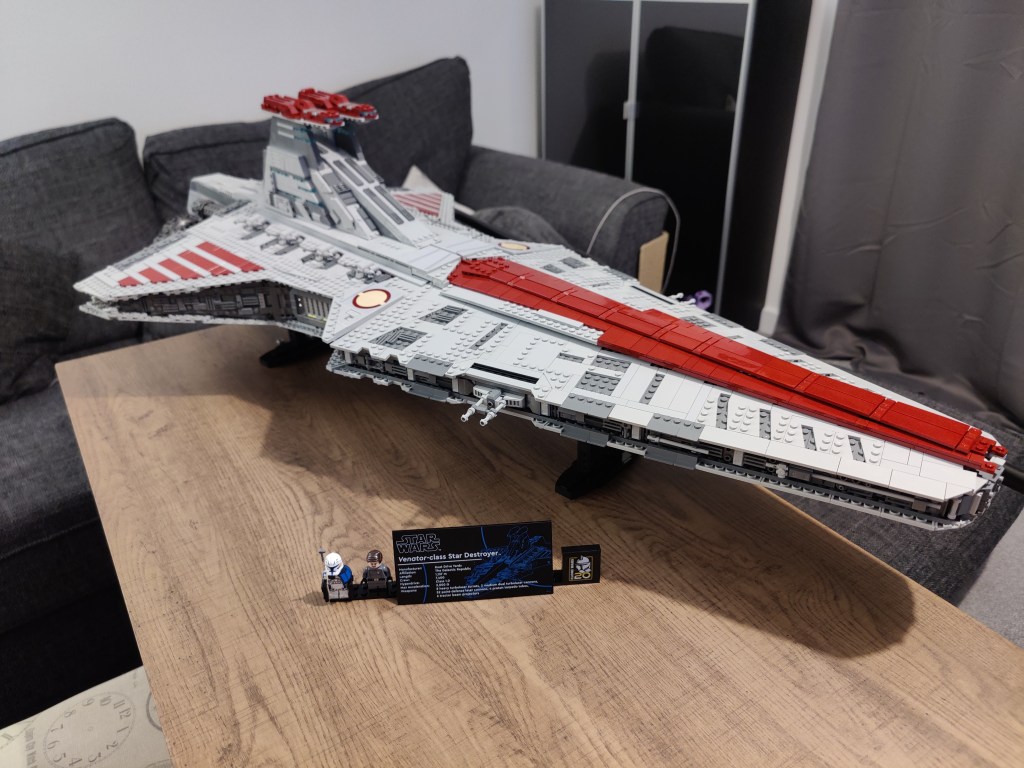
    Interestingly, I didn’t add many new LEGO sets to my collection this year. I did, however, finally pick up the UCS Jabba’s Sail Barge — a set I’d had my eye on ever since seeing it in person at the LEGO Store at the beginning of last year. Alongside that, I started downsizing parts of my collection, selling some duplicate sealed sets and finally letting go of empty boxes I’d been holding onto. 

    That shift felt less like missing out and more like choosing space — both physically and mentally. 

    At the beginning of the year, I also spent a lot of time reading about home automation and smart home ideas. While that interest never fully turned into projects at home, I don’t see that as a negative. I enjoyed learning about it, and not every interest needs to lead to something tangible to be worthwhile. 

    Overall, 2025 helped me rethink how I spend my downtime. Slowing down didn’t mean doing less — it meant doing things more deliberately, and choosing enjoyment over obligation. 

    Money, Balance, and Being More Intentional 

    My relationship with money shifted slightly in 2025 — not in a dramatic or restrictive way, but in how consciously I thought about it. 

    I became more aware of where my money was going and why. That didn’t mean cutting out everything I enjoy, but it did mean pausing more often before spending and asking whether something would genuinely add value to my life or simply add clutter. 

    A big part of that shift came from wanting a calmer, more intentional living space. Downsizing parts of my LEGO collection and being more selective about what I brought into the house wasn’t about losing interest — it was about creating room, both physically and mentally. 

    I also started prioritising experiences more than material things. Holidays, trips, and shared experiences began to feel like better uses of money than accumulating more stuff. It wasn’t about choosing one over the other entirely, but about finding a balance that felt right for where I am now. 

    Alongside that, I made a conscious effort to get my finances back on track. I focused on catching up with my savings goals and building a bit more stability, which gave me a greater sense of control and peace of mind as the year went on. 

    By the end of 2025, money felt less like something I was reacting to and more like something I was thinking about deliberately. That mindset shift has carried forward, and it’s something I plan to build on further as I move into the next phase of life. 

    Looking Back at the Goals I Set for 2025 

    At the start of 2025, I set myself a handful of goals — not as rigid targets, but as rough markers for the kind of progress I wanted to make over the year. 

    Some went exactly to plan. Others didn’t. And a few changed shape entirely as the year unfolded. 

    One of my biggest priorities was getting my savings back on track, and I’m really happy to say I achieved that. Reaching that goal brought a sense of relief and stability that carried through the rest of the year, and it laid a solid foundation going forward. 

    I also set out to achieve Network+. I completed the training but never actually booked the exam. At one point, that might have felt like a failure, but in hindsight, I’m comfortable with it. The training itself was valuable, and following a change in career direction, taking the exam no longer felt as important as it once did. 

    Reading was another goal I didn’t quite hit numerically. I aimed to read 36 books over the year and ended up reading 24. That said, I’m still really pleased with that number — especially considering I stopped reading entirely for a few months at one point. Reading more consistently than I had in previous years felt like a win in itself. 

    Reducing my screen time to under two hours a day proved difficult. I didn’t quite manage it, but I did make meaningful progress. I became far more aware of how I use my phone and continued working on reducing that time, which feels like a positive trend rather than a missed target. 

    I also wanted to start a weekly journal, writing a short summary each Friday. That didn’t happen consistently, largely due to limited time. Rather than forcing it, I chose to prioritise writing blog posts and working on my novel instead — something that felt like a better use of my creative energy. 

    Finally, I planned to continue my Italian lessons on Duolingo, but I eventually stopped. I struggled to find a routine that made it sustainable alongside everything else I had going on. It’s something I’d like to return to at some point, but for now, it made sense to focus on other areas of learning. 

    Looking back, I don’t see the goals I didn’t fully achieve as failures. They gave me structure, helped me stay mindful of what I wanted to work on, and — just as importantly — showed me where my priorities shifted over the course of the year. 

    Closing Reflections: Stepping Into a New Phase of Life 

    Looking back, 2025 gave me a lot to be grateful for. 

    There were moments of joy, moments of uncertainty, and plenty of time spent figuring things out as I went. Some of the year’s highlights were obvious at the time, while others only really make sense in hindsight. Together, they shaped what ended up being a genuinely meaningful year. 

    The year wasn’t without its difficult moments either. We lost our cat in 2025, and saying goodbye was far harder than I expected. It was a quiet but powerful reminder that not all change comes with momentum, and that some moments simply ask you to pause and reflect. 

    One of the defining aspects of 2025 was reaching a major personal milestone that marked a clear transition into a new phase of life. I married my long-term partner in a beautiful ceremony with our friends and family, and it was truly one of the best days of my life. 

    In a year of big events like getting married and starting a new job, there were also countless smaller moments that mattered just as much — trips, shared experiences, quiet routines, creative progress, and the simple satisfaction of feeling more aligned with myself than I had been at the start of the year. I also bought a new car — a nice upgrade from my old banger that I learned to drive in all those years ago — which felt like another small marker of change. 

    What I appreciate most about 2025 is how it helped me slow down, reassess, and make more intentional choices. It was a year that quietly laid foundations rather than chasing outcomes, and I’m grateful for that. 

    As I move into 2026, I feel optimistic and determined. I want to focus on being consistent, following things through to the end, making the most of opportunities, and ultimately getting as much out of life as I can. More than anything, I want to make memories and continue building on the foundations that 2025 helped put in place. 

    Final Thoughts 

    Writing this has been a reminder of just how much can change over the course of a year — sometimes quietly, sometimes all at once. 

    If there’s one thing 2025 reinforced for me, it’s the value of slowing down, reflecting, and being intentional about where time and energy go. Not everything needs to be optimised or rushed. Some things just need space to grow. 

    If you’ve made it this far, thanks for reading — I genuinely appreciate it. 
    I’d love to know what 2025 looked like for you. Did it feel like a year of change, a reset, or something else entirely? 

    If you enjoy reflective posts like this, feel free to explore more of the blog, or subscribe to follow along as I head into 2026. There’s plenty more to come. 
  • Books I Read in 2025 – A Year of Sci-Fi, Self-Growth, Greek Myths & Rediscovering Reading

    Books I Read in 2025 – A Year of Sci-Fi, Self-Growth, Greek Myths & Rediscovering Reading

    Over the last few years, I’ve made a conscious effort to read more. As a kid, reading was my favourite thing in the world — I’d spend hours tucked away in my room, completely absorbed in story after story. But as life got busier, reading slowly slipped out of my routine. Between the ages of 16 and 21, I barely read anything unless I was on holiday, sat by the pool thinking, “Wow, I forgot how much I love this.”

    As I’ve got older (and more aware of how valuable time is), I’ve tried to build reading back into my daily routine. Since 2022, I’ve set myself yearly reading challenges, slowly increasing the number. This year my target was 36 books — ambitious, and I’m not quite on track… but looking back at everything I have read has been so fun.

    I’ve made a conscious effort to mix up genres too. Normally I’m all-in on sci-fi and fantasy, but in 2025 I added non-fiction, philosophy, self-help, and mythology into the mix. It’s been a surprisingly reflective year of reading, and in many ways the books mirror the kind of year I’ve had.

    So, without further ado…

    All the Books I Read in 2025 (With Authors)

    Philosophy

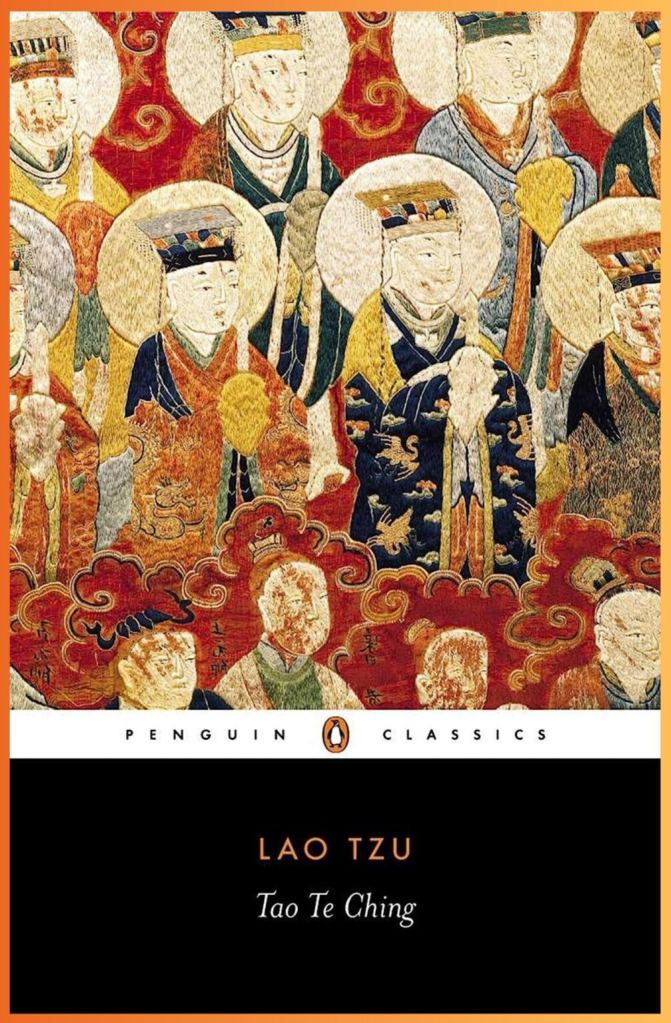
    • Tao Te ChingLao Tzu

    Sci-Fi / Halo Universe

    • Halo: The Fall of ReachEric Nylund
    • Halo: The FloodWilliam C. Dietz
    • Halo: First StrikeEric Nylund
    • Halo: Ghosts of OnyxEric Nylund
    • Halo: Contact HarvestJoseph Staten
    • Halo: Silent StormTroy Denning
    • Halo: OblivionTroy Denning
    • Halo: Broken CircleJohn Shirley
    • Halo: CryptumGreg Bear
    • Halo: PrimordiumGreg Bear
    • Halo: SilentiumGreg Bear
    • Halo: Mortal DictataKaren Traviss

    Cherub Series (Re-reads)

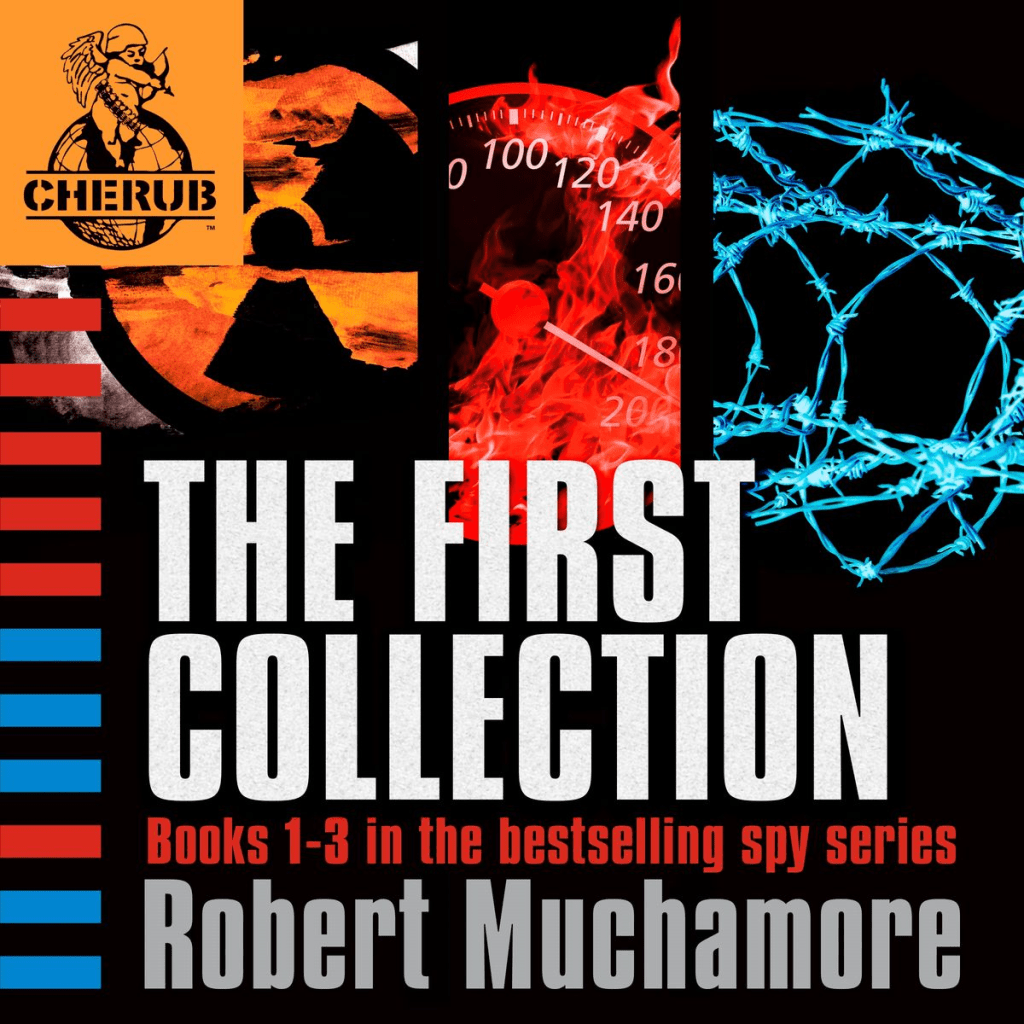
    • CHERUB: The RecruitRobert Muchamore
    • CHERUB: Class ARobert Muchamore
    • CHERUB: Maximum SecurityRobert Muchamore
    • CHERUB: Dark SunRobert Muchamore

    Non-Fiction, Self-Help & Lifestyle

    • How to Build a CarAdrian Newey
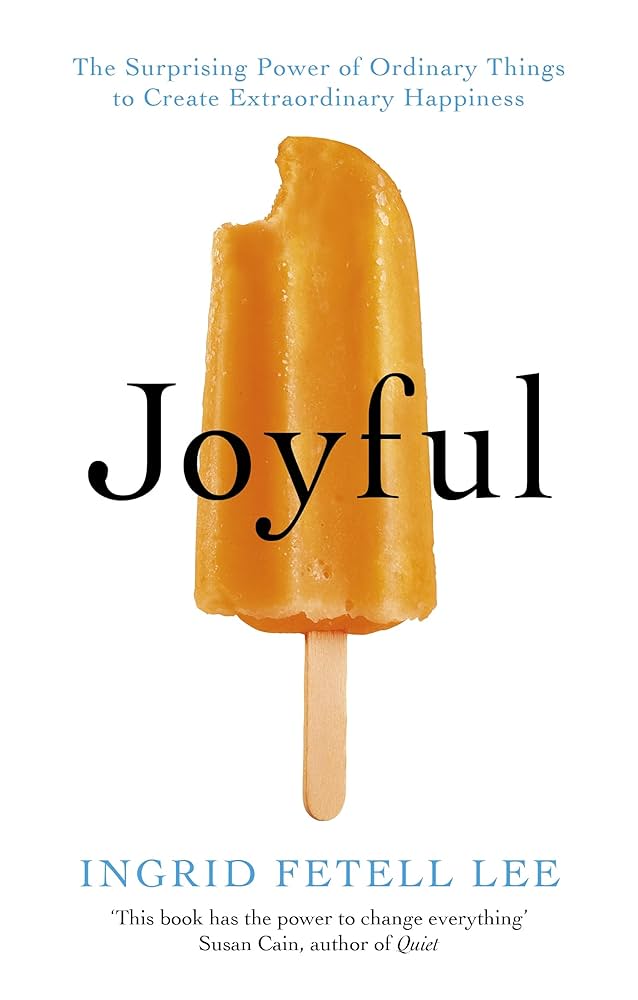
    • Joyful: The Surprising Power of Ordinary Things to Create Extraordinary HappinessIngrid Fetell Lee
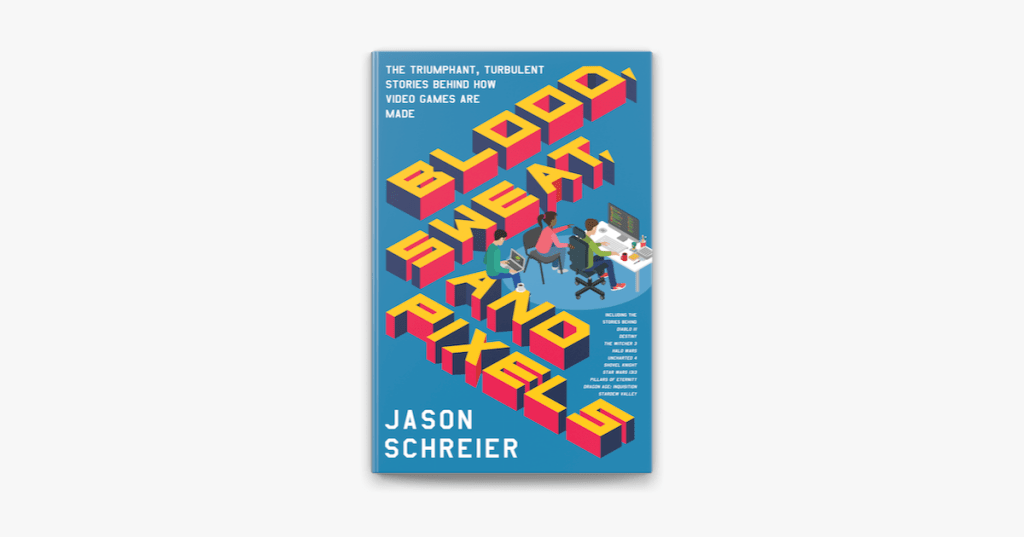
    • Blood, Sweat, and PixelsJason Schreier
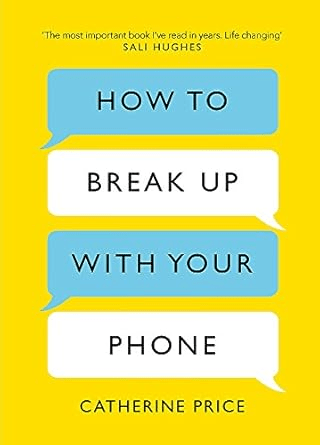
    • How to Break Up With Your PhoneCatherine Price
    • The Neuroscience of Dopamine DetoxDr. Anna Lembke / similar (note: confirm exact author)
    • The 5AM ClubRobin Sharma

    Mythology

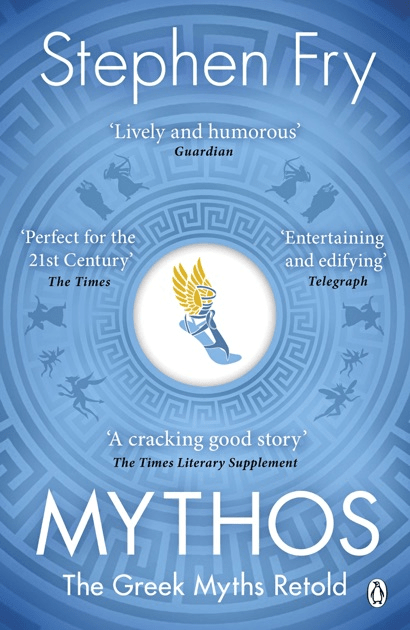
    • MythosStephen Fry

    What I Thought of Them – Highlights, Reflections & Surprises

    Starting the Year With Philosophy

    I began the year with Tao Te Ching by Lao Tzu — a book that’s mentioned constantly in discussions about wisdom, balance, and living a more grounded life. I’d seen it recommended so many times that I felt almost obligated to give it a try, especially as someone who’s been actively trying to improve their mindset and outlook on life.

    Tao Te Ching is a short book, but it demands slow reading. It’s poetic, full of metaphor, and often intentionally vague so that readers can find their own interpretations. I genuinely tried to take my time with it, but I found it challenging to connect with. The ideas about harmony, non-action, and the flow of life were interesting, but they didn’t land for me in the way I hoped.

    Still, reading it wasn’t a waste. Even though philosophy clearly isn’t my go-to genre, I’m glad I stepped outside my comfort zone to try something different. Sometimes the value in a book is simply realising more about what does and doesn’t resonate with you.

    My Halo Reading Marathon (And Why I Loved It)

    After finishing the Halo games with my partner over winter, I wanted more lore, more backstory, and more of the universe I’ve loved for years — so diving into the Halo novels felt like the perfect next step.

    If you’ve read my post “My Ultimate Top 10 Favourite Games of All Time” (https://lifeofj.com/2025/07/28/my-ultimate-top-10-favorite-games-of-all-time/), you’ll know the Halo series has a permanent place on that list. It’s a franchise that’s shaped so many of my gaming memories, so experiencing deeper stories and perspectives through the books has been incredible.

    And honestly? They’ve been some of the most enjoyable reads of the year.

    • Eric Nylund’s entries were the standouts, especially The Fall of Reach, which remains one of my favourites.
    • The Forerunner Saga by Greg Bear started slowly for me, but by the final book I was completely drawn in — it massively expanded my understanding of the Forerunners and the origins of the Halo universe.

    Revisiting My Childhood: The CHERUB Series

    During spring, I took a break from Halo and returned to a huge part of my reading childhood: the CHERUB series by Robert Muchamore.

    These books were the series that turned me into a reader when I was younger. I remember sitting in my bedroom for hours inhaling them — completely obsessed with the idea of kids being trained as undercover agents, going on missions, solving crimes, and doing things adults underestimated them for.

    Rereading them as an adult was incredibly nostalgic. They were just as fun, fast-paced, and easy to fall into as I remembered. It genuinely felt like reconnecting with an old friend.

    Back then, I also read Muchamore’s Henderson’s Boys series — the prequel set during World War II. I loved the shift in tone and era, taking CHERUB’s world and anchoring it in real wartime events. I never actually finished the whole Henderson’s Boys series as a teenager, so it’s something I’d really like to revisit at some point. There’s something fascinating about seeing the origins of CHERUB and how the organisation was imagined during the war.

    Coming back to these books in 2025 reminded me why they captured me in the first place.

    The Book That Re-Ignited My Reading Habit: How To Build A Car

    When I hit a reading slump mid-year, How To Build A Car by Adrian Newey completely pulled me out of it.

    As I’ve said before (including in my early blog post about my love for F1), motorsport has been a huge part of my life for over a decade. Adrian Newey is someone I’ve admired for years — he’s arguably the greatest Formula 1 designer of all time — so finally getting to read his autobiography felt special.

    What surprised me most was just how detailed and technical the book is.

    • The deep dives into aerodynamics were fascinating.
    • The hand-drawn diagrams showing airflow, downforce, components, and chassis geometry were incredible to look at.
    • I learned so much about how tiny design decisions can completely change a car’s performance.
    • I loved discovering how his brain works — the intuition, creativity, and problem-solving behind some of the most iconic cars ever built.

    But the part that hit me hardest was his candid retelling of Ayrton Senna’s accident.
    Newey explains the technical failure that led to the crash, how the team analysed the data afterwards, and the enormous guilt he carried — and still carries — decades later. Reading that section was genuinely emotional. It gave me a level of insight into the tragedy that I’d never had before, and a new respect for the human side of F1 engineering.

    This book wasn’t just interesting — it made me fall in love with reading all over again.

    Finding Joy Again — Literally

    Book cover of Joyful by Ingrid Fetell Lee featuring bright orange balloons on a white background.

    After that, I picked up Joyful by Ingrid Fetell Lee (full review here: https://lifeofj.com/2025/10/02/joyful-by-ingrid-fetell-lee-a-personal-reflection-and-review/).

    It genuinely changed how I view small pleasures, colour, design, and the spaces we live in. A surprising highlight.

    Holiday Reading in Greece

    As usual, I took a stack of books with me on holiday — and while I didn’t get through as many as I normally do, I still enjoyed a couple of great reads.

    If you want to see the photos, food, ancient ruins, and the biggest mojito of my life, you can read the full blog post here: https://lifeofj.com/2025/11/28/my-trip-to-greece-rhodes-athens-sun-ruins-food-and-the-biggest-mojito-of-my-life/

    Blood, Sweat, and Pixels — Jason Schreier

    This book had been on my wishlist for a while, and it absolutely delivered. It’s a brilliant peek behind the curtain of game development — everything from impossible deadlines to studio meltdowns, creative struggles, and miracle turnarounds.
    The chapters on Halo Wars and The Witcher were especially fascinating.

    I also discovered that Schreier has released a follow-up, which immediately went on my wishlist.

    Mythos — Stephen Fry

    Since I was literally in Greece, reading about Greek mythology felt like the perfect choice.

    Growing up on Percy Jackson, I’ve always loved the ancient Greek world, and Stephen Fry absolutely nails the retelling. It’s funny, clever, modern without losing authenticity, and an easy recommendation for anyone who loves mythology.

    A Shift in Mindset: Phones, Dopamine & Early Mornings

    Across the second half of the year, I noticed a big shift in how I think about time, distraction, and routine. I’ve become more aware of how much my phone pulls me out of the real world, and how easy it is to spend hours scrolling without really doing anything.

    These three books arrived at the perfect time.

    How to Break Up with Your Phone — Catherine Price

    This book is a mix of neuroscience, psychology, and practical strategies to form a healthier relationship with your phone.
    Some insights that stuck with me:

    • how apps intentionally exploit dopamine cycles
    • how notifications fragment attention
    • the importance of building “phone-free” pockets in the day
    • the value of mindful, intentional technology use

    I didn’t implement every strategy perfectly, but even the ones I tried genuinely helped.

    The Neuroscience of Dopamine Detox

    This book goes deeper into the mechanisms behind dopamine, craving, and reward. It’s not really about “detoxing” — it’s about understanding the neurological patterns that drive compulsive behaviour.
    It helped me understand why things like social media feel so addictive, and gave me a better awareness of when I’m using my phone intentionally vs. reflexively.

    The 5AM Club — Robin Sharma

    The 5AM Club by Robin Sharma was a book I’d had sitting in my Kindle library for ages, and I’m genuinely annoyed I didn’t read it sooner. Even though it’s written in a slightly unusual fictional style, the core ideas really resonated with me. Sharma focuses on how powerful the early hours of the morning can be for clarity, growth, and focus — before the rest of the world wakes up and distractions take over.

    The book’s 20/20/20 formula (20 minutes of movement, 20 minutes of reflection, 20 minutes of learning) felt surprisingly practical. On the mornings when I followed it, I started the day feeling more energised, calmer, and more intentional. It shifted the whole tone of my mornings, making them feel purposeful instead of rushed.

    I’m not perfect at waking up at 5AM every day, but even applying the principles a few times a week has made a noticeable difference. It’s a book I’ll probably revisit every year.

    Winter Reading: Returning to the Halo Universe

    As winter arrived and the nights got colder, my partner and I started talking about finishing Halo ODST and Halo Infinite together before Christmas. That immediately put me back in the mood for more Halo lore, so I picked up the next books in the lineup.

    Halo: Oblivion — Troy Denning

    This one dives deeper into the tension, mystery, and politics surrounding the early years of the Spartan-II program. I loved getting more insight into Chief’s younger years and the dynamics of Blue Team.

    Halo: Broken Circle — John Shirley

    Broken Circle was especially interesting because it takes a break from the usual UNSC perspective and instead focuses heavily on the Covenant’s own internal struggles. Seeing the Sangheili and San’Shyuum politics from the inside added a layer of depth to the universe that the games only ever hint at.

    Both books reminded me why the Halo universe remains one of my favourite sci-fi settings ever. After so many years (and books), there’s still always something new to learn.

    My Favourite Books of 2025

    If I had to pick a top four, they’d be:

    How to Build a Car – Adrian Newey
    Joyful – Ingrid Fetell Lee
    The 5AM Club – Robin Sharma
    Halo: The Fall of Reach – Eric Nylund

    My 2026 Reading Goal

    Next year is going to be extremely busy with work and studying, so I’m setting a more realistic target:

    12 books – one per month.

    Anything more is a bonus, and I’m hoping holidays will give me a chance to catch up.

    Books I’m especially excited to read in 2026:

    • The Art of Creative Thinking – Rod Judkins
    • How to Talk to Anyone About Anything – James W. Williams
    • Brief Answers to the Big Questions – Stephen Hawking
    • The Martian – Andy Weir

    What About You?

    Have you read any of the books I mentioned?
    What did you think of them?
    What were your favourite books of 2025 — and what are you planning to read next year?

    Drop your recommendations in the comments — I’d love to hear them.

  • My Trip to Greece: Rhodes & Athens – Sun, Ruins, Food, and the Biggest Mojito of My Life 

    My Trip to Greece: Rhodes & Athens – Sun, Ruins, Food, and the Biggest Mojito of My Life 

    After years of saying, “One day we’ll go,” we finally booked our dream trip to Greece — six and a half days in Rhodes, followed by four and a half days in Athens. I’d only been to Greece once before, on a chilled-out, all-inclusive holiday to Corfu about five years ago. That trip was all cocktails, sunbeds, warm seawater and eating until I physically couldn’t anymore. Bliss. 

    But this time, we wanted something different. 
    A mix of adventure and relaxation. 
    History and good food. 
    Pool days and mythological nerd-out moments. 

    Plus, I’d had “See the Acropolis” on my bucket list since I was 13. 

    Rhodes and Athens ended up being completely different experiences, but both left me genuinely obsessed with Greece. 

    Rhodes 

    Arriving in Rhodes & First Impressions 

    We landed early Tuesday morning into warm, slightly cloudy weather — basically perfect after leaving whatever British misery was happening at home. The drive from the airport was surprisingly short and ridiculously scenic, weaving through rugged hills, dry rocky patches, clusters of greenery, and that unmistakable “we’re somewhere properly Mediterranean now” landscape. 

    We stayed at the Kresten Royal Euphoria Resort, and honestly, the first thing that hit me was: this place is huge. Beautifully maintained pathways, everything freshly painted, not a scrap of litter anywhere. Very resort-y in the best way. 

    Our junior suite came with our own private pool overlooking the sea — an absolute slice of luxury. The room looked modern at first glance, but once we’d settled in, you could see it was a bit worn in places. Nothing tragic — just well-used, end-of-season vibes. The bathroom, though? Amazing. Two showers and a jacuzzi bathtub. Easily the best bathroom I’ve ever had in a hotel. 

    One thing we weren’t expecting — even though reviews mentioned it — was the smell. Being near a sewage plant meant a weird aroma hit you as soon as you walked outside. Not pleasant, but also… weirdly easy to get used to. After five minutes, you just stop noticing it completely. 

    A sunny view of one of the pools at a Rhodes resort, with straw parasols, sun loungers, and guests relaxing beside the water under a bright blue sky with scattered clouds.
    Relaxing by one of the three pools at our resort in Rhodes.

    The grounds, however, were gorgeous. Bright plants, colourful trees, spotless walkways… the sort of place where your shoulders immediately drop and you think, Yes. Holiday mode activated. 

    Pool Bars, Snacks & Settling Into Island Life 

    The moment we reached the pool bar, we realised this would be our little home base for the week. 
    The drinks? Free — amazing. 
    The taste? Chaotic. 

    Some were very strong. Some were syrup in disguise. The secret was adding water, which actually worked wonders. But the real magic wasn’t the drinks — it was the snack area

    They served food during the awkward “restaurant closed” gap, which was a lifesaver. We’re talking: 

    • Fresh crepes with loads of toppings 
    • A mountain of fruit 
    • Ice cream 
    • Gyros 
    • Burgers & chips 
    • And the BEST thing: koulouri with feta, tomato, and pepper 

    We loved that so much we’ve started making it at home. 

    We spent a good few hours that afternoon just relaxing — playing rummy, people-watching, sipping questionable cocktails, listening to background music that wasn’t too loud, and just… decompressing. Loads of sunbeds, friendly atmosphere, not too busy — perfect first-day vibes. 

    Dinner: A Genuine Highlight of the Entire Trip 

    A plate of buffet food at a Rhodes resort, featuring grilled meats, fresh vegetables, feta cheese, corn, and mixed hot dishes on a white tablecloth.
    A loaded plate from the buffet at our Rhodes resort.

    Let me not be dramatic here… but also, let me be dramatic. 
    This hotel’s buffet was unbelievable

    Fresh salads, great fish, tender meats, perfect pasta, desserts that tasted homemade — I went up for seconds (and sometimes thirds) every night purely because everything was so good. All-inclusive food is usually hit or miss. This? I would pay to eat here again. 

    The Resort Cats, Evening Entertainment & Our Little Beach 

    A light ginger cat sitting on a covered table at a Rhodes resort, looking toward the camera with big amber eyes.
    One of the friendly cats we met around our resort in Rhodes.

    As with pretty much everywhere in the Mediterranean, there were cats. 
    Many cats. 
    Friendly, happy, well-fed cats that had absolutely claimed the hotel as their kingdom. We adored them. 

    The resort’s private beach 

    Rhodes Resort Private Beach – Greece Holiday View
    The peaceful private beach at our Rhodes resort on a calm, sunny morning.

    The beach was small and shaded for a decent part of the day, so we didn’t spend much time there. But when we first went down to check it out, we spotted a lionfish floating near the rocks — such an unexpected and very cool moment. 

    /im

    Exploring Rhodes Old Town – My Favourite Part of the Island 

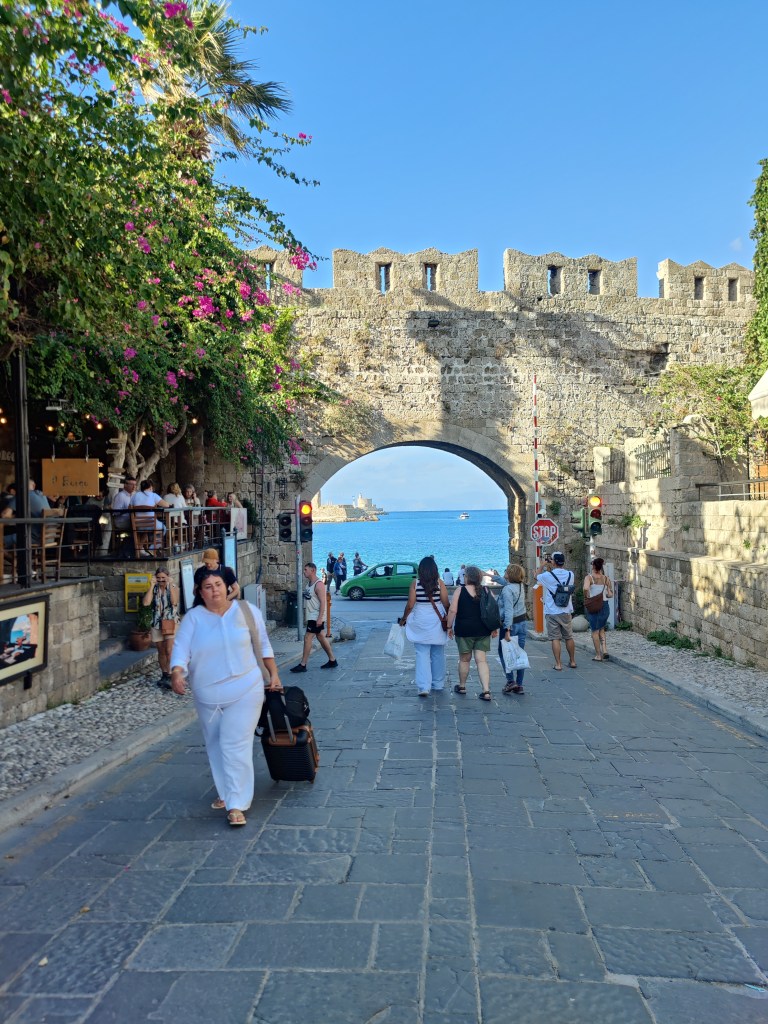
    On our first full day, we grabbed the €2.50 bus into Rhodes Old Town — and I was not ready for how stunning it was. 

    Walking along the seafront was beautiful: a warm breeze, lively restaurants, the smell of grilled seafood mixing with salty air. Then we walked through St Paul’s Gate… and it felt like stepping back in time. 

    The Medieval City of Rhodes completely blew me away. 
    Stone streets twisting in every direction, dramatic walls, flowers spilling over balconies, and a maze of tiny shops selling: 

    • Statues of gods 
    • Mythological ornaments 
    • Jewellery 
    • Ceramics 
    • Tourist souvenirs (of course) 

    It was busy but not in an overwhelming way — lively, colourful, and ridiculously easy to get lost in. My Percy Jackson–obsessed younger self was living their best life. 

    Cocktail Recommendations 

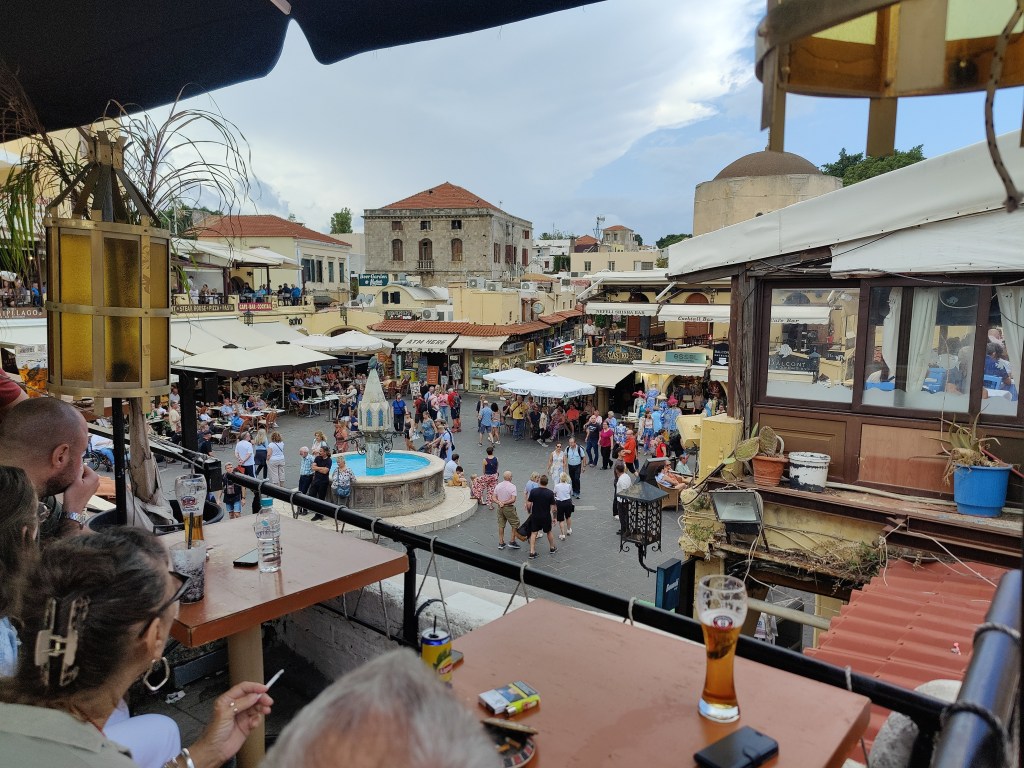
    Chevalier Shisha & Cocktail Lounge Bar 
    Tucked in Hippocrates Square. Mojitos are unreal. 
    But do not order the large mojito unless you want to suffer

    Balcony 961 
    Tiny balcony, only about 14 seats. 
    The owner is incredibly friendly, chatty, and keeps giving out free drinks. 
    A top-tier people-watching spot. 

    After wandering the streets, we got caught in the most incredible lightning storm — but from a distance. From our hotel balcony later that night, we watched constant flashes illuminating the sky above the sea. It was honestly one of the most beautiful things I’ve ever seen. Cocktails + thunderstorms = perfection. 

    We loved Old Town so much we went back later in the week — which resulted in us (slightly tipsy) browsing an art gallery and buying a piece to take home. No regrets. 

    Lindos – Climbing Up to Ancient Beauty 

    On our second full day, we headed to Lindos, and wow — what a place. 

    Whitewashed buildings packed tightly together, narrow little lanes, rooftop restaurants with insane views, shops full of souvenirs… it felt like walking through a postcard. 

    We grabbed frozen strawberry daiquiris and some amazing Greek bruschetta before making our way up to the Acropolis of Lindos

    The climb is steep, but manageable. 
    If you prefer, you can take a donkey (some people do it for novelty rather than necessity), but we walked. 

    The views the whole way up are incredible — sparkling sea, white buildings, cliffs, everything. 

    And then the Acropolis itself… breathtaking. 

    Ancient columns, temple remains, pathways worn down by thousands of years of footsteps. Seeing Greek inscriptions still carved so clearly into stone honestly blew my mind. 

    It’s absolutely worth visiting Lindos for this alone. 

    Only thing I regret? Not doing one of the glass-bottom boat tours. Next time! 

    Rhodes Summary 

    Rhodes was everything I hoped it would be — warm, beautiful, friendly, full of history and charm. 
    I’d go back in a heartbeat (maybe in slightly warmer weather). 
    Old Town was my favourite, but every day had its own special moment. 

    Athens

    Hotel & First Impressions 

    A rooftop balcony view in Athens overlooking city buildings and the Acropolis hill with the Parthenon visible under a clear blue sky.
    The incredible view of the Acropolis and Parthenon from our hotel balcony in Athens.

    After a lovely, relaxing few days in Rhodes, we flew to Athens for the more “tourist mode” portion of the trip — museums, tours, ruins, food, all of it. 

    We stayed at Athens21, right near Monastiraki Square, and our room had a balcony view of the Acropolis. At night, with everything lit up… absolutely unbelievable. 

    The staff were great, the apartment was cosy but stylish, and the location was perfect. 

    Our first evening, we wandered to the Roman Agora before stopping at Taverna Akropoli for dinner. If you go, get the halloumi with raspberry jam. Trust me. 

    Seeing Athens by Segway (Yes, It’s Brilliant) 

    We always do a Segway tour when we visit a new city — it’s fun, fast, and gives you your bearings instantly. 

    We booked with Athens City Segway Tours and lucked out: we were the only people on our time slot, so it became a private tour. 

    Our guide was amazing — friendly, super knowledgeable, and full of recommendations for food and views. 

    We visited: 

    • Pnyx 
    • Ancient Agora 
    • Roman Agora 
    • Herod Atticus Odeon 
    • Kerameikos Cemetery 
    • Areopagus (Mars Hill) 

    It was a perfect introduction to Athens. 

    Afterwards, we stopped at Makrigianni 3, next to the Acropolis Museum, where I had the best mojito of my entire life, plus saganaki and roasted peppers with feta. Unreal. 

    The Acropolis Museum 

    This museum is incredible — not just for what’s inside it, but how it’s designed. 

    The top floor aligns perfectly with the Parthenon, displaying the original frieze in the same orientation it would’ve had on the temple. It’s such a clever, respectful layout, and it makes the whole experience feel special. 

    We spent hours looking at sculptures, artefacts, pottery — everything. Fascinating history everywhere you turn. 

    After leaving, we detoured to Little Kook, a famous fairy-tale-themed street. It’s chaotic, colourful, over-the-top, and very Instagrammable.

    Mythology Tour & Finally Seeing the Acropolis 

    This was the big day — the thing I’d wanted since I was 13. 

    We joined the Athens & Acropolis Highlights Mythology Tour with Alternative Athens and visited: 

    • Hadrian’s Arch 
    • Temple of Olympian Zeus 
    • Acropolis 
    • Theatre of Dionysus 
    • Temple of Athena Nike 
    • Erechtheion 
    • Parthenon 
    • Ancient Agora 
    • Temple of Hephaestus 

    Walking up the marble steps to the Acropolis felt surreal. 
    Seeing the Parthenon? I couldn’t stop grinning. It’s so much bigger, brighter, and more impressive than photos can ever show. 

    We also stopped at the Hill of Mars (Areopagus) — a rocky outcrop with great views and its own mythological history. 

    By the end of the tour, we were exhausted… but very, very happy. 

    Athens Food Tour – A Day of Eating Everything 

    On our final full day, we joined an Athens food tour, and it was amazing. We tried: 

    • Fresh, warm koulouri 
    • Custard-filled bougatza 
    • Traditional Greek coffee 
    • Local cheeses and cured meats 
    • Mezze plates 
    • Real Greek yogurt with honey 

    The yogurt was life-changing. 
    So much so that we’ve now changed the brand we buy at home. 

    We ended the day at a cosy wine bar recommended by our guide, drinking white wine with cheese and fig jam — the perfect finish to our Athens adventure. 

    Final Thoughts: Greece, We Love You 

    Some holidays end and you’re ready to go home. 
    This was not one of those holidays. 

    I didn’t want to leave. 

    Rhodes and Athens were completely different but equally incredible — beaches and medieval walls on one side, ancient temples and unbelievable food on the other. 

    If you’re thinking of visiting Greece, go. 
    Whether you’re into sunsets or ruins, cocktails or mythology, relaxing or exploring… there is something magical waiting for you. 

  • Reflecting on My Shifting Relationship with Social Media

    Reflecting on My Shifting Relationship with Social Media

    Social media has been a constant presence throughout my life. I was part of the generation that grew up both with and without it — old enough to remember life before Facebook, but young enough to get swept up in the excitement of its rise. Over the years I’ve used platforms like Facebook, Instagram, Snapchat, Reddit, and YouTube, and my feelings towards them have shifted dramatically. 

    What once felt exciting, fresh, and fun now feels complicated. Social media can still be useful — for staying in touch, sharing memories, or learning something new — but it also comes with its fair share of downsides: endless ads, negativity, comparison culture, and the addictive pull to keep scrolling. 

    In this post, I want to reflect honestly on my relationship with social media — the good, the bad, and why I’ve found myself using it less and less as the years go by. 

    Growing Up With (and Without) Social Media 

    I feel lucky to have grown up in a generation that experienced both life with and without social media. I was aware of platforms like MySpace and MSN Messenger, though I didn’t really use them myself. MSN in particular was huge among my friends at school — everyone seemed to rush home just to carry on conversations there. I never joined in, but I remember watching how central it was to their social lives. 

    My parents didn’t let me join social media until I was 13, when I was finally allowed to create a Facebook account. At the time I hated being left out, but looking back, I understand why they made me wait. Facebook in those days was a completely different beast. It felt fresh, exciting, and almost like a game — whoever had the most friends was the most popular. 

    I wasn’t exactly a social butterfly, so my own use of Facebook was fairly modest. I mostly logged in to play games like Social Empires and Social Wars, or to chat with close friends (and occasionally try my luck talking to a girl). The time I spent online was short and sweet, usually 15–20 minutes of chatting in broken abbreviations like “wuu2”, all squeezed into a narrow window on the family computer. Smartphones weren’t around yet — we just had brick-like mobiles for calls, texts, and tinny MP3s beamed across by Bluetooth. In hindsight, I’m actually a bit envious of that simplicity. 

    From there, I started experimenting with other platforms. One I remember dabbling in was Kik, after friends convinced me to join group chats with people I’d never actually met. It didn’t stick, but it was my first taste of how social media could connect you beyond your immediate circle. Things only really took off for me once Instagram and Snapchat launched, though. For the first time, social media wasn’t just about chatting or games — it was about sharing moments, photos, and stories, and being plugged into what everyone else was doing in real time. 

    The Positives 

    Social media has definitely had its benefits. One of the best things about it is how easy it makes it to stay connected. I can keep in touch with friends and family all over the world, something that would have been far harder without it. Back in the early days, it felt incredible to be able to message someone instantly, no matter where they were. 

    It’s also been a great way to keep up with interests and hobbies. Whether it’s technology, LEGO, Formula 1, or gaming, I can get the latest news in seconds. I don’t have to wait for magazines or television coverage — I can open an app and find whole communities discussing the things I care about. 

    Another strength of social media is how it gives a platform to small businesses and creative people. Artists, writers, and even bloggers like me can share their work with audiences they’d never reach otherwise. It’s a powerful tool for self-promotion and for discovering voices you’d never come across in day-to-day life. 

    I also really like how it helps with sharing memories. Facebook’s reminders for photos from years ago always make me smile, and often bring back moments I’d completely forgotten. Without those prompts, a lot of those pictures would probably just sit buried in my cloud storage, never to be looked at again. 

    On the learning side, I think social media has been transformative. YouTube and Reddit have become daily tools for me — not just for entertainment, but for solving technical problems at work, learning new skills, and even just winding down with a video in the evening. In many ways, YouTube has become as much of a streaming service as Netflix or Disney+, and I think it’s one of the most valuable platforms out there. 

    At its best, social media can be a tailored source of news, education, entertainment, and connection. In moderation, it really does have the ability to add value to everyday life. 

    The Negatives 

    As much as social media has positives, it also comes with a long list of downsides — and the older I get, the more I feel like these now outweigh the benefits. 

    One of the biggest problems is how platforms are increasingly dominated by ads, algorithms, and artificial content. Instead of seeing posts from friends and family, I often have to scroll through several adverts or “suggested” posts before finding something I actually want to see. The algorithm might be clever at spotting habits and serving content that keeps me hooked, but it’s not about what I value — it’s about keeping me on the platform as long as possible. 

    That leads into the next issue: addiction and wasted time. I find myself using it intentionally much less, and more out of boredom — the classic “I’ve not got anything going on right now so I’m going to have a quick scroll.” The problem is that a quick scroll often turns into “Oh God, I’ve wasted 45 minutes and now I’m late for work.” It’s shocking how easy it is to lose time without realising, and it leaves me feeling drained rather than entertained. 

    Then there’s the problem of negativity and misinformation. With the rise of AI and content farms, it’s harder than ever to know what’s real and what isn’t. Platforms are flooded with clickbait, outrage, and fake news. Extreme opinions spread quickly, while balanced discussion often gets buried. Add to that the toxic side of anonymity — fake accounts, bullying, and impersonation — and it’s easy to see how damaging it can become. 

    Another issue is comparison culture. Social media lets people carefully curate their lives, showing only the highlights — the cars, the holidays, the successes — while hiding the struggles and everyday realities. For younger users especially, it creates unrealistic expectations of what “normal” looks like and fuels feelings of inadequacy. It’s no surprise self-esteem issues are so common when kids are growing up constantly measuring themselves against influencers or even peers who seem to have it all. 

    And finally, I have mixed feelings about TikTok. On one hand, I know it can be a useful platform for creativity, quick learning, and entertainment. On the other, its reputation for highly addictive short-form content and privacy concerns makes me wary. I’ve avoided using it myself, partly because I know how easily it could eat away at my time without giving me much value in return.

    How It Makes Me Feel Today 

    As an adult, I’d describe my relationship with social media as very mixed. The older I get, the more I realise it isn’t what it once was, and in many ways it feels more harmful than good. 

    These days, I use social media less intentionally and more out of habit. I’ll often open Facebook or Reddit when I’m bored, with no real reason other than “I’ve got a spare moment.” A quick scroll often turns into wasted time, and I come away feeling like I’ve achieved nothing. Reddit at least gives me a sense of purpose — I might go there to check F1 news, troubleshoot a tech issue, or explore a hobby community. Facebook, by contrast, feels like noise: ad after ad, suggested posts, and then maybe a glimpse of something from family or friends. It doesn’t add much value to my life anymore, and I often regret using it. 

    Over the years I’ve slowly cut back. I deleted Snapchat and Instagram and don’t miss them at all. WhatsApp doesn’t feel like “social media” to me — it’s just replaced SMS and calling as my main way of keeping in touch. YouTube is in a different category too: I treat it more like Netflix or Disney+, a mix of entertainment and learning, rather than a feed to scroll. In fact, I’d say YouTube has become one of the most useful tools I use daily, both at work and at home. 

    The biggest frustration is the habitual pull. I catch myself checking my phone when I don’t even need to, almost on autopilot. That itch is hard to ignore, and I know it comes from years of using platforms designed to train attention spans around notifications, short clips, and constant stimulation. It doesn’t feel intentional anymore — it feels like a reflex. 

    I’ve even tried ways to break the habit. I installed a minimalist phone app that removes colourful icons and forces me to type out app names instead of just tapping them. I’ve also set my phone to switch into black-and-white mode after 8pm, which makes apps far less visually appealing. These changes sound small, but they make a difference. It’s harder to scroll mindlessly when the apps look bland and you have to consciously go looking for them. 

    Part of the problem is how locked in social media has become. A lot of apps come preinstalled on phones now and can’t be removed, and deleting accounts isn’t straightforward. Many services use Facebook login as a shortcut, which makes it even harder to cut ties completely. That interconnectedness feels suffocating sometimes — like you can’t fully step away without losing access to other things. 

    Ideally, I’d like to get rid of Facebook entirely and just keep Messenger for the few people I still use it with. But for now, I still feel tied to it, even though I know it doesn’t really benefit me. Most of the time, it feels more like a bad habit than something I enjoy. 

    The Bigger Picture 

    Looking beyond my own use, I worry about the wider impact social media is having on society. 

    The most obvious issue is addiction culture. Platforms are designed to retain attention at all costs, and for many people — myself included — using them has become more of a reflex than a choice. If you swapped “social media” for “drugs” and described the same impulsive behaviours, alarm bells would be ringing everywhere. The difference is that social media is accessible, free, and normalised, which makes the problem harder to see. 

    I also think a lot about younger generations. We joke about “iPad kids,” but it’s no longer funny when you see it happening everywhere. I notice it all the time when I’m out and about — kids in buggies glued to iPads instead of just watching the world go by, or children in restaurants pestering their parents until they hand over a tablet. When I was younger, I’d happily spend time at Pizza Hut drawing on the paper menus or reading while waiting for food — but now it seems that sort of thing has almost disappeared. Screens have taken over. 

    This has shifted the way we communicate too. With autocorrect and predictive text doing so much of the work, grammar and spelling skills have suffered. Eye contact, body language, and other vital social skills risk being lost when most conversations happen through a screen. I know I’ve become lazier with writing over the years — it’s something I can see in myself. 

    Then there are the privacy concerns. People often forget that platforms aren’t really free — we pay with our data. Social media doesn’t just track what we post; it logs our habits, what we click, how long we look at something, even where we are when we use the app. That information is sold on to advertisers, and while it makes for effective marketing, it comes at the cost of personal privacy. 

    Another problem is comparison culture and curated reality. People present polished versions of their lives online — the cars, the trips, the “perfect” lifestyles — while hiding the everyday struggles. This creates unrealistic expectations, particularly for young people, and it fuels insecurity when their own lives don’t measure up. It also amplifies extremes: feeds are often filled with either intense positivity or outright negativity, rarely the ordinary middle ground. 

    Finally, there’s the issue of constant accessibility. With smartphones and social media, people expect instant responses. Decades ago, you might send a letter and wait days or weeks for a reply. Now, if you don’t answer a message within hours, people assume you’re ignoring them. That expectation creates pressure to always be available — fuelling the cycle of constant checking and feeding into the addiction. 

    Final Reflections 

    When I step back and look at my own relationship with social media, I can’t say it brings me much value anymore. Facebook, in particular, feels more like a bad habit than something I enjoy. It used to be exciting — logging on after school to chat with friends or play a quick game — but now it’s a feed of ads, suggested content, and distractions I didn’t ask for. More often than not, I come away feeling like I’ve wasted my time. 

    That’s why I’ve gradually been cutting back. I’ve deleted Snapchat and Instagram, and I see Facebook as the next one to go. If I could keep Messenger and drop the main app, I probably would. Reddit and YouTube still feel useful, but in different ways — Reddit gives me communities and answers, YouTube feels like a streaming service as much as anything else. WhatsApp I see as separate altogether, just a replacement for texts and calls. 

    The more I reflect on it, the more I believe social media in its current form does more harm than good. The positives are still there — memories, connections, learning — but they’re buried under algorithms, ads, comparison culture, and addictive design. I don’t think we can escape it completely, but I do think it’s worth being intentional about how and why we use it. 

    For me, that means continuing to scale back, using it with purpose rather than out of habit, and carving out space where social media doesn’t intrude. I’m much happier in that smaller, simpler bubble — and I think that’s where I’ll keep heading. 

    💭 What about you? How do you feel about social media these days — is it still a positive in your life, or do you find yourself wanting to step back like I do? 

  • Life Lessons I Want to Teach My Kids (That I Wish I’d Learned Sooner)

    Life Lessons I Want to Teach My Kids (That I Wish I’d Learned Sooner)

    We all hit moments when we think, “Blimey, I wish I’d learned this sooner.” That’s part of growing up—collecting lessons as we go. But some lessons feel so foundational that I’m writing them down now to make sure I teach my kids (if and when I have them). Think of this as a living list of life lessons I wish I’d picked up earlier—about money, careers, learning, habits, manners, health, family, reading, and simply becoming more resilient.

    None of this is rocket science, and some of it won’t surprise you. But timing matters. The right idea, heard early enough, can change the way you move through the world. I’m sharing what’s actually helped me—simple, honest, UK‑leaning advice learned the long way round—in case it helps another parent, future parent, or anyone passing on practical wisdom.

    1. Finances: Saving – LISA, pensions, emergency funds
    2. Career: pick a direction, build proof, stay adaptable
    3. Studying: make learning small, daily, and social
    4. Habits: discipline, systems, and 1% gains
    5. Manners: small courtesies, big impact
    6. Exercise: move your body, protect your mind
    7. Family & socialising: show up in real life
    8. Reading: fiction, non‑fiction, and winding down well
    9. DIY skills: confidence through doing
    10. Final thoughts: a living list, not a rulebook

    Finances: Saving – LISA, pensions, emergency funds

    Savings jars with pound coins on a wooden desk beside a budget notebook, calculator and calendar — UK personal finance planning.
    Savings jars for an emergency fund, LISA and pension — keep money simple and planned.

    I learned most of my money lessons the hard way. I wish someone had sat me down earlier and explained the basics: why we save, how to budget, and what smart saving does for future you. Teaching kids about money isn’t “don’t spend too much”—it’s “use money to buy freedom, reduce stress, and open choices.”

    Start with goals (the why) It’s easier to save when you’re aiming at something. Set short, medium and long‑term targets: a console or trip (months), a car or moving out (1–5 years), and a first‑home deposit or financial cushion (5+ years). Once the goal is clear, the plan writes itself.

    Where to put savings There are loads of accounts, but a few do most of the work: a high‑interest easy‑access savings account (great for emergencies and near‑term goals), fixed‑rate bonds (better rates if you can lock money for 1–3 years), and for first‑timers a Lifetime ISA (LISA).

    LISA explained (UK) You can contribute up to £4,000 a year and the government adds 25% (up to £1,000), within your overall ISA allowance. Use it for a first home (up to £450k) after 12 months or keep it for retirement. Example: £4,000 a year for 10 years = £50,000 before interest (£40k you + £10k bonus). Not everyone can max it, but knowing what’s possible helps you plan. Rules change—always check current UK guidance.

    Pensions and compounding (your future’s best friend) Compound interest is interest earning on interest. £1,000 at 5% becomes £1,050 in year one; in year two you earn 5% on £1,050, and so on. Starting earlier gives your money longer to grow, so the same monthly amount from 18 vs 25 can mean a much larger pot by retirement. In the UK, workplace pensions help: auto‑enrolment, tax relief (salary sacrifice can also reduce National Insurance), and often an employer match—free money that compounds. As a rule of thumb, aim for 12–15% combined (you + employer) across your career if you can.

    Emergency fund (rainy‑day buffer) Keep 1–3 months of essential outgoings in a high‑interest easy‑access account, then build to 3–6 months. The interest is a bonus; the real win is avoiding high‑cost debt when life happens.

    Spending within your means (in a social media world) Ignore other people’s highlight reels. Automate savings on payday, pay credit cards in full, treat BNPL as debt, and bump your saving rate when your income rises. The essentials for me: know why you’re saving, pick the right accounts (LISA, pension, high‑interest savings), and let time and compound growth do the heavy lifting.

    Simple starter plan

    • Pick one short, one medium and one long‑term goal.
    • Open a high‑interest easy‑access account (emergency + near‑term).
    • If eligible, open a LISA and set a monthly amount you can stick to.
    • Join the workplace pension and contribute at least enough to get the full employer match; increase a notch with each pay rise.
    • Review every 3–6 months. Automate where possible.

    Quick FAQ (SEO‑friendly)

    • Is a LISA worth it in the UK? Often yes for first‑time buyers because of the 25% bonus, but check fees, eligibility, and current rules.
    • How much should I keep in an emergency fund? Start with 1–3 months of essentials; build towards 3–6 months as you can.
    • What’s the minimum I should put in a pension? At least enough to get your employer’s full match; aim for 12–15% combined over time if affordable.

    Note: This is general info, not financial advice. UK rules and rates change—double‑check current guidance before acting.

    Career: pick a direction, build proof, stay adaptable

    Laptop, CV pages, notebook and calendar on a tidy wooden desk — UK career‑planning workspace.
    Plan your next step: choose a direction, build proof and prep for interviews

    Choose a direction, then build towards it. This one’s easy to say and harder to do, but picking a direction sooner really helps—you get more time to progress and it keeps you focused. You don’t need a perfect plan or a fixed job title; start with a rough idea of where you want to end up and break it into steps. Run small experiments—taster courses, shadow days, volunteering, side projects—to see what sticks. Direction → skills → proof → people.

    Turn that into a simple plan: a three‑year target role you’d like to be capable of, a few skills or certifications to tackle this year, and monthly actions that actually move the needle (ship one project, learn one skill block, speak to one person doing the job you want). Get real‑world reps early—part‑time work, internships, work experience, freelancing, or UK routes like apprenticeships, degree apprenticeships and NVQs. University is great for some paths, but it’s not the only one.

    Make yourself easy to find with a clean, results‑focused CV, a useful LinkedIn headline and a small portfolio that proves what you can do—outcomes beat buzzwords every time. Learn to interview with clear stories (what you did and the result), ask for feedback, find a mentor if you can, and don’t be shy about negotiating once you’ve checked salary bands. Most importantly, don’t treat your first choice like a life sentence—if the path isn’t what you expected, pivot and update the plan. Small, consistent steps compound into opportunities.

    Studying: make learning small, daily, and social

    Open notebook, stack of flashcards, wireless headphones and phone with audio waveform beside a 20‑minute timer and mug of tea on a tidy desk — studying setup
    Small, daily learning—20‑minute sessions, notes and active recall.

    When I say “studying,” I mean always learning. Curiosity keeps your mind sharp, your life interesting, and your confidence growing. It doesn’t have to look like school—follow what you enjoy and add small blocks of knowledge over time. You don’t need to master everything; learning a little about a lot makes you more rounded, and depth can come later.

    The easiest way to build a learning habit is to keep it tiny and daily. Ten to twenty minutes is enough, especially if you use dead time well—a podcast on a walk, an audiobook while cooking, a short video on the commute. Keep a simple “curiosity list” in your notes app and pick one thing a day to explore. I like the 1–1–1 idea: learn one thing, write one sentence about it, share it with one person. Tiny wins stack fast.

    Mix “useful” with “fun” so you stay engaged. Practical life skills (a few great meals, basic first aid, bike or car maintenance, simple home repairs) pay off forever. Money basics (budgeting, compound interest, pensions, investing) reduce future stress. Digital skills (spreadsheets, coding basics via freeCodeCamp, design tools like Canva or Figma) are handy in almost any job. Balance that with creativity (photography, drawing, music production, writing), a few phrases of a new language each week, and wellbeing—sleep, habits, mindfulness, strength training. There are loads of free UK‑friendly resources: FutureLearn, OpenLearn, Coursera and edX for courses, and Libby for free library ebooks and audiobooks.

    Learn smarter, not harder. Instead of re‑reading, test yourself from memory and summarise what you learned—active recall beats passive review. Revisit key ideas over days and weeks (spaced repetition apps like Anki help). Teach someone else or post a short explanation; teaching exposes gaps and cements understanding. Build small projects so learning turns into something real—a budget template, a short video, a simple app, a photo series. Focus on just‑in‑time learning tied to a project; it’s easier to stay motivated when you need the skill right now.

    Make it social because learning compounds with people. Join a club or community—a book or podcast club, coding group, maker space, sports team, or local class—and ask good questions. Volunteer to learn new skills while meeting people you wouldn’t otherwise meet. For kids and teens in the UK, great options include libraries, Duke of Edinburgh, Scouts/Guides, school clubs, hackathons, youth theatre and local workshops. Aim for T‑shaped growth: broad across many areas so you’re adaptable, with one or two deeper spikes that make you especially valuable.

    Don’t over‑engineer the tools. Notion or Obsidian for light notes, Pocket or Instapaper to save articles, Libby for audiobooks on the go. Start small, keep it daily, and let the habit do the heavy lifting. Continuous learning builds confidence, creates opportunities, strengthens connections, and makes you more resilient when life changes.

    Habits: discipline, systems, and 1% gains

    Open notebook, stack of flashcards, wireless headphones and phone with audio waveform beside a 20‑minute timer and mug of tea on a tidy desk — studying setup.
    Small, daily learning—20‑minute sessions, notes and active recall.

    This is something we could all do better at, and teaching it early pays dividends for decades. One of my favourite books on the topic is James Clear’s Atomic Habits—the idea that small actions compound really stuck with me. You don’t need superhuman willpower; discipline is mostly about systems and environment. Aim to be a little bit better most days; those tiny gains add up. (If you did 1% better every single day for a year, the maths works out to roughly 37x—numbers aside, the point is that small wins compound.)

    The basics that work for me are simple. Stack a new habit onto an existing one: after X, I do Y. Make good habits obvious and easy (gym kit by the door, book on your pillow) and bad habits a touch harder (phone in another room during study, junk apps off the home screen). Use the two‑minute rule to make starting friction‑free: read one page, do one push‑up, open the notes doc. Track your streaks lightly (a calendar tick or notes app), use “never miss twice” when you slip, and do a quick weekly reset to line up the next seven days.

    Keep examples boringly practical. Do the housework or homework before gaming. Pack your bag the night before. Put an automatic transfer to savings on payday. Set app limits if you need them. For kids and teens, link chores to pocket money, read a few pages after dinner, or spend 10 minutes tidying before TV. For adults, try a 10‑minute walk after logging off, stretch while the kettle boils, or run one load of laundry after your morning coffee. Remove friction for the right things (healthy snacks visible, guitar on a stand) and add friction for the wrong ones (website blockers in the evening, sweets out of sight). Over time, tiny actions done consistently build confidence and momentum—discipline is just the habit of making those small, smart choices on repeat.

    Manners: small courtesies, big impact

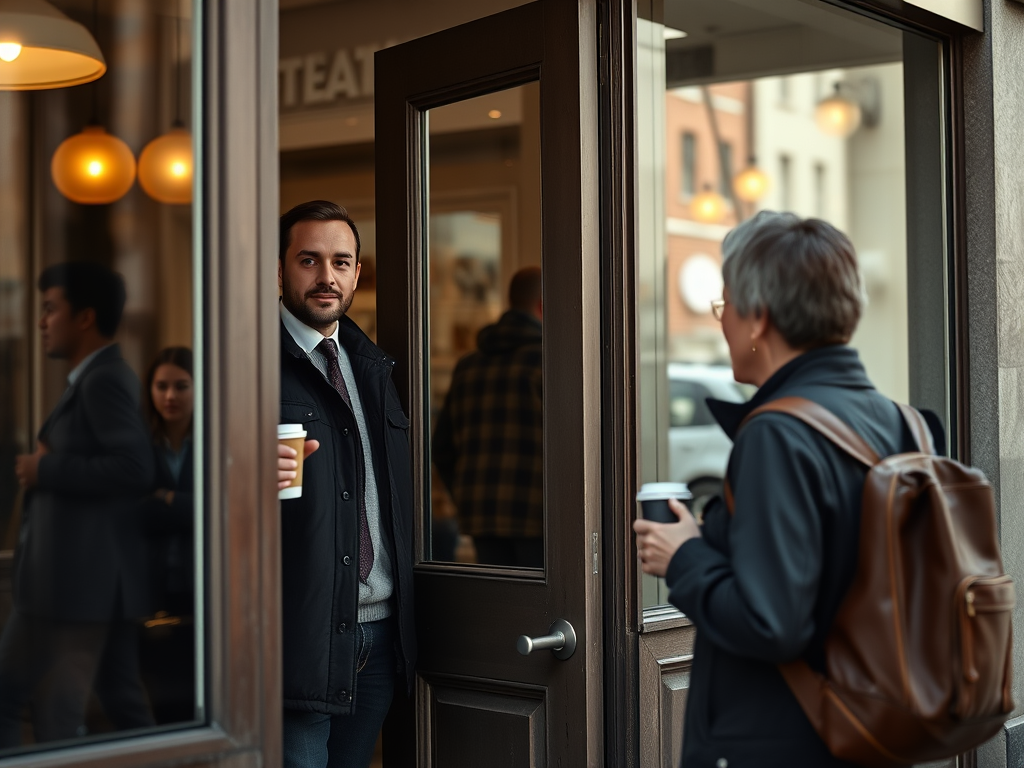
    Person holding a shop door open for someone entering — simple act of good manners on a UK high street.
    Small courtesies matter — please, thank you, hold the door.

    It might sound old‑fashioned, but I genuinely think manners have slipped over the last decade. There’s a noticeable lack of basic courtesy and respect, and it shows up in little moments—the “please,” “thank you,” “excuse me,” or a simple smile. Those tiny gestures matter. People treat you with more respect when you’re polite, and that goes a long way—especially with first impressions. Manners aren’t about being posh; they’re about showing you see the person in front of you.

    The basics are simple and powerful: say please and thank you, hold doors, make eye contact, and be on time. In the UK, respect a queue and let people off the train before you get on. Lower your voice on public transport, offer your seat if someone needs it, and put your phone away when someone’s speaking. Learn and use people’s names. After someone helps you, send a quick thank‑you message or note—it’s tiny effort for a big impact. And when you mess up, apologise properly: “I’m sorry I [did X]. I can see that [impact]. Next time I’ll [do Y].” No excuses, no deflection.

    Online manners count too. Start messages with a greeting, don’t fire off one‑word replies, and avoid ALL CAPS or sarcasm that won’t translate. Be generous with clarity—use paragraphs, not walls of text. Don’t ghost people; if you can’t do something, reply with a polite “no” and a quick reason. Before you hit send, read it like a stranger would.

    Teach kids by modelling it in everyday life: eye contact, a friendly hello to shop staff, a proper thank‑you, holding the door, offering help when someone’s juggling bags. For teens, practise email intros, respectful disagreement, and follow‑ups after work experience or interviews. These little habits cost nothing but compound into trust, opportunities, and kinder interactions.

    Exercise: move your body, protect your mind

    People jogging and brisk‑walking on a tree‑lined path at sunrise in a UK park — everyday exercise for physical and mental health.
    Aim for 150 minutes a week plus two short strength sessions — consistency beats intensity.

    You only get one body, so look after it. That doesn’t mean living in the gym—it means building simple, sustainable habits that keep you healthy. Start early and make it part of your routine; moving your body regularly lifts your mood, reduces stress, boosts energy and focus, and does wonders for mental health. And you don’t need a gym: pick active things you actually enjoy—football, dance, swimming, cycling, hiking, climbing, a brisk walk with a podcast, or Parkrun with a friend. Walking absolutely counts.

    As a rough guide, aim for around 150 minutes of moderate activity a week (that’s 20–30 minutes most days) plus a couple of short strength sessions—bodyweight is fine. Consistency beats intensity. Keep it social if that helps—join a class, a five‑a‑side team, or a walking group—getting out of the house and being around people makes it easier to stick with. UK‑friendly starters: NHS Couch to 5K, Parkrun on Saturday mornings, beginner yoga/Pilates at your local leisure centre, or a home routine with a resistance band.

    Make it easy to start. Lay out your trainers the night before, put sessions in your calendar, go with a buddy, and use a “just 10 minutes” rule on low‑motivation days—once you’re moving, you’ll often do more. Anchor it with simple, healthy basics: decent sleep, plenty of water, mostly whole foods, a bit of stretching, and some daylight each day. You don’t have to be perfect; you just have to keep showing up. Your future self will thank you.

    Family & socialising: show up in real life

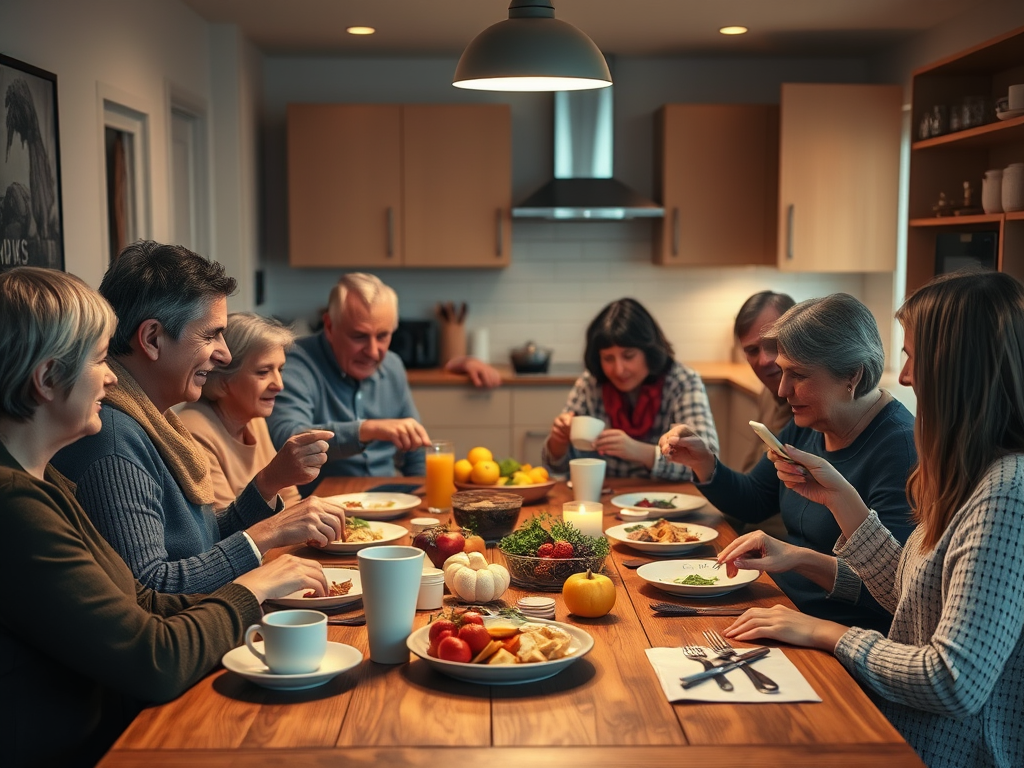
    Family and friends sharing a phone‑free dinner at a kitchen table — real‑life connection and conversation.
    Show up in real life — shared meals, conversation and small rituals.

    Socialising might come naturally to some, but in an age of constant scrolling and DMs, we have to make a deliberate effort to show up in real life. I’m always happier after a coffee with a friend than an hour of doomscrolling. Face‑to‑face time teaches things you can’t learn on a screen—reading body language, timing a joke, handling awkward pauses, resolving disagreements, building empathy. It boosts confidence too. Being able to hold a conversation, listen well, and maintain steady eye contact are real‑world skills that shape first impressions and long‑term relationships. Family is your first team: the people who celebrate you, challenge you, and have your back.

    Make it part of the routine with small, repeatable rituals. Shared meals without phones. A Sunday walk. Movie night. Phoning grandparents. Showing up to each other’s events. Say yes to things that put you around people: join a club or local class, volunteer, go to community events, invite friends round for a simple dinner. Keep tech in its place with gentle boundaries like no phones at the table or a nightly downtime window. Small acts keep connections alive—send a quick “thinking of you,” drop off soup, remember birthdays.

    Give kids and teens social reps. Let them order their own food, pay at the till, answer the door politely, and chat with adults as well as peers. Practise a friendly hello, eye contact, and a few conversation starters (“What’s been the best part of your day?” is a good one). If conflict happens, model how to apologise properly and repair the relationship. Encourage them to host—game nights, study sessions—because creating spaces for people builds confidence and community.

    If you’re rebuilding your social muscle as an adult, start low‑pressure. Walk‑and‑talks, a class where you’re doing something with your hands, or a monthly book club are easier than loud nights out. UK‑friendly places to meet people include Parkrun on Saturday mornings, volunteering sites like Do‑it or local charity shops, adult‑ed classes at your council college, community sports leagues, choirs, climbing gyms, faith groups, or Meetup groups for hobbies. For teens, great options include libraries, Duke of Edinburgh, Scouts/Guides, youth theatre, coding clubs and local workshops. Find “third places” (not home, not work) like libraries, cafés and parks where it’s easy to bump into the same faces.

    Bottom line: relationships are a life support system. In‑person connection teaches the human stuff—kindness, courage, communication—that opens doors and gets you through the tough bits. Treat people like a priority and protect your relationships; the rest gets easier.

    Reading: fiction, non‑fiction, and winding down well

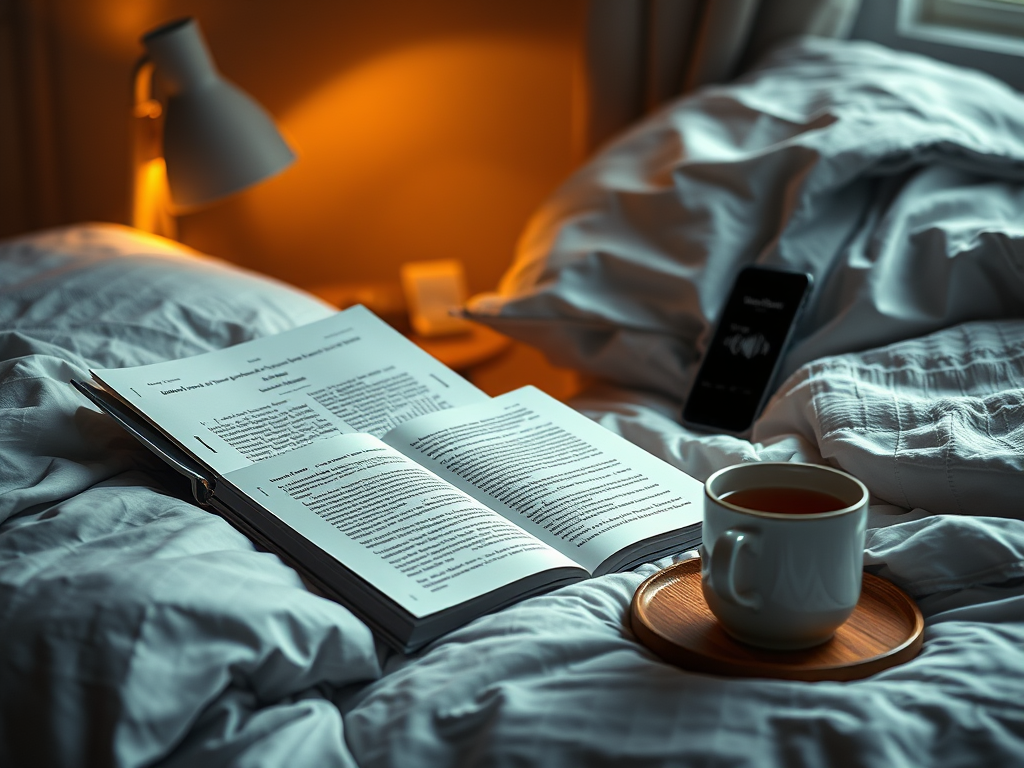
    Open book, e‑reader and phone with audiobook beside a mug of tea on a bedside table — bedtime reading routine in a UK home
    Wind down for 10–20 minutes — fiction for empathy, non‑fiction for ideas. Audiobooks count.

    Reading feels like a skill that’s at risk of being lost, and that’s a shame because it’s a genuine superpower. Fiction and non‑fiction both matter—and a mix of the two is best. Fiction builds empathy, imagination, vocabulary and focus; it lets you live a hundred lives and understand people unlike yourself. Non‑fiction gives you tools you can use—ideas from history, science, money and psychology. Together they sharpen your mind, calm your nervous system, and make you a better conversationalist.

    One of the best times to read is in bed as you wind down. Swap TV or doomscrolling for 10–20 minutes with a book; it’s gentler on your brain than a bright screen and helps you switch off. The easiest way to read more is to keep something handy—a paperback, Kindle or audiobook—and grab small pockets of time on the commute, over a cup of tea, or while cooking. Audiobooks absolutely count.

    To keep things interesting, I try to read one non‑fiction book for every three fiction books, and I mix the themes so I stay engaged—maybe a mystery, then some sci‑fi, then a memoir, then a psychology or history pick. Visit the library, try a book swap with friends, or join a low‑pressure book club. For kids, let them choose (graphic novels and series are great gateways) and read together sometimes, even if it’s just a chapter.

    Give yourself permission to quit books that aren’t clicking, note a favourite quote now and then, and chat about what you’re reading—half the fun is sharing it. The goal isn’t to finish the most books; it’s to keep curiosity alive and make reading a simple, daily habit.

    DIY skills: confidence through doing

    Hands installing a floating shelf with a drill and spirit level; wall plugs and screws on a tray — DIY skills in a UK home
    Start small — measure, drill, use the right wall plugs, and work safely.

    This is something I wish I was better at. I wasn’t involved enough in DIY growing up, and it’s harder to learn as an adult—which is exactly why I want to make it normal for my kids. Knowing how to fix small things isn’t about being “naturally handy”; it’s confidence, problem‑solving, and not waiting weeks for a tiny repair. Plus, there’s nothing like the feeling of “I fixed that.”

    Start small and involve kids early: torch‑holding, reading instructions, measuring and marking, handing over screws. Little jobs build competence—changing a lightbulb, tightening a hinge, building flat‑pack, filling a small hole, touching up paint, resealing a bath, hanging a picture with the right wall plugs. As confidence grows, try drilling, putting up a shelf, swapping a door handle, changing a tap washer, bleeding a radiator, or basic bike maintenance. If you’re renting, check your agreement; stick to reversible fixes (Command hooks, filling tiny holes properly) and always restore to the original condition.

    A simple starter toolkit (UK): tape measure, Phillips and flat screwdrivers, hammer, spirit level, utility knife, pliers, adjustable spanner, Allen key set, stud finder, assorted screws and wall plugs (rawl plugs), sandpaper, filler and caulk with a gun, masking tape, and a decent drill/driver with wood/masonry bits. Keep a small “fix‑it” list on the fridge and a house notebook with paint codes, measurements, filter sizes, and photos as you take things apart.

    Safety first, always. Turn off power at the breaker, shut off the water at the stopcock, wear eye protection, and read the manual before you start. Know your limits: gas work, boiler issues, consumer‑unit electrics, and anything structural are for pros. That judgment is part of being competent.

    Final thoughts: a living list, not a rulebook

    This isn’t an exhaustive checklist or a set of hard rules—just a living list of ideas I’ve been thinking about lately and want to pass on. The common thread is simple: start small, keep it daily, and let time do the compounding. Save early (LISA, pensions, an emergency buffer). Pick a direction, build proof, and stay adaptable. Learn in tiny, social bursts. Build habits with systems, not willpower. Mind your manners. Move your body to protect your mind. Show up in real life for the people who matter. Read to widen your world. Try DIY to build confidence through doing.

    If even one of these lands early, it can change the way a young person moves through the world.

    Over to you: what’s missing? What do you wish someone had taught you 10 years sooner—and what do you want to teach your kids that isn’t on this list? Drop a comment or message me; I’d love to include your best lessons in a future update.

  • The Constant Struggle of Productivity: How I Manage Focus & Guilt

    The Constant Struggle of Productivity: How I Manage Focus & Guilt

    The Productivity Paradox 

    The other day, I sat staring at my to-do list — not a neat, minimal one, but the sprawling, chaotic kind that makes you feel like you’ve already failed before you’ve started. My phone buzzed, I checked it “just for a second,” and somehow 15 minutes later I was watching a video of a man building a miniature log cabin out of matchsticks.

    Does any of this sound familiar? If you’ve ever struggled to stay productive or felt frustrated by your own distractions, you’re definitely not alone.

    Why do we put so much pressure on ourselves to always be productive? 

    Everywhere we look, there’s a message about maximising output: “Wake up at 5am,” “Plan your day the night before,” “Never waste a minute.” The modern world seems obsessed with squeezing every last drop of efficiency from our time — but the more I try, the more I realise how exhausting it is. 

    We live in a culture that celebrates being busy as a badge of honour. It’s almost as if saying “I’ve been swamped” is proof that we’re doing life right — a signal to others that we’re pushing forward, achieving, and making the most of every minute. Social media only adds to this pressure, serving up endless highlight reels of people who seem to achieve more before lunch than I manage in a whole week. 

    For me, the guilt often creeps in when I take time to do something purely for myself. If I spend an evening watching Netflix or getting lost in a game instead of working on my business, writing a blog post, or tackling something on my to-do list, there’s a nagging voice in the back of my mind telling me I’ve wasted the day. 

    That guilt usually hits hardest at night, when I’m getting into bed and my brain starts its review of the day. I think about all the things I should have done and could have done, and it’s frustrating because I know that I could have been more productive if I’d just stayed focused. Instead, I replay the hours that slipped away on small distractions, wondering where my discipline went. 

    It’s a vicious cycle — my interest locks onto something new, my attention drifts, and before I know it, the day has gone. I can’t help but think my ADHD plays a part in this, because my brain needs genuine interest to stay engaged, and my interests are quick to hop from one thing to another. And so the pressure builds, not just from the outside world, but from myself. 

    The Downside: When Productivity Becomes Stressful 

    The truth is, constant striving comes with a cost. When you’re always chasing the next task, the next goal, or the next “hack” to squeeze more out of your day, you start to lose sight of the point of it all. It can leave you burnt out, anxious, and oddly dissatisfied, even when you’re getting things done. 

    Lately, my motivation has been at an all-time low — partly because I’m not enjoying my job. When the thing that takes up the biggest chunk of your week brings little to no joy, it’s hard not to let that drain your energy for everything else. And when motivation slips, distractions find their way in more easily. It becomes a snowball effect: the less I do, the more frustrated I feel, which makes it even harder to get back on track. 

    Living with a very productive partner adds another layer to this. She’s brilliant at getting things done, and while I admire it, I can’t help but compare myself. I often find myself measuring my day against hers, wondering if I’ve pulled my weight or done enough. Sometimes this is particularly hard because I don’t always notice when things need doing — my memory isn’t amazing, and if I don’t write something down, there’s a good chance it will slip my mind entirely. That means my focus tends to be narrow and linear, fixed on whatever is already on my list, rather than on the broader picture of what could be done. 

    The irony is that the harder I push myself to be “on” all the time, the less I seem to achieve. Instead of feeling accomplished, I’m left with this lingering sense that I’m falling short. That constant mental pressure — from myself, from the world, and from the silent comparisons I make at home — can be exhausting, and it doesn’t always leave much room for joy in the things I once loved. 

    Finding Your Own Way: What Productivity Means to Me 

    Over time, I’ve realised that being productive isn’t just about ticking boxes for the sake of it. For me, it’s about making progress in ways that feel meaningful — whether that’s finishing a blog post, making a bit of headway on a home project, or even tackling a list of small but necessary chores. 

    One thing I’ve noticed about myself is how much better I feel at the end of a day when I’ve got a lot done. It’s not just about big wins — in fact, I often feel more satisfied after completing lots of small tasks than I do from finishing one or two large ones. There’s something about seeing a long list with plenty of ticks that gives me a real sense of achievement. Because of that, I’ve made a conscious effort to break bigger jobs down into smaller steps, so I can keep building momentum throughout the day. 

    I’m also trying to take a wider view of what “being productive” means in my life. It’s not only about work or chores — it’s about getting more out of life overall. I want to strike a balance between achieving the things I need to and having the time and space to enjoy the things that make me happy. For me, that might be spending an evening gaming, diving into a new interest, or simply relaxing with my partner. 

    I think the sweet spot lies somewhere between productivity and satisfaction — getting enough done to feel accomplished, without becoming so focused on output that I forget to enjoy the present. That’s the balance I’m aiming for, even if it’s still a work in progress. 

    Strategies That Actually Help 

    These aren’t magic “productivity hacks” or guaranteed solutions — they’re simply methods I’ve found that genuinely help me. I’m not an expert by any means, and I’ve learned that the most important thing is to experiment until you find what works for you. Some of these ideas might click instantly, others might not suit you at all, and that’s okay. 

    • The “5-minute rule” — If something can be done in under five minutes, do it immediately. It stops little jobs from piling up and creating a mental backlog. 
    • Breaking things down — I tackle bigger goals by dividing them into small, manageable steps. It makes it far easier to start, and it also means I get that extra boost from ticking more things off my list. 
    • Two to-do lists — One shared with my partner for household tasks and anything that affects both of us, and one personal list for my own day-to-day reminders. I even have an end-of-day reminder to check both lists. 
    • Journalling for motivation — I covered this in a bit more detail in this blog post, but then I’m struggling to get going, I’ll write out a goal — sometimes just the end result I want — and let myself imagine what it will feel like to achieve it. That little spark of excitement often gives me the push I need to take the first step and get the ball rolling. 
    • Limiting my phone’s pull — Social media and short videos can easily eat up my time, so I try to keep my phone out of sight whenever I can. My smartwatch lets me handle calls and messages without needing my phone right next to me, which helps more than I expected. 
    • Music as a focus tool — Playing the right kind of music helps quiet the background noise in my head and keeps me moving. Something upbeat works best for me when I need to power through. 

    These aren’t foolproof — I still have off days — but when I put them into practice, I notice a real difference in how much I get done and, more importantly, how I feel about it. 

    Embracing Imperfection 

    If there’s one thing I’ve had to remind myself over and over again, it’s that nobody is perfect. It’s completely normal to have good days and bad days — the aim isn’t to somehow eliminate the bad ones entirely, but to try and increase the number of good ones over time. 

    Some days, I’m in the zone, ticking things off my list left, right, and centre. Other days, I can barely muster the motivation to do the basics. And that’s okay. It’s the same with anything in life — there will always be peaks and troughs. The more productive I can be on some days, the more freedom I have to enjoy slower, lazier days without feeling guilty about it. 

    And lazy days aren’t necessarily a bad thing either. We only get one life, and while getting things done is satisfying, it’s just as important to make sure we’re still living — spending time on hobbies, relaxing with people we care about, or simply doing nothing if that’s what we need. Being productive should enhance our lives, not consume them to the point where we forget to actually enjoy them. 

    For me, embracing imperfection means letting go of the idea that every day needs to be optimised. Some days will be a write-off, others will be wildly productive, and both are part of the bigger picture. The key is to recognise that balance matters more than perfection. 

    Conclusion: It’s a Journey 

    If there’s one thing I’ve learned about productivity, it’s that there’s no single “right” way to do it. What works brilliantly for one person might be completely useless for someone else, and that’s fine. Productivity is personal — it depends on our priorities, our focus, our environment, and the season of life we’re in. 

    For me, it’s about understanding my own habits, identifying distractions, and using simple systems to manage them. But it’s also about remembering that productivity isn’t the only measure of a good day. Sometimes a productive day is one where I’ve completed my goals — and sometimes it’s a day spent resting, recharging, or doing something that genuinely makes me happy. 

    If you’ve ever found yourself lying in bed at night thinking about all the things you should have done, you’re not alone. We’re all trying to strike a balance between progress and peace, ambition and rest. Maybe the goal isn’t to be productive every single day, but to create enough productive days that the less active ones don’t matter as much. 

    At the end of the day, life isn’t just about getting things done — it’s about living. And if you can find a rhythm that lets you achieve your goals while still enjoying the things you love, that’s true productivity. 

    What about you? How do you define productivity in your own life? Do you have any tips or routines that help you find the right balance? Share your thoughts in the comments — I’d love to hear them. 

  • From Childhood Builds to Collector’s Shelves: My Lego Star Wars Story

    From Childhood Builds to Collector’s Shelves: My Lego Star Wars Story

    Lego Star Wars isn’t just a hobby for me—it’s a treasure trove of memories and experiences that have shaped my love for both Lego and the Star Wars saga over the years. From the thrill of building my very first X-Wing as a kid to late-night sessions piecing together intricate sets with friends, each Lego Star Wars model holds a special place in my heart. Through every brick and minifigure, I’ve not only recreated epic scenes from a galaxy far, far away but also built lasting memories that I cherish today. 

    In this blog post, I want to take you on a journey through my personal history with Lego Star Wars—sharing the sets that marked important moments, the lessons I’ve learned as a collector, and the stories that make this hobby so meaningful to me. Whether you’re a fellow enthusiast or just curious about the magic behind Lego Star Wars, join me as I look back on the experiences that have made this adventure unforgettable. 

    Looking back, I honestly can’t pinpoint exactly when my Lego journey started—it feels like these colorful bricks have always been a part of my life. My earliest Lego memory goes all the way back to building a car with my dad, using his own childhood set. The box was filled with a nostalgic jumble of mismatched yellow and red bricks, plus some big, chunky wheels. There were no instructions, no pressure—we just let our imaginations take the wheel and enjoyed the simple act of building something together. Sometimes, we’d run out of bricks mid-build, and I’d wish for an even bigger box, dreaming up future creations. 

    Lego wasn’t just about building for me; it was about bonding, creativity, and even venturing into new worlds of play. I was obsessed with making cars—especially ones from Formula 1 —in every shape and size, adapting my designs depending on what caught my interest that day. My love for Lego even spilled over to the digital world with Lego Racers on PC, where I could design my own kart and race Mario Kart-style. These early experiences built the foundation of fun, creativity, and nostalgia that still fuels my Lego Star Wars hobby today. 

    Some of my best childhood memories revolve around long afternoons spent building with my brothers. Together, we’d lose ourselves for hours, each of us adding to sprawling custom worlds inspired by whatever sparked our imagination that day. Sometimes we’d design high-tech sci-fi bases, complete with robot guardians; other times, we’d craft grand fantasy castles filled with rival knights and horses. It was all about teamwork, storytelling, and letting our creativity run wild. 

    The first Lego theme I truly fell in love with was Lego Knights’ Kingdom, which launched back in 2004. While I can’t remember every set I owned, I have vivid memories of their buildable action figures. One that stands out was when my parents surprised me with the King Mathias set (8786) at the pub to keep me entertained—looking back, it’s wild to realize how long ago that was! 

    Lego Knights Kingdom 8781
    Lego Knights Kingdom 8781 – The set I always wanted but never got!

    Birthdays and Christmases were always filled with the hope of receiving Lego sets. Every year, I’d painstakingly circle my wish-list in the Argos catalogue (if I’m honest, it was pretty much every set). On gift-giving days, I’d eagerly shake every present for that unmistakable Lego rattle. As I grew older, my attention shifted fully to Lego Star Wars, fueled by my obsession with both the movies and the games. (Check out my top 10 games here! ) Special traditions made the hobby even more magical. A birthday trip to Legoland was always the ultimate treat, and I was lucky enough to visit a few times. Exploring the incredible Lego buildings, riding the themed attractions, and earning proud batches of Lego driving licenses (I collected three or four over the years!) are memories I’ll always cherish—and ones I can’t wait to share with my own kids. I still remember the excitement of buying a foam sword and shield from the Lego Knights’ Kingdom market, then racing home with my brother to spend days on end play-fighting and letting our fantasies come to life. 

    There are so many stories I could tell, and if you want to read more of my favorite Lego memories, be sure to check out this post here!  

    Like many lifelong fans, I went through the infamous “dark ages” where I hardly touched a single Lego brick. But everything changed a couple of years ago, just before Christmas, thanks to my girlfriend. During the first Covid Christmas, with the world in lockdown, she gifted me Anakin’s Jedi Interceptor (75281) so we could build it together. It was the perfect way to spend time when we couldn’t go out, and it reignited all those childhood feelings I’d nearly forgotten. I built the set within hours of receiving it—the rush of excitement was so real, it felt like my childhood was coming back in full force. (Still a bit sad I misplaced the set during a move, but the spark was definitely lit again!) 

    Lego Star Wars Anakin’s Jedi Interceptor 75281

    A year later, the 501st Legion Clone Troopers (75280) became part of my collection—a set that’s practically legendary among Star Wars fans. Soon after, I stumbled across a sealed but battle-worn Kashyyyk Trooper battle pack being sold locally and couldn’t resist picking it up for my growing clone army. With these sets, I suddenly found myself reminiscing about all the Lego Star Wars boxes gathering dust in my parents’ attic. I called them up, asked if I could finally dig them out (which I’m sure they were grateful for), and coming home to rediscover all those old pieces and minifigs was just such a wave of nostalgia. It felt like reconnecting with an old friend. 

    At first, I was a bit self-conscious about being an adult who builds Lego—worried what others might think, and hesitant to share much about my hobby. But my partner was super supportive, and as I started opening up, I discovered that several friends were secretly Lego fans too! It turns out, there’s a massive community of adult Lego fans (AFOLs) out there, and the more I shared, the more connections I made. Now whenever one of us grabs a cool new Star Wars set or finds a great deal, we can’t wait to share it in our group chat. Sometimes friends will come over, and while some of us watch TV or do puzzles, I’ll build a Lego set and we’ll catch up, chat, and just hang out. Every time a new wave of releases drops, we’re all sharing our favorites and nerding out together. Honestly, it’s been such an unexpected source of fun and connection as an adult—I wouldn’t trade it for anything. 

    I’ve been back in the Lego Star Wars hobby for almost four years now, and my collection has grown far more than I ever imagined. Through a mix of buying awesome new releases and rebuilding old favorites, I’ve managed to assemble a total of 71 different Lego Star Wars sets—ranging from classics released in 2009 all the way up to sets dropping in 2025. I even have a few duplicates stashed away, ready to trade with friends or maybe keep for my kids someday. 

    A full tour of my collection deserves its own blog post, but here are some of my absolute highlights. The UCS Venator is probably my crown jewel—it was my very first Ultimate Collector Series set and it feels epic seeing it on display. Another standout is my Sith Fury Interceptor from 2012. As I mentioned in my post on my top 10 Star Wars games, Star Wars: The Old Republic is a game I adore, so owning sets from that era means a lot. I was lucky enough to grab the Fury Interceptor when it first came out, even before I played the game! In 2023, I started the mission to hunt down every single SWTOR-inspired set. I’m nearly there—just two elusive minifigs from the Jedi Defender Class Cruiser remain on my wishlist. They’re the most expensive, of course, but collecting wouldn’t be as fun without a little challenge! Those Old Republic ships have been on display ever since I got them. 

    Most of my Lego sets are proudly displayed across three sets of shelves scattered around the house. I’ve even crafted a custom display frame to showcase my favourite minifigures when I run out of shelf space! I usually theme each shelf—matching sets from similar Star Wars eras or planets—so things look tidy, organized, and a bit like a mini Star Wars museum. I love to swap things around, especially when a new release comes out, to keep everything fresh and exciting. The only downside? Keeping sets dust-free! Right now, I spend two or three hours every couple of weeks cleaning them, so I’m definitely planning on updating to sealed glass displays soon. I’ve got my eye on those custom WickedBricks acrylic cases for Ikea shelves—they’re high on my ever-growing Lego collector wishlist. 

    While Lego Star Wars is really the only theme I’m seriously collecting, I have to admit the new Lego Formula 1 sets are incredibly tempting. F1 was a huge part of my childhood, and I’m a longtime Red Bull Racing fan, so I had to grab the RB21 Speed Champions set when it came out—it has pride of place in my living room! The larger Technic sets look phenomenal, but with limited space (and budget), I’ve managed to resist for now. I’m also eyeing some of the new medieval Lego sets, since those classic knights and castles bring back great memories, but for now, I’ll just admire them from afar. Having “adult money” is fun—and a little bit dangerous—but the Lego wishlist always seems to stay one step ahead! 

    One of the things I’ve loved most about my return to Lego Star Wars is finding a whole community of fans who share the same passion. There’s something really inspiring about seeing other people’s custom builds, sharing collecting tips, and keeping up with the latest Lego Star Wars news. I’m active on a few great Lego subreddits like r/Lego, r/LegoStarWars, and r/LegoLeak—they’re perfect for discovering incredible MOCs (My Own Creations), catching sneak peeks of upcoming sets, and finding the occasional bargain. 

    When it comes to video content, MandRproductions is my go-to Lego YouTuber. His vlogs always have a fun mix of collection updates, unboxings, and set reviews. Even though I’m not someone who’s on social media every day, I always look forward to checking in and catching up on the latest videos and community discussions. 

    A real highlight of being part of the Lego Star Wars community is the annual Lego May the 4th Promotion. Each year, Lego celebrates all things Star Wars with some of the year’s best discounts and exclusive gifts-with-purchase (GWPs)—a true event for collectors! For me, May the 4th is the one time I let myself go big, usually picking up several discounted sets all at once to take advantage of the deals and free collector’s items. I don’t usually buy the newest sets right on release; I find it’s smarter to wait a year or so, when they’re more affordable. Right now, I’m still working my way through sets from 2024, and no doubt I’ll be chasing the 2025 releases a year from now. It takes a little patience, but it makes collecting much more sustainable—and let’s be honest, Lego can get expensive pretty fast! 

    Whether it’s through online forums, YouTube content, or community events like May the 4th, connecting with other Lego Star Wars fans has added a whole new layer of enjoyment to the hobby. There’s just always something new to see, learn, or get excited about. 

    As I’ve grown older, my love for building Lego has taken on a whole new meaning. Beyond the nostalgia and the fun of collecting Star Wars sets, building Lego has become a genuine form of relaxation and mindfulness in my adult life. With a busy schedule and an ADHD brain that never really switches off, sitting down with a new Lego set helps me slow down, focus, and just enjoy the process—one step at a time. It’s almost meditative. I’ve learned to savor the experience too—whereas I used to rush through a set in one sitting, now I tend to build just a few bags at a time, stretching the enjoyment out over several evenings. 

    Lego isn’t just a solo hobby, either. My collection has actually turned out to be a great conversation starter whenever people visit. Guests love to check out what’s new on my shelves, and the collection always sparks fun (and sometimes surprising) discussions. For anyone who finds small talk awkward (like me!), sharing a passion like Lego makes connecting with others that much easier. 

    An unexpected side effect of being back in the hobby is that I’ve become interested in the economics of Lego collecting. When I started looking up old Star Wars sets I missed out on, I was shocked by how much some of them now sell for—especially if they’re sealed! That realization led me to start collecting sealed sets myself, both as a potential investment and for pure collecting satisfaction. Admittedly, I got a bit carried away at first, snapping up battle packs and sets without really thinking through exactly where I’d keep them all. But I’ve been fascinated to see how well Lego sets hold their value over the years, especially compared to some other collectibles. 

    Overall, Lego has become my go-to for unwinding, a surprising means of social connection, and even a lesson in patience and value. It’s all these little things that have made it something I genuinely appreciate having in my life now. 

    Tips for New or Returning Lego Fans 

    If you’re thinking about jumping back into the world of Lego—especially Lego Star Wars—here are a few tips I’ve picked up that can save you time, money, and a lot of hassle! 

    Be Patient with New Sets: My top advice? Don’t feel pressured to buy every new set on release day. I know the hype can be tempting, but if you wait just six months or so, you’ll usually start to see some great discounts both online and in stores. Over time, these savings really add up—plus, searching for deals becomes its own fun challenge. 

    Brick-Hunting and Bulk Buying: If you enjoy the thrill of the hunt and don’t mind a little sorting, try buying Lego bricks in bulk from local Facebook Marketplace ads or car boot sales. You never know what hidden treasures you’ll uncover—sometimes you’ll find rare pieces or classic minifigs mixed in. Collecting loose bricks is also a fantastic way to grow a parts collection for building MOCs or even recreating official sets without buying them new. 

    Make Use of Free Resources: Did you know Lego offers instructions for nearly all their sets online? If there’s a particular set you love but don’t own, simply download the parts list and get to work sourcing bricks yourself. It’s like a personal Lego scavenger hunt! 

    Check for Forgotten Lego: If you grew up with Lego, definitely ask your parents whether there’s an old box or bin still lurking in the attic or garage. Rediscovering your childhood collection is not just nostalgic—it can sometimes yield some real gems that are hard (or expensive!) to find today. 

    Get Involved with the Community: Reddit is one of my favorite Lego resources, with active subreddits like r/Lego and r/LegoStarWars. These communities are welcoming spaces to ask questions, share your latest builds, swap collecting tips, and celebrate your hobby with others who “get it.” There’s no shame in enjoying what you love—embrace your interests and do what makes you happy! 

    Whether you’re starting from scratch or diving back in, the Lego community is more welcoming and helpful than ever. 

    Looking back on my Lego Star Wars journey, it’s amazing to see how much joy, creativity, and connection these little bricks have brought into my life. From building mismatched cars with my dad and epic castles with my brothers, to rediscovering the magic as an adult alongside friends and my partner—Lego has added something special to every stage of my story. 

    Today, Lego is more than just a hobby; it’s how I unwind, express myself, and bond with a vibrant community of fellow fans. Whether it’s hunting down rare sets, completing a challenging build, or simply showing off my collection when someone visits, Lego continues to spark excitement, nostalgia, and new friendships. 

    If you’re considering getting back into Lego, or starting your own Lego Star Wars collection, my best advice is: just go for it. Build at your own pace, chase what makes you happy, and embrace the magic—no matter your age. 

    I’d love to hear from you—what was your first Lego set, or the favourite one you built as a kid? Do you have any special Lego memories from your childhood, or a set you still dream of owning? Share your stories in the comments below, and let’s celebrate our love for Lego together. May the Force (and builder’s luck) be with you! 

  • Unlocking Nostalgia: The Science of Music and Memory

    Unlocking Nostalgia: The Science of Music and Memory

    Ever wonder why hearing an old song can instantly transport you back in time? If a random playlist triggers goosebumps, laughter, or even a lump in your throat, you’ve experienced the powerful connection between music and nostalgia. Let’s dig into the science—and I’ll share some of my personal experiences—about why music triggers nostalgia so strongly, and why those feelings are sometimes impossible to shake.

    Why Does Music Trigger Nostalgia So Intensely?

    So what is it about music that digs straight into your heart and memory? The answer is surprisingly scientific. When you listen to music, it interacts with the deepest parts of your brain—the amygdala and hippocampus—areas responsible for processing emotions and long-term memories. This means you’re not just hearing a song; you’re reliving the feelings, smells, sights, and vibes of the original moment you heard it.

    Research shows that the songs we listen to during our teenage years and big life moments get permanently embedded in our memory. Experts call music a “cue”: once your brain connects a song to a powerful memory, even a short clip can release a flood of flashbacks—almost like pressing play on your own highlight reel. Your emotional memory is at its peak during times of big change, which is why hearing a song from your school days or first relationship can feel so vivid, even years later.

    Real-Life Music Memories: How Certain Songs Became My Time Machine

    Looking back, music has always been tightly woven into the key moments of my life—even ones I didn’t know I’d someday remember. When a certain track sneaks onto my playlist, I can be transported instantly to a different chapter. Afternoon sunlight, waves outside the sailing club, my battered laptop and RuneScape on the screen—hearing “La La La” by Naughty Boy ft. Sam Smith now still evokes a feeling of peaceful rebellion and a nerdy contentment I never knew I’d someday treasure.

    Other memories are even more vivid. “Can’t Hold Us” by Macklemore instantly shoots me back to a sun-beaten day, driving home from a powerboating course, windows down with a friend, both of us singing so loud we were hoarse for days. All it takes is a few notes to unlock that sense of being young, free, and unstoppable.

    Family life had its own soundtrack. If you played “Party Rock Anthem” by LMFAO right now, I’d immediately picture my brother and me dumping boxes of Lego across the bedroom floor, racing to build the ultimate Star Wars AT-AT. It’s amazing how some songs conjure up cheerful chaos, sibling rivalry, and the drive to create something epic—even if it was just plastic bricks back then.

    Then there are songs that cue up memories of fleeting encounters. “Barbra Streisand” by Duck Sauce zips me back to a caravan holiday, where I met a girl and her brother, hung out for just one afternoon, and never saw them again. Yet every time I hear that track, I’m fourteen again, convinced the smallest moments might be the start of something magical.

    I’ll also admit—I’m not immune to “cringe” tracks. Like a lot of guys, a teenage crush led me to listen to Justin Bieber’s “As Long As You Love Me,” even though it wasn’t my usual style. Hearing it now reminds me of teenage awkwardness and how much we all grow and change, even if our old music choices are a little embarrassing.

    Why Some Songs Hit So Hard—Even If Your Taste Has Changed

    No matter how much my playlists evolve, those older songs are emotional bookmarks. For many of us—especially if you aren’t the type to dwell on your feelings or journal every thought—music keeps your memories safe, the good and the bittersweet. Sometimes a nostalgic song is uplifting; other times, it stings. Either way, when those notes hit, you can’t help but remember who you were back then.

    These days, I try to lean into it. I keep playlists full of old favorites for those moments when I need a boost or want to remind myself of where I started. Even the awkward tunes have their purpose—they’re a kind of time capsule, and a reminder of how far I’ve come.

    What about you? What songs transport you back to a different time—even if your friends might never let you live it down? Do you have a track that instantly triggers a flood of memories, good or bad? Let me know in the comments—no judgement, just stories!

  • My Digital Story: A Little Look Into My Life and What I Love 

    My Digital Story: A Little Look Into My Life and What I Love 

    So! If your still reading this, I’ve obviously caught your attention, which means you probably want to learn more about me. This blog isn’t going to have a face attached to it (Which is in your best interest, trust me!) but I’ll share as much as much as I can with you so you understand who I am 
     
    I’m in my late 20’s and have a background in IT, I grew up playing games across a verity of consoles which started my interest in computers. I distinctly remember when I was still at school giving myself local admin privileges through registry editor to allow myself to install GTA San Andreas and Halo Combat evolved on multiple machines for myself and my friends, and creating hidden files in network shares to store music and videos. I never got caught, and I still heard stories from years after I left about people finding the games on random machines – that always felt good. 

    I built my first PC in 2015, it was an entry level build for the time with an AMD FX8350 CPU, ASUS GTX 960 graphics card with 8GB of DDR3 memory and a 1TB hard drive. Up until then, I’d been playing games on an old laptop with a cooling fan putting out enough RPM to put a jet turbine to shame. I was only really playing RuneScape at that point, as it wasn’t powerful enough to render anything other than 1 texture at a time! Building that PC was the gateway to world that would shape the rest of my life, both professionally and personally.  

    That rig lasted me for a couple of years, until the release of the GTX 10 series when I put it through a considerable upgrade. I moved to a 1080ti which completely blew my mind, partnered with a Ryzen 2700X, M.2 NVMe storage and 32GB of RAM. It was night and day difference. Before I was only really able to play games on medium to achieve 60fps at 1080p, whereas I was now able to hit way over that on max, and even stable framerates at 1440p. Game changing.  

    Nowadays I don’t use it so much for gaming. I’ve regressed into more of a filthy casual and use my Xbox when the mood strikes, so I’ve gone out of my way to repurpose it into a home server. I’ve only just started this journey so it’s currently just a Hyper-V host for a Veeam Backup server, but I’m planning to do more with it. My homelab contains UniFi Networking Infrastructure, with a UniFi Gateway Max, an 8 Port PoE switch and 2 U6+ AP’s. A bit overkill maybe, but I suddenly got into networking following the discovery of Home Assistant. I originally only wanted to setup a guest network and vlans for my IoT devices so I could secure my network, but the more I researched, the more I got sucked in. 

    When I’m not messing around with my network, I’ll probably be watching the F1 or getting lost in a Lego build. Both have been go-to sources of fun and inspiration for as long as I can remember, and I never really outgrew either one. 

    Formula 1 runs deep in my family: I grew up watching races with my parents, and these days, it’s a can’t-miss routine that my partner and I share every weekend. I’ve even managed to tick off two live races from my bucket list—Silverstone and Catalunya. For me, F1 is so much more than fast cars. I love diving into the strategy, the technical behind-the-scenes, and, of course, the non-stop drama that comes with each season. 

    I’ve stood by Red Bull Racing since 2009 (back when Sebastian Vettel first joined the team), but I have huge respect for the whole grid. Legends like Daniel Ricciardo, Kimi Raikkonen, Fernando Alonso, Jenson Button, Mark Webber, and Max Verstappen have all won me over in different ways. Honestly, I could talk for hours about the sport and its drivers. 

    The recent boom in F1’s popularity—thanks in large part to Netflix’s “Drive to Survive”—has been wild to witness. Suddenly, it’s everywhere: I can’t walk down the street without spotting someone in team merch, and social media is full of F1 ads and debates. As a lifelong fan, it’s been great to see so many people discover the sport and join in the excitement. So when I heard the news of F1 teaming up with Lego this year, it definitely got my attention. 

    Lego was a huge part of my childhood—I spent countless hours with my siblings turning piles of bricks into sprawling castles and crazy imaginary worlds. Some of my favorite memories are those epic make-believe battles, and the secret code we invented to wake each other up for early-morning building sessions. The ritual was simple: three knocks on the wall, repeated three times. If you heard it, you knew it was time for another round of Lego adventures. 

    As we got older, life crept in and the bricks eventually gathered dust in the loft. That all changed during the big lockdown, when my girlfriend surprised me with a Lego Star Wars set for Christmas. We quickly built it together, and I quickly realized that spark for Lego never really died—it just needed a nudge to ignite again. Honestly, if she knew she was about to unleash a full-blown obsession, maybe she’d have thought twice! 

    That single set sent me down a rabbit hole. I dug out every old box of Lego I’d stored away and spent months sorting through them—three massive tubs packed with pieces and long-forgotten minifigures. It became a mission to catalogue every set I could remember from my childhood collection. Turns out, many of these were mid to late 2000s releases, now considered collector’s items. Of course, building and displaying them became its own challenge, and what started as a single three-tier bookcase is now a growing network of shelves and displays throughout my home. 
    The best (and sometimes most dangerous) part of being an adult Lego fan? Having adult money. These days, I try to keep my collection focused on Star Wars, but it’s tough to resist all the newest releases. The recent Formula 1 Lego sets in particular have really put my willpower to the test—I’ve limited myself, so far, to picking up the small Speed Champions Red Bull RB20, but those big Technic sets keep calling my name… and honestly, it’s probably just a matter of time. 

    I’ve always been into reading so lately, I’ve started setting myself goals to keep things interesting. Last year I aimed for two books a month, and this year I’m seeing how close I can get to three. I mix things up a lot: sometimes it’s fantasy or sci-fi, sometimes it’s non-fiction or a biography, depending on what catches my eye. I’m trying to broaden my horizons and make sure I still read educational books alongside the more creative ones, anything I can do to learn more or become a better person. Right now, I’ve just started Joyful by Ingrid Fetell Lee, a book around understanding how you can find joy no matter where you are. I can be quite a serious person, and I want to make the most of every moment.   
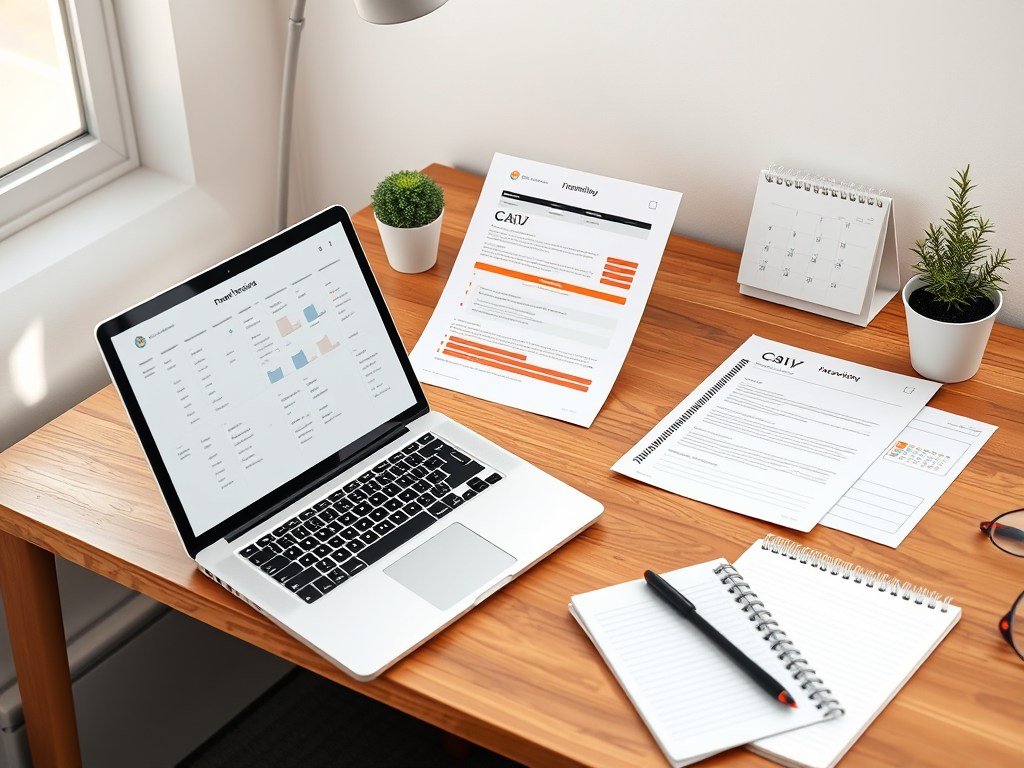
    When I’m not reading, I’m probably binge-watching TV, getting way too invested in movies, or listening to music. I’m a sucker for stories that make you actually feel something, and I’ll admit, The Greatest Showman still gets me every single time. As for music, I usually find myself looping through the same artists—Logic, Joyner Lucas, Post Malone—until I’m ready for something new. Playlists are great, but sometimes you just need that one album on repeat. 

    Travel is another thing I’ve really grown to love. Over the past few years, I’ve been lucky enough to tick off some cool places like Rome, Barcelona, and Jamaica. City breaks have become a new favourite for me—there’s just so much to see and do, and every trip feels like a mini adventure. I used to be all about relaxing beach holidays, but after exploring cities, booking tours, and getting lost in new places, I’m hooked. My travel bucket list keeps growing, and I’m hoping to get a few more ticked off over the next year 

    So that’s me, for the most part! My goal with this blog is to share my experiences and thoughts and hopefully spark some conversations along the way. More to come soon—see you in the next post. Until next time, thanks for reading!