Tag: personal growth

  • Reflecting on 2025: A Year of Change and Growth

    Reflecting on 2025: A Year of Change and Growth

    I know this post is arriving a little later than planned — we’re already well into 2026 — but over Christmas I spent some time reflecting on the year just gone. This ended up taking a bit longer than I expected, thanks to illness and a busy start to the year, but better late than never. 

    Every year feels important while you’re living it, but some years reshape things in a more lasting way. 

    2025 was one of those years for me. 

    Over the course of the year, I went through several major changes — personal, professional, and creative — and by the end of it, I found myself stepping into a new phase of life. 

    At the same time, 2025 wasn’t just about big moments. It was a year of reflection, reassessment, and quietly working out what I want my life to look like going forward — from how I spend my time, to what I focus my energy on, to the goals I set for myself and how I measure progress. 

    Looking back now, 2025 feels less like a finish line and more like a turning point — a year that marked the end of one chapter and the beginning of another. That feeling pretty much shaped how the rest of the year developed.

    How the Year Unfolded

    2025 felt big, but not in a constant or overwhelming way. 

    I was always aware that something important was coming up later in the year — something that gave the whole year a sense of direction and momentum (more on that later!). 

    At the same time, I found myself stepping back more than usual to reflect on how I was feeling and what I wanted to change. 

    I wasn’t enjoying my job, and that dissatisfaction had started to affect me outside of work. It wasn’t something I could switch off at the end of the day, and over time it made me realise how closely my overall happiness is tied to feeling fulfilled in what I do. 

    Alongside that, I became more aware of a few habits I’d been wanting to work on for a while. Rather than trying to overhaul everything at once, I focused on making gradual changes throughout the year. That slower, more intentional approach made progress feel achievable rather than overwhelming. 

    By the end of 2025, the year felt less like something I’d pushed through and more like something that had quietly prepared me for change — a reset point rather than a conclusion. 

    Small Changes That Made a Big Difference 

    Some of the most meaningful changes I made in 2025 were quiet ones. 

    One of the clearest was becoming more aware of how much time I was spending on my phone. Over the course of the year, I started using it less and eventually uninstalled Facebook — the final piece of social media I was still using regularly. That change alone made a noticeable difference to my attention and overall mood. 

    One small habit that had a bigger impact than I expected was leaving my phone on its charger when I was at home, rather than carrying it around with me. That simple change ended up freeing up little pockets of time throughout the day — time that would previously have disappeared into scrolling. 

    Those small gaps quickly turned into opportunities to do other things, like reading. In that sense, it was a double-sided change. It helped me break a habit I wasn’t happy with, while also making me happier overall by giving me more space to indulge in something I genuinely enjoy and want to do more of. 

    Alongside that, I noticed a gradual shift in how I approach problems, particularly when it comes to productivity. I started trying to focus less on motivation and more on momentum. The “five-minute rule” — which I’ve written about in more detail here — helped me reframe tasks that I’d usually put off. 

    Instead of thinking “I really can’t be bothered to do this, I’ll do it later,” I began approaching things from the perspective of “I’ll be glad this is done and off my mind.” I’m far from perfect, but that change in mindset has felt like a step in the right direction. 

    None of these changes were dramatic on their own, but together they reshaped how I spend my time and energy. Small adjustments, made consistently, ended up making a bigger difference than I expected. That growing awareness carried over into the the choices I made with the projects I’d planned out for throughout the rest of year

    Projects I Started — and the Ones I Let Go Of

    2025 was a year of starting things — and being honest with myself about which projects I genuinely wanted to put my time into, and which ones I mostly liked the idea of. 

    Over the course of the year, I started this blog, refreshed my home network, returned to technical learning, and began writing a fantasy novel — two creative projects that ended up becoming far more important to me than I initially expected. Each of these projects gave me something different, whether that was learning, structure, or a creative outlet. 

    Not everything carried on as planned. 

    Some ideas — particularly around my homelab and home automation — slowly fell away. I realised I wasn’t enjoying technical projects in my free time in the way I used to. Forcing myself to continue with them was starting to feel like an extension of work, rather than something I looked forward to. Letting go of those projects created space for things I genuinely wanted to spend my time on, like reading and writing. 

    That realisation eventually led to a bigger decision. Towards the end of the year, I sold my PC — something I’d been quietly thinking about for a long time. It had stopped being something I actively used and had slowly turned into both clutter and a distraction. When I did sit down at it, it was often when I should have been doing something else, something I was consciously trying to improve on. 

    As I mentioned in one of my first blog posts, I hadn’t really been using it for years. In hindsight, some of the projects I’d been planning were less about genuine interest and more about finding a reason to keep it around. 

    That’s not to say I’m done with homelabbing or gaming entirely. I still have my Xbox and enjoy using it casually now and then, and I’ve kept my Home Assistant Green for whenever the home automation itch returns. If I do want to explore more virtualisation work in the future, I’ll likely look to host things in the cloud instead. 

    The projects I did work on earlier in the year ended up helping me secure a new job towards the end of the year, which is something I’m incredibly grateful for. Even though not everything was seen through to completion, those efforts still paid off in ways I didn’t fully appreciate at the time. 

    Looking back, I don’t see the projects I didn’t finish as failures. They helped me learn what I enjoy right now, and just as importantly, what I don’t. In that sense, choosing to stop was just as intentional as choosing to start. 

    Rediscovering Writing and Creativity 

    Writing made its way back into my life almost by accident. 

    What actually started off as an idea for a technical project — building a simple website to self-host — quickly became something much more personal. As I began writing regularly, it became clear that the creative side of the project mattered far more to me than the technical challenge ever did. 

    I’ve always enjoyed writing, even if I haven’t always made time for it. Growing up, I loved reading and drawing, and I even wrote short stories and fanfiction as a teenager. As I got older, that creative spark faded into the background. Ideas still came to me, but they rarely went anywhere. They lived in notes, half-finished documents, and sprawling files that I’d add to every now and then, without ever really doing anything with them. 

    Starting the blog changed that. 

    For the first time, writing became something consistent rather than occasional. Over the course of the year, I published 24 posts, wrote over 56,000 words, and saw more than 600 views. Not because of reach or validation, but because it gave me the fire to keep going. It was genuinely exciting to know that people were actually seeing what I was writing — and even better, that some of them liked it. By the end of the year, the blog had picked up 4 subscribers and over 30 likes, which was far more than I ever expected. 

    I went into it assuming nothing would really come of it beyond being a creative outlet for myself. Instead, it became something I actively looked forward to working on, something I genuinely enjoyed building and returning to week after week. 

    That renewed sense of creativity naturally spilled into something bigger. Towards the end of the year, I began working on a fantasy novel — something I’d thought about for a long time but never seriously attempted. It felt like a natural extension of writing more regularly and finally giving myself permission to explore ideas properly. 

    Looking back, rediscovering writing wasn’t just about producing words. It was about finally getting all of those ideas out of my head and onto the page — about taking the worlds I see in my imagination and starting to shape them into something tangible. I don’t just want to write a book. I want to create a world. 

    Hobbies, Joy, and Slowing Down 

    As much as 2025 was a year of reflection and change, it was also a year where I gave myself permission to slow down and enjoy things again. 

    A lot of that joy came from fairly simple routines. Watching Formula 1 when it was on at the weekends, reading more consistently, and writing all became small but important anchors throughout the year. They gave structure to my free time and something to look forward to, especially during periods when other parts of life felt more uncertain. 

    Karting also made an appearance a couple of times throughout the year. It’s something I’ve always enjoyed and have dipped in and out of over time, and 2025 reminded me how much I’d like to make space for it more often. 

    Writing, in particular, became a constant. It wasn’t just a creative outlet — it was something that helped keep me grounded and gave me a sense of momentum when I wasn’t enjoying work. Sitting down to write, even briefly, felt like time well spent. 

    Interestingly, I didn’t add many new LEGO sets to my collection this year. I did, however, finally pick up the UCS Jabba’s Sail Barge — a set I’d had my eye on ever since seeing it in person at the LEGO Store at the beginning of last year. Alongside that, I started downsizing parts of my collection, selling some duplicate sealed sets and finally letting go of empty boxes I’d been holding onto. 

    That shift felt less like missing out and more like choosing space — both physically and mentally. 

    At the beginning of the year, I also spent a lot of time reading about home automation and smart home ideas. While that interest never fully turned into projects at home, I don’t see that as a negative. I enjoyed learning about it, and not every interest needs to lead to something tangible to be worthwhile. 

    Overall, 2025 helped me rethink how I spend my downtime. Slowing down didn’t mean doing less — it meant doing things more deliberately, and choosing enjoyment over obligation. 

    Money, Balance, and Being More Intentional 

    My relationship with money shifted slightly in 2025 — not in a dramatic or restrictive way, but in how consciously I thought about it. 

    I became more aware of where my money was going and why. That didn’t mean cutting out everything I enjoy, but it did mean pausing more often before spending and asking whether something would genuinely add value to my life or simply add clutter. 

    A big part of that shift came from wanting a calmer, more intentional living space. Downsizing parts of my LEGO collection and being more selective about what I brought into the house wasn’t about losing interest — it was about creating room, both physically and mentally. 

    I also started prioritising experiences more than material things. Holidays, trips, and shared experiences began to feel like better uses of money than accumulating more stuff. It wasn’t about choosing one over the other entirely, but about finding a balance that felt right for where I am now. 

    Alongside that, I made a conscious effort to get my finances back on track. I focused on catching up with my savings goals and building a bit more stability, which gave me a greater sense of control and peace of mind as the year went on. 

    By the end of 2025, money felt less like something I was reacting to and more like something I was thinking about deliberately. That mindset shift has carried forward, and it’s something I plan to build on further as I move into the next phase of life. 

    Looking Back at the Goals I Set for 2025 

    At the start of 2025, I set myself a handful of goals — not as rigid targets, but as rough markers for the kind of progress I wanted to make over the year. 

    Some went exactly to plan. Others didn’t. And a few changed shape entirely as the year unfolded. 

    One of my biggest priorities was getting my savings back on track, and I’m really happy to say I achieved that. Reaching that goal brought a sense of relief and stability that carried through the rest of the year, and it laid a solid foundation going forward. 

    I also set out to achieve Network+. I completed the training but never actually booked the exam. At one point, that might have felt like a failure, but in hindsight, I’m comfortable with it. The training itself was valuable, and following a change in career direction, taking the exam no longer felt as important as it once did. 

    Reading was another goal I didn’t quite hit numerically. I aimed to read 36 books over the year and ended up reading 24. That said, I’m still really pleased with that number — especially considering I stopped reading entirely for a few months at one point. Reading more consistently than I had in previous years felt like a win in itself. 

    Reducing my screen time to under two hours a day proved difficult. I didn’t quite manage it, but I did make meaningful progress. I became far more aware of how I use my phone and continued working on reducing that time, which feels like a positive trend rather than a missed target. 

    I also wanted to start a weekly journal, writing a short summary each Friday. That didn’t happen consistently, largely due to limited time. Rather than forcing it, I chose to prioritise writing blog posts and working on my novel instead — something that felt like a better use of my creative energy. 

    Finally, I planned to continue my Italian lessons on Duolingo, but I eventually stopped. I struggled to find a routine that made it sustainable alongside everything else I had going on. It’s something I’d like to return to at some point, but for now, it made sense to focus on other areas of learning. 

    Looking back, I don’t see the goals I didn’t fully achieve as failures. They gave me structure, helped me stay mindful of what I wanted to work on, and — just as importantly — showed me where my priorities shifted over the course of the year. 

    Closing Reflections: Stepping Into a New Phase of Life 

    Looking back, 2025 gave me a lot to be grateful for. 

    There were moments of joy, moments of uncertainty, and plenty of time spent figuring things out as I went. Some of the year’s highlights were obvious at the time, while others only really make sense in hindsight. Together, they shaped what ended up being a genuinely meaningful year. 

    The year wasn’t without its difficult moments either. We lost our cat in 2025, and saying goodbye was far harder than I expected. It was a quiet but powerful reminder that not all change comes with momentum, and that some moments simply ask you to pause and reflect. 

    One of the defining aspects of 2025 was reaching a major personal milestone that marked a clear transition into a new phase of life. I married my long-term partner in a beautiful ceremony with our friends and family, and it was truly one of the best days of my life. 

    In a year of big events like getting married and starting a new job, there were also countless smaller moments that mattered just as much — trips, shared experiences, quiet routines, creative progress, and the simple satisfaction of feeling more aligned with myself than I had been at the start of the year. I also bought a new car — a nice upgrade from my old banger that I learned to drive in all those years ago — which felt like another small marker of change. 

    What I appreciate most about 2025 is how it helped me slow down, reassess, and make more intentional choices. It was a year that quietly laid foundations rather than chasing outcomes, and I’m grateful for that. 

    As I move into 2026, I feel optimistic and determined. I want to focus on being consistent, following things through to the end, making the most of opportunities, and ultimately getting as much out of life as I can. More than anything, I want to make memories and continue building on the foundations that 2025 helped put in place. 

    Final Thoughts 

    Writing this has been a reminder of just how much can change over the course of a year — sometimes quietly, sometimes all at once. 

    If there’s one thing 2025 reinforced for me, it’s the value of slowing down, reflecting, and being intentional about where time and energy go. Not everything needs to be optimised or rushed. Some things just need space to grow. 

    If you’ve made it this far, thanks for reading — I genuinely appreciate it. 
    I’d love to know what 2025 looked like for you. Did it feel like a year of change, a reset, or something else entirely? 

    If you enjoy reflective posts like this, feel free to explore more of the blog, or subscribe to follow along as I head into 2026. There’s plenty more to come. 
  • The Psychology of Collecting: Why We Love Owning Things

    The Psychology of Collecting: Why We Love Owning Things

    Why I Wanted to Understand My Need to Collect

    I’ve always had a habit of collecting things. LEGO, Formula 1 merch, Pokémon cards, books —you name it, I’ve probably had the urge to gather it, organise it, and display it somewhere in my home. I’ve joked before that if I ever took every interest I’ve had and tried to collect everything tied to it, I’d need a warehouse.

    Lately though, I’ve been trying to understand why. Why does that instinct feel so strong? Why do I get that spark of excitement whenever I spot something new to add to a shelf, even when I know I’m trying to be more careful with money and space?

    I’m at a stage in life where I’m trying to be more intentional—less clutter, fewer impulse buys, a bit more financial breathing room. Yet the collector in me hasn’t disappeared; he’s just gotten quieter, waiting for an excuse. I love the thrill of owning something meaningful, but I also crave the calm of simplicity. That tension between joy and restraint is exactly what I want to explore here.

    Psychologists have long studied that drive to collect. It isn’t simply greed or materialism—it’s often emotional. The moment we decide to buy something, our brains release a small burst of dopamine, the same chemical that fuels learning, curiosity, and goal-setting. It’s that little surge of reward that keeps us chasing the next thing. Collectors often describe it perfectly: the hunt is the best part.

    For me, that “hunt” has shown up in many forms. I’ve built an entire LEGO Star Wars display (something I’ve written about before), and each year I add another Red Bull Racing shirt or cap to my growing F1 collection. There’s a pattern there: when something captures my interest, it quickly becomes an obsession, and before long I’m deep in research, lists, wish-lists, and plans.

    Before I can change or balance that instinct, I first need to understand it—the psychology, the emotion, and the meaning behind why I love owning things.

    The Psychology of Collecting

    The more I’ve thought about it, the more I’ve realised collecting taps into something deeply human. It’s not just about ownership; it’s about emotion, memory, and meaning.

    When psychologists talk about collecting, they often describe it as a mix of reward, control, and identity. The process itself—researching, planning, and completing a set—lights up the same parts of the brain that respond to learning and achievement. Every new addition triggers a hit of dopamine, giving that familiar rush of satisfaction and anticipation. It’s why the lead-up to buying something can feel almost as exciting as owning it. That sense of the chase is, biologically speaking, part of what keeps us hooked.

    Then there’s the element of control and order. In a world that can feel uncertain, collecting gives us structure. Werner Muensterberger, who wrote Collecting: An Unruly Passion, suggested that collecting helps people create emotional security—a small, organised world where everything has its place. I can relate to that. Rearranging my LEGO shelves or lining up my Red Bull Racing caps isn’t just aesthetic; it’s grounding. It’s something I can manage and perfect when everything else feels in motion.

    Of course, much of it is tied to nostalgia. Psychologists say nostalgia activates parts of the brain linked to comfort and self-continuity—it helps us feel connected to who we used to be. That explains why I get such a warm sense of familiarity when I open a pack of Pokémon cards or pick up a book series I loved as a kid. It’s not just about collecting objects; it’s about collecting memories. We’re not just curating things—we’re curating pieces of our own history.

    Collecting also speaks to identity. Researchers often describe collections as “external self-representations”: physical reflections of who we are, what we value, and how we see ourselves. My LEGO sets, my F1 memorabilia, even the idea of eventually displaying vinyl covers—they all say something about me: creativity, nostalgia, curiosity, and a need for expression.

    And underneath all of this, there’s something psychologists call the completion instinct. Humans naturally crave closure and wholeness. Completing a set, finishing a run of books, or finding that final missing piece offers a tiny moment of order in a messy world. It’s why collectors can feel uneasy leaving something unfinished—it’s not about material gain, but about satisfying the mind’s need for completion.

    Put together, it’s easy to see how collecting becomes so emotionally powerful. It’s reward, comfort, nostalgia, and identity all rolled into one. It’s a form of storytelling—turning moments and memories into something tangible.

    My Story: How Collecting Became Part of Who I Am

    For as long as I can remember, whenever I find something new I’m interested in, it slowly becomes an obsession. It starts with curiosity, turns into research, and eventually becomes a collection. LEGO, Formula 1 merch, Pokémon cards, books — each of these began the same way. I find something I love, and suddenly I want to own every piece of it.

    That pattern really became clear last year when my partner and I started collecting the Pokémon Scarlet & Violet 151 set. We bought it on a whim one afternoon while out with friends, who were collecting it too. It was meant to be just for fun — a bit of nostalgia, something small. But after pulling two full-art cards from our first four packs, we were hooked. Over the next 18 months we spent evenings opening boosters, trading duplicates, and slowly completing the master set. When we finally slotted that last card into the binder, the sense of satisfaction was unreal. It wasn’t just about the cards — it was about the journey. The planning, the anticipation, and the shared excitement with friends. Psychologists would call that the reward loop in action: anticipation releases dopamine, completion gives closure.

    That same feeling shows up everywhere. Each year, I add another Red Bull Racing shirt or cap to my small but growing collection. There’s a sense of pride in it — a symbol of following a team I’ve supported for years. I like the consistency, the ritual, the tangible record of my loyalty. It’s not about showing it off; it’s about holding a piece of something I care about.

    Books tell a similar story. I’ve followed the Skulduggery Pleasant series since I was a kid, and I’ve collected every hardback — often pre-ordering the signed editions even though I’m still five or six behind on actually reading them. There’s something deeply satisfying about having them all lined up, uniform and complete. That’s the completion instinct again — our brains like finishing sets, even if the journey itself is still ongoing.

    Then there are the LEGO builds, which have been a huge part of my life. I could spend hours planning which sets to get, how to display them, and where to fit them next. My collection fills a full IKEA bookcase, a narrow shelf, and two floating displays. Each piece tells a story, and the process of arranging them gives me a sense of order and calm. Psychologists describe this as the control and comfort side of collecting — bringing order to the world through small, personal systems.

    One set in particular, the UCS Venator, stands out the most. I’d wanted it ever since I saw the first leaked images online but had convinced myself it was too expensive. Then one Saturday morning, my partner turned to me and said, “Should we just go get it?” Before I knew it, we were driving 45 minutes to the LEGO store, grinning like kids. The staff even looked envious as I carried the massive box to the till. It wasn’t just the purchase that made it memorable — it was everything leading up to it: the anticipation, the decision, the shared excitement, even the drive home with the box sitting proudly in the back seat. That’s the emotional core of collecting — not just the thing itself, but the story and memory that come with it.

    Even when I look at that set now, I don’t just see plastic bricks; I remember the day we bought it, the people I was with, the feeling of joy and shared indulgence. That’s nostalgia and memory at work — how collections become time capsules for emotions.

    But I’ve also started noticing the downsides. The constant cycle of interest and obsession can get exhausting — and expensive. I can feel my focus narrowing on one thing until I burn out and move on to the next. I’m aware that, psychologically, this is partly the dopamine cycle too — chasing the next hit of excitement, rather than staying satisfied with what I already have.

    Lately, I’ve been trying to balance that by thinking more about why I collect, rather than just what I collect. Part of it comes down to self-expression. Each collection reflects a side of who I am — my curiosity, nostalgia, and creativity. But another part is comfort and control. Having these things displayed neatly in my space makes me feel calmer, more grounded. It’s a physical manifestation of order in my mind.

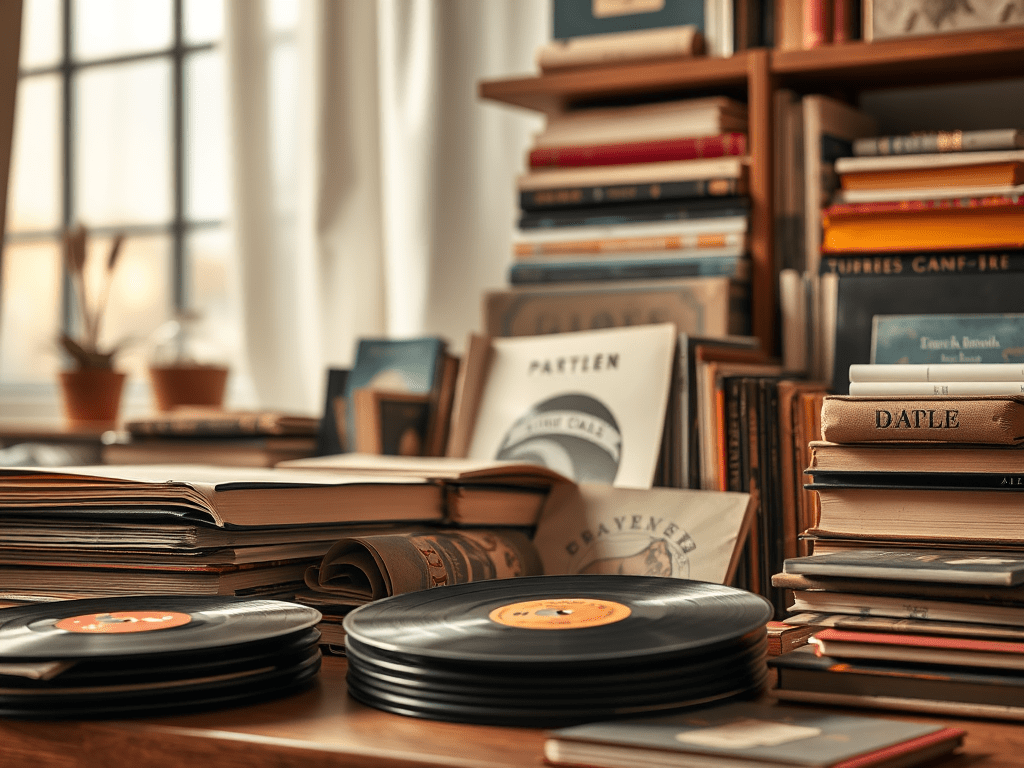
    At the same time, I know I want to move toward something more sustainable. I’ve been thinking a lot about vinyl records — I love the idea of collecting them, maybe even displaying some of my favourite album covers — but I’ve stopped myself for now. I don’t even own a turntable. I just know that feeling: I’ve seen something I love, and my collector’s brain lights up. It’s a reminder that the instinct never really goes away; it just finds new shapes.

    The Modern Collector: Hype, Community, and Control

    One of the hardest parts of being a collector today is that the world seems designed to keep us collecting. Brands know exactly how to spark that sense of urgency — limited editions, exclusives, vaulted sets. They speak directly to the part of our brains wired for scarcity. Psychologists call it loss aversion: we feel the pain of missing out more strongly than the pleasure of gaining something. It’s why a countdown timer or “while stocks last” label can make us hit buy now faster than we’d like to admit.

    LEGO is a perfect example. Every year they run big sales where spending a certain amount unlocks a Gift With Purchase — often an exclusive set that can’t be bought separately. I’ve been guilty of buying extra just to hit that threshold. It’s fun, sure, but also a reminder of how easily excitement can slip into excess. Marketing plays into our psychology so neatly that even when we know what’s happening, we still want to take part. That moment of participation — of being “in” on something special — releases its own dopamine rush.

    The same thing happens in the Pokémon community. New expansions drop and within hours people are buying cases, not to open or enjoy, but to store or resell. It’s a fascinating mix of passion and speculation. On one hand, there’s nothing wrong with people turning a hobby into income. On the other, it sometimes pushes true fans out — raising prices and turning joy into competition. Psychologists link this to social comparison theory: when we see others succeeding in the same space, we subconsciously measure ourselves against them. Online, that comparison is constant.

    Yet community is also one of the best parts of collecting. Talking about new releases, sharing photos, trading items — those things build connection and belonging. Studies show that sharing our hobbies with others releases oxytocin, the same hormone tied to trust and bonding. There’s something powerful in that: a reminder that collecting isn’t just solitary; it’s social.

    The challenge, then, is to keep the joy without letting the hype take over. I’m learning to pause before every impulse purchase — to ask myself whether I want the thing or the feeling it promises. Most of the time, it’s the feeling: excitement, nostalgia, participation. Recognising that makes it easier to slow down, to collect with intention rather than compulsion.

    The Deeper Meaning — What Collecting Really Means

    When I look at my shelves now, I don’t just see objects. I see chapters of my life. Each collection marks a moment in time — the things I was into, the people I shared them with, the memories tied to each purchase or build. Psychologists describe this as symbolic immortality — the idea that we preserve parts of ourselves through the things we keep.

    Every collector I’ve ever met has stories hidden in their shelves. The set they saved up for as a kid, the figure they traded for, the signed book that came at just the right time. It’s never just about owning things; it’s about storytelling. Humans are wired to collect stories — physical collections are simply tangible versions of that instinct. We build little museums of our lives.

    There’s also comfort in that continuity. Psychologists talk about self-continuity — the feeling that the “past you” and the “present you” are part of the same person. Nostalgia helps maintain that thread. When I look at my LEGO builds or the Pokémon binder we filled, I’m not just remembering the objects; I’m reconnecting with younger versions of myself — the kid circling items in the Argos catalogue, the teenager geeking out over a new release, the adult still chasing that spark. Those moments remind me that curiosity and joy have always been at the core of who I am.

    Collecting also shapes identity in the present. The things we choose to keep often reflect our values: creativity, precision, nostalgia, community. My shelves, in a strange way, are a portrait — not perfect or complete, but honest. They show where my interests meet meaning.

    But perhaps the most valuable thing collecting gives is perspective. It turns emotion into something tangible — a way of making sense of experience. Each collection is a small, personal story of curiosity, effort, and care. Over time, those stories form a timeline — not of what we owned, but of what mattered enough to hold onto.

    From Owning to Curating

    The older I get, the more I realise that collecting, for me, isn’t really about ownership — it’s about meaning. But meaning doesn’t have to come from more.

    Lately, I’ve been trying to shift from owning to curating. I still love the process of collecting, but I want it to feel intentional rather than impulsive. Part of that comes from practicality — life is expensive, and clutter takes both money and space — but it also comes from wanting mental clarity. I know that when my surroundings are calmer, I am too.

    There’s a psychological comfort in this shift. Collecting once gave me a sense of control through addition — building structure by accumulating things that made me happy. Now, I’m learning to find control through selection — keeping only what still brings joy or tells part of my story. It’s a subtle but powerful difference.

    Psychologists often say that our attachment to objects comes from the stability they represent — familiarity, identity, and comfort. But real stability doesn’t always come from holding on; sometimes it’s in letting go. The trick is learning to separate the memories from the materials, to recognise that the stories still exist even if the shelves are a little emptier.

    I don’t think I’ll ever stop being a collector. It’s part of how I experience the world — through curiosity, discovery, and connection. But I do think I can be a more conscious one. I want to collect with intention, not just instinct. To make my shelves tell a story that still feels like me, just with fewer distractions.

    Maybe that’s what collecting really is — not just owning things, but choosing what matters enough to keep.

    Final Thoughts: Every Collection Tells a Story

    I started writing this because I wanted to understand why I collect — why I feel drawn to gather, display, and treasure things that connect to my interests. Along the way, I’ve realised it’s not really about the objects at all. It’s about emotion, memory, identity, and meaning.

    Collecting, at its best, is joy in physical form — a way to hold onto stories and moments that shaped us. But like anything, it needs balance. For me, that means curating instead of consuming, choosing what still feels meaningful, and letting go of what doesn’t.

    I’ll probably always be the kind of person who gets excited by new releases or limited editions. That’s just how I’m wired. But now, I can recognise the pattern — the dopamine rush, the nostalgia, the comfort — and decide what’s really worth chasing.

    Maybe collecting isn’t about owning more. Maybe it’s about remembering why we cared in the first place.

    So, what about you?
    What do you collect, and what does it mean to you?
    I’d love to hear your stories — share them in the comments or tag me online. After all, every collection tells a story, and I’d love to see yours.