I first stumbled across Joyful by Ingrid Fetell Lee in a Waterstones while browsing, and the title instantly caught my attention. I didn’t pick it up then and there, but the concept of finding more joy in everyday life stuck with me. A few months later, when I’d been feeling increasingly focused on efficiency and “just getting the job done” rather than really enjoying the moment, I finally added it to my reading list.
This isn’t meant to be a professional review — more of a reflection on the thoughts I had while reading, and how the book made me look at things differently.
First Impressions of Joyful
Going in, I wasn’t entirely sure what to expect. I thought it might be light and whimsical, but actually it was much more science-based than I anticipated. That did make it a little harder to read at times, but still approachable. And honestly, I found myself surprised by how often I related to the ideas — sometimes to things I’d never really thought about before.
The Power of Colour
One of the first themes that really stood out to me was colour. I’d never really considered just how much bringing more colour into your life can influence joy. Ingrid Fetell Lee writes: “Color is energy made visible. It activates an ancient circuit that links brightness and color with abundance.”
I like the idea of finding ways to bring more colour into my home while still keeping a minimal style — simple spaces with a striking piece of bright artwork that makes the room feel alive. We’re often told not to rely on material things for happiness, but at the same time, our surroundings clearly influence how we feel. Like everything, it’s about balance.
This reflection also made me think more about art. I’ve wandered into galleries while on holidays in coastal towns, usually just out of curiosity. I’ve often thought, “I like that one,” without really stopping to ask myself why. Reading Joyful made me pause: is it the colours that draw me in? The textures? Or maybe just the feeling it sparks?
Nature, Plants, and Rediscovering Wonder
Lee’s insights on nature really resonated with me. I couldn’t agree more with how much plants brighten up a space. I’d love to have more at home — we’ve tried herbs, and I even built a little DIY rack, but they never last long. Honestly, the only thing we’ve successfully kept alive is the grass outside, and I take great pride in making it green and thick. It sounds silly, but there’s genuine joy in watering it, watching it grow, and seeing it thrive. Plants almost feel alive emotionally — they droop when sad and perk up when happy. They really do make us feel something.
I also loved Lee’s reflections on sound. I’d always thought of “bringing nature indoors” as meaning plants and light, but sound is just as powerful. I’ve recently started playing rain sounds in the background while I read, and it makes such a difference. It helps me focus, but it also just feels calming, almost like a reset button for my brain.
Reading Joyful also reminded me of the bigger picture. We live in such a man-made world that it’s easy to forget about the wonders around us — lightning storms, stargazing, the Northern Lights, or even bioluminescent pools. These are things I definitely want to experience more of. It’s too easy to get swept along in daily life and forget to make time for them.
Play, Creativity, and the Magic of Escape
When Lee writes about play, it really struck me personally. She explains how it’s one of the only things we do purely for joy. “Play doesn’t fuel us to be more productive. It fuels us to be more present.”
That’s definitely true for me. I had quite an isolated childhood, mostly playing with my little brothers at home with Lego or made-up adventures. As I grew up, I was praised for being mature, and I leaned into that — but it’s left me sometimes feeling like I’m not much fun. I’ve even been told I can be a bit boring, and I’d partly agree. Reading Joyful reminded me of the happiness I felt running around the playground as a kid, pretending to be a fighter jet, completely lost in imagination. I miss that feeling.
This also ties into creativity. As a child, I was endlessly creative — writing stories, designing quests for games, inventing little worlds. I still dream of writing a fantasy novel one day, but these days my ideas come much slower, and everything feels more rigid and logical. Lee’s link between joy and creativity made me realise how much I’d like to reconnect with that part of myself.
Another relatable theme was about individuality — how so many of us choose the “safe” or “normal” path rather than expressing ourselves fully. I can relate to this. At school, I just wanted to fit in, and often made jokes to get people to like me. It worked in the moment, but I never built meaningful friendships. That left me quite isolated later on, unsure of who I really was.
As I’ve grown older, I’ve become more comfortable being myself — sharing things like my love for Lego, which I once would’ve kept quiet about. And funnily enough, I’ve discovered friends who feel the same way but also never spoke about it.
Lee’s chapter on treehouses made me smile instantly. Almost everyone has dreamed of having one, right? I remember watching The Simpsons and instantly wanting Bart’s treehouse, even though we had no trees in our garden. Even now, when we go to Centre Parcs, I look at the big treehouses and imagine how fun it would be to stay in one. There’s something magical about them — an escape from everything, a space to just switch off. I think they’d be the perfect spot for a digital detox.
Escaping Technology and Reconnecting with the Outdoors
Of course, joy isn’t just about adding things into our lives — it’s also about noticing what gets in the way. One of the biggest culprits, as Lee highlights, is technology. Social media, mobile devices, constant advertising — it’s all designed to keep our attention, and it pulls us away from the real world. It’s easy to forget how good it feels to step outside and just experience fresh air, trees, or even a patch of grass when you spend your whole day surrounded by screens and concrete.
I’ve written more deeply about this in another post on my blog — Reflecting on My Shifting Relationship with Social Media — where I talk about how platforms are built to keep us hooked, and how that changes the way we spend our time. Reading Joyful definitely tied into those thoughts, reminding me that escaping technology often means reconnecting with the natural world.
Practical Inspirations from Joyful
On a practical level, this book has sparked a little interest in interior design for me. I’d love to add some 3D wall art with more colour into my home — keeping the minimal base I like, but adding splashes of vibrancy here and there. Some of it could even be DIY.
If you’re looking for simple ways to bring more joy into your own space, here are a few ideas inspired by the book:
Add a single bold artwork or accessory to a neutral room.
Experiment with natural soundscapes (rain, wind, birdsong) to create a calming environment.
Keep a “Joy Journal” — just jot down one moment of joy each day, and reflect on why it made you feel that way.
Small changes like these don’t take much effort, but they can shift the atmosphere of your day-to-day life.
Final Thoughts on Joyful by Ingrid Fetell Lee
Looking back, I’m glad I picked up Joyful. It’s been an eye-opening read, helping me notice things I hadn’t before, and giving me a fresh perspective on how to invite more joy into daily life. It’s not a breezy, feel-good book — it’s grounded in science and research — but that made it even more interesting.
I’d recommend it to anyone who wants to shake up their perspective, rethink their surroundings, and bring a little more joy into their world.
Have you read Joyful? Or is it one you’d add to your list? I’d love to hear your thoughts — drop a comment below and let me know how you bring joy into your own life.
2025 has been another huge year for LEGO Star Wars, with plenty of exciting releases, long-requested remakes, and of course, some inevitable controversies. From massive UCS flagships to smaller battle packs and helmets, this year really had the potential to go down as one of the greatest ever. But with rising prices, downsized builds, and a few questionable design choices, the line-up has split opinion across the community.
In this post, I’ll be counting down my Top 10 LEGO Star Wars sets of 2025—the ones that stood out to me as the best of the bunch, whether for their design, minifigures, display value, or just that nostalgic spark they gave me. Some of these were easy picks, others more controversial, but all of them earned their spot on this list.
So let’s dive in and take a look back at the highs (and lows) of LEGO Star Wars in 2025.
10. Republic Juggernaut – 75413 – £139.99
Man, I was so excited when I first heard the rumours for this set. I’ve wanted a Turbo Tank for years, ever since I missed out on the original 7261 during my dark ages. Sadly, what could have been one of the highlights of the year has turned out to be a bit of a disappointment.
Let’s start with the positives. We finally got Galactic Marines! Not quite in the form I expected, but they’re here at last and LEGO did a solid job with the design. Short of adding cloth kamas, there’s not much more they could have done, and we even get three of them. The line-up is boosted further with Commander Bacara, another Clone general to add to the collection. He’s a brand-new minifigure complete with a new helmet mould. It looks a little strange at first glance, but when compared to the source material it’s surprisingly accurate. Throw in some great looking box art and a nicely designed turret at the back for added playability, and on the surface this sounds like a winner.
Unfortunately, the biggest issue is the build itself. The Juggernaut has been heavily downsized, and it really shows. Compared to the original 7261, this version is almost a third smaller, and that compromise has gutted the interior. Aside from one small pit designed for a minifigure, you simply can’t stand troops up inside—which defeats the purpose of such a large troop carrier. Even when you compare it to the AT-TE from 2023 (75337), which is roughly a similar price point, the Juggernaut just feels shrunken and awkward.
The design choices don’t help either. The brick-built wheels were a poor call in my opinion; LEGO has so many wheel moulds to choose from, and this option just doesn’t capture the look or feel of the vehicle. Then there’s the price: £139.99 for 813 pieces. Outrageous. I don’t mind paying a premium when a set delivers on detail or comes with a truly standout figure selection, but this feels like paying more for less. Downsized, overpriced, and worse looking—it’s a triple hit that’s hard to swallow.
As a side note, while the minifigure line-up is excellent, it feels like a strange match for this vehicle. Early rumours suggested a UT-AT was coming paired with the Galactic Marines, which would have been a dream set. Given how underwhelming this Juggernaut turned out, part of me is relieved that LEGO didn’t go that route—it could have been an even bigger let-down.
In the end, I’ll still pick this set up, but only when it sees a serious discount. There are some great things here (mainly the minifigs), but it’s impossible to overlook the compromises.
Score: 5/10 – full of potential, but ruined by poor design choices and greed.
9. 327th Star Corps Battle Pack – 75431 – £34.99
The latest Battle Pack continues a worrying trend we’ve been seeing with LEGO: price hikes. Retailing at £34.99 for 258 pieces, that works out at around 13.5p per piece. For comparison, last year’s Clone Trooper & Battle Droid Battle Pack came in about 2p cheaper per piece, so this is a noticeable bump.
But pricing aside, let’s talk about what’s good. First off—more Clones! Fans have been asking for the 327th Star Corps for years, and it’s great to finally see them in an affordable set. The inclusion of new plastic pauldrons is a nice touch, and with four troopers included as the new standard, it makes army building a lot easier. The set also includes a walker, which I think is a slight improvement over the version we got with the 501st Clone Troopers (75280). It’s been scaled down to look more accurate, and that makes it a better companion piece for display and play.
Now for the downsides. Aside from the obvious issue with pricing (which everyone’s already sick of hearing about, but it’s still a factor), the Spider Droid build is pretty underwhelming. It feels too blocky and clunky, and I don’t think it lives up to LEGO’s usual design standards for vehicles. It’s also worth noting that in the original leaks for this set, there was a small foliage build included—maybe 20–30 pieces at most. For whatever reason that didn’t make it into the final release, yet the price tag stayed the same, which definitely doesn’t help things.
Overall, it’s an okay set that’s mainly carried by its figures. On its own it feels a little lacking, but it does pair nicely with the Battle of Felucia Separatist MTT (75435), which also released this year and which I’ll cover later in this list. I’ll still pick up one or two of these eventually, but only once they’ve been discounted.
Score: 6/10 – Great figures, but the set design and price let it down.
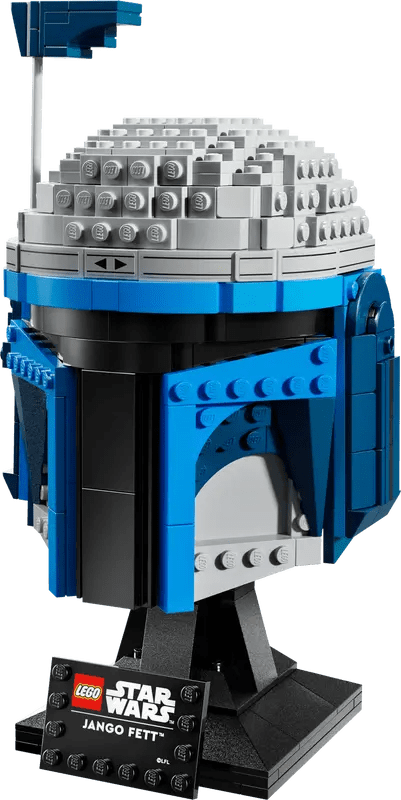
8. Jango Fett’s Helmet – 75408 – £69.99
This one didn’t come to much of a surprise to me when this was announced, the Helmet lineup has been incredibly popular since the first wave, with them being affordable and a great display piece, and Jango Fetts version has kept this going. At X it contains X pieces, which makes it the highest priced helmet from this line.
It looks great, very similar to Boba Fett’s (set number) and the Mandalorian (set number) versions, with minor cosmetic changes. There is nothing standout about this set, but I image it would look great displayed with the other helmets or the UCS Jango Fett’s Firespray-Class Starship released at the same time.
Score: 7/10 – Nothing remarkable, but still a good set, even though its overpriced. A good addition to the collection if bought discounted
7. ARC-170 Starfighter – 75402 – £59.99
Another downsized set—but this time, done quite nicely. The ARC-170 has returned in a smaller, sleeker form compared to its previous releases, and while it may not be as imposing on a shelf, it’s a smart redesign that makes sense for modern LEGO.
I own the 2010 version (8088 ARC-170 Starfighter), and side by side the differences are clear. The new version is noticeably smaller and simpler in design, but it still manages to capture the look and feel of the ship without overcomplicating things. In fact, the reduced size actually improves playability, making it easier to swoosh around and use as a proper playset, rather than just a chunky display piece.
Minifigures are a definite highlight here. We get three new Phase II Clone Pilots, each with unique helmet markings, plus a brand-new astromech: R4-P44. That’s a really strong line-up for a set at this price point. The box art is also worth a mention—it looks fantastic, and LEGO have been stepping up their packaging design in recent years, which makes these sets pop even more on a shelf.
For context, the ARC-170 has had a couple of outings before: the original 2005 version (7259), which was big and bulky but felt ahead of its time, and the 2010 version (8088), which refined the design but still leaned towards being oversized. This latest release is the first time LEGO has really leaned into a downsized approach, prioritising accessibility and playability over sheer size.
The only real drawback is the pricing. At £59.99, it does feel steep for what you get in terms of size and piece count. That said, on discount, it’s a brilliant set to pick up—especially if you’re looking to round out your Clone Wars-era collection.
Score: 7/10 – A sleek, well-designed downsizing with excellent figures. Overpriced at retail, but a great buy on sale.
6. UCS Death Star – 75419 – £899.99
What was supposed to be the most impressive LEGO Star Wars set of the year has instead become one of the most controversial. Rather than a traditional spherical model, LEGO has opted for a fresh approach: a modular, diorama-style build that showcases iconic scenes from across the original trilogy. It’s a bold choice that follows the popularity of the Diorama Collection—and not everyone is convinced.
At 9,023 pieces, this is the largest Star Wars set ever produced and the fifth largest LEGO set overall. It’s absolutely huge too, standing 27.5 inches tall and 31 inches wide, making it an undeniable display piece. Packed inside are multiple recognisable locations including the Emperor’s Throne Room, the Trash Compactor, the detention block, and of course the Superlaser—which, in my opinion, is the best designed version we’ve had so far.
The set also breaks another record with 38 minifigures and droids, the most ever in a Star Wars set. Among them are several highly sought-after new characters, including Admiral Motti, General Tagge, and Galen Erso, which give collectors a real reason to be excited.
I’ll give LEGO credit: after two previous spherical UCS Death Stars (10143 and 10188), another round design would have felt repetitive. This new modular style at least tries to bring something different to the table, even if parts of it feel reminiscent of the smaller Diorama sets like 75339 and 75352.
However, the elephant in the room is the price. At $1,000 (£849.99), this is LEGO’s most expensive set ever. While that comes with the piece count and minifigure line-up to back it up, it still feels out of reach for most fans. For me personally, that makes it hard to justify. It’s impressive, but also a little underwhelming for what should have been the flagship set of the year.
Overall, I think it looks good, I like the format, and I love the minifigure line-up. But with the high price tag and design that doesn’t quite wow me, it’s not one I’ll be rushing to add to my collection. Score: 7/10
5. V-19 Torrent – 75432 – £59.99
I was unlucky enough to miss out on the original V-19 Torrent back in the day, so when I saw the leaks earlier this year I was genuinely excited for its return. At 567 pieces, this set is another example of LEGO downsizing, and while the build feels a little stubby compared to the 2008 version (7674 V-19 Torrent), it still looks really cool. I’m a big fan of the yellow cockpit canopy, and the ship looks fantastic with the wings folded down into flight mode.
One disappointment is that this version drops the wing deployment feature that the original had, which was one of the best play functions of that set. While this new model still looks good in landing mode with the wings folded up, it does lose a bit of that mechanical charm and uniqueness that made the 2008 version stand out.
Where this set absolutely shines, though, is in the minifigure line-up. We get three completely new figures:
Clone Pilot with a brand-new helmet mould and print
Obi-Wan Kenobi in Clone Wars armour with printed arms (the standout of the set)
Asajj Ventress, complete with her two curved-hilt lightsabers
For me, Obi-Wan is the highlight here, and Ventress is a close second as she’s a character I’ve not had in my collection before. The fact that LEGO has brought her back with her correct unique hilt design is a pleasant surprise. Fun fact: the last time Ventress appeared in a LEGO set was back in 2011’s 7957 Sith Nightspeeder, so it’s been well over a decade since we’ve seen her in minifigure form.
All in all, this is a robust build with fantastic playability and an outstanding minifigure selection. Even with the downsized design and loss of the wing function, it’s easily one of the highlights of 2025.
Score: 8/10 – A solid build and excellent figures make this a must-have, even without the full functionality of the original.
4. UCS AT-ST Walker – 75417 – £179.99
I’ll admit, I wasn’t all that excited when rumours of this set first started circulating. I already had the AT-ST Walker (75322) from 2022, which I thought was the best version LEGO had released up to that point—even better than the original UCS AT-ST from 2001 (10018).
But seeing the images of this latest UCS release completely changed my mind. In my opinion, it has now taken the crown as the definitive AT-ST. The scaling is spot on: it’s large enough to show off the detail, but not so oversized that it loses the essence of the vehicle. The build feels modern while still capturing the gritty styling of the original trilogy design, and it looks sturdy enough to hold up as a proper display model.
The cockpit interior is a real highlight—it’s far more detailed than I expected, with a clever build that captures the look of the on-screen version. The set also includes a unique minifigure, simple but polished, which adds a nice exclusive touch without feeling forced.
What I love most about this set is how it shows that LEGO doesn’t need to overcomplicate things. By keeping it clean, accurate, and well-scaled, they’ve produced a fantastic model that feels both impressive and approachable. At £179.99, it’s also one of the more affordable entry points into the UCS line, which makes it accessible to a wider range of collectors.
The AT-ST also pairs brilliantly with the UCS AT-AT (75313). While the two don’t scale perfectly to one another in terms of size, they still look fantastic displayed side by side. The AT-AT is the massive flagship with over 6,700 pieces, while the AT-ST works as its smaller—but equally detailed—counterpart, recreating the feel of the Battle of Hoth on a UCS display shelf.
Overall, this is a brilliant set that combines smart design with great value for the UCS range, and I’m definitely looking forward to adding it to my collection.
Score: 8/10 – The best AT-ST yet. Simple, accurate, and a great entry-level UCS set.
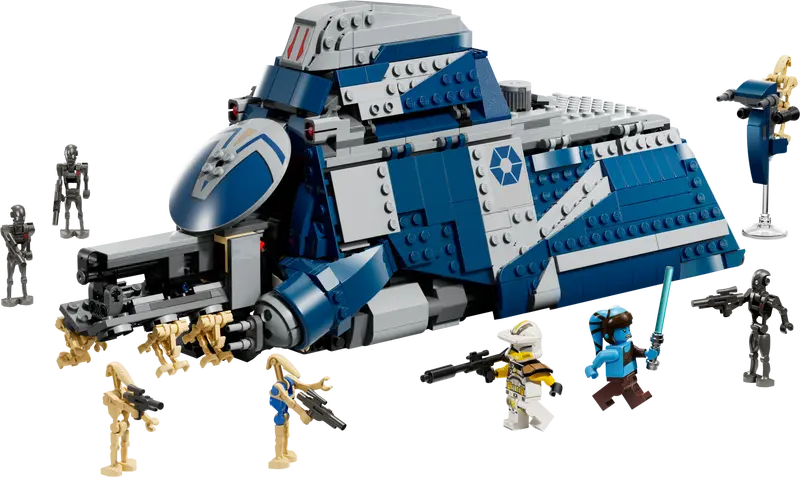
3. Battle of Felucia Separatist MTT – 75435 – £139.99
A somewhat controversial entry into my Top 10—I know a lot of fans won’t agree with me on this one—but for the most part, I’m really happy with what LEGO has delivered.
I was incredibly excited when I first heard we’d be getting a new MTT. I’ve never owned one before, but I’ve always wanted to after seeing the original 2007 variant (7662) with its iconic battle droid rack. That play feature alone made it one of the most memorable Clone Wars–era sets. This new release captures some of that magic, even if it is a little smaller.
The minifigure selection is a big win here. The return of Commando Droids, this time in a new gunmetal grey, is brilliant—we get three of them, and they look fantastic. I still have the pair from the Elite Clone Trooper & Commando Droid Battle Pack (9488) in dark brown, which remain some of my favourite droids, so it’s great to see them back in a new colour. On the Clone Trooper side, we finally get Commander Bly, complete with detailed torso and leg printing. It’s just a shame LEGO didn’t go the extra mile and give him printed arms, as that would have taken the figure to the next level. We also get another Aayla Secura—not the most exciting inclusion, but she’s a fitting Jedi for a Felucia-themed set.
The build itself is very sleek and well-shaped. Like many sets this year, it’s downsized compared to older models, but it still manages to pack in some nice detail. The battle droid rack is included, though it’s noticeably smaller than I’d have liked—it doesn’t have quite the same wow factor as the 2007 version.
If I had one big complaint, it’s the lack of a Tactical Droid. This would have paired perfectly with the Separatist line-up and made the set feel more complete. Including one would have really elevated the overall package.
That said, I’m still very excited to add this to my collection. I’ve wanted an MTT for years, and to finally get a Separatist-coloured variant is even better. With solid figures, a sleek design, and a good mix of Clone Wars and Felucia-specific content, it stands out as one of my favourites of the year. The MTT has had a couple of notable versions before: the 2007 release (7662), which came with over 1,300 pieces, 20 battle droids, and a huge extending rack, and the 2014 variant (75058), which cut the piece count to under 1,000 and featured a smaller, less satisfying rack mechanism. This new 2025 version sits somewhere between the two, offering a sleeker exterior design and better figure line-up, even if the rack is smaller once again.
Score: 8/10 – A sleek redesign with excellent droid and Clone inclusions. Downsized, but still one of 2025’s highlights.
2. AT-AT Driver Helmet – 75429 – £69.99
This was a surprise entry to my Top 10. While I’ve always liked the Helmet Collection from the last few years, none have really stood out enough to tempt me into collecting them—until now. The AT-AT Driver Helmet instantly grabbed my attention and has quickly become my favourite of the entire range.
The design is absolutely fantastic, with clever shaping, excellent use of colour, and well-placed printed parts that elevate it above many of the earlier helmets. The red Imperial insignias pop against the grey and white, the black visor shaping is spot-on, and the smooth curves give it a very polished finish. I actually said “wow” out loud when I first saw the images—rare for this theme.
At £69.99, it’s on the pricier end for helmets, but in this case I think it’s justified. Some sets at the same price point felt a bit dear for what they offered; here, the detailing and overall presentation make it one of the few I’d happily pay full price for. As a display piece, it pairs brilliantly with the now-retired UCS AT-AT (75313)—and even alongside the UCS Snowspeeder—to create a tidy Hoth-themed shelf.
AT-AT Driver vs Jango Fett’s Helmet: Both released this year at £69.99 and both look great on display. Jango’s has that striking metallic blue colour blocking and a clean, symmetrical silhouette that mirrors Boba/Mando, but it doesn’t push the design language much beyond what we’ve seen before. The AT-AT Driver, by contrast, feels more intricate: the layered greebles, tubing cues, and sharp insignias give it extra depth and texture. If you’re choosing one at full RRP, I’d lean AT-AT Driver for the richer detailing; if you’re collecting the character trio (Boba/Mando/Jango), Jango’s still completes that look nicely—ideally picked up on discount.
Overall, this is by far the best helmet LEGO has produced to date in my opinion. It looks fantastic, it’s distinctive, and it feels like a genuine step forward for the Helmet Collection.
Score: 9/10 – The standout helmet of the entire line, and one of the best display sets LEGO released this year.
This set was easily the best of the year for me, and I knew it would be the second I saw it. It looks absolutely fantastic, with colouring that’s been handled really well and a detailed, sturdy-looking build. I actually almost ended up buying this on release during the May the 4th promotion, and only skipped it because the UCS Sail Barge was on offer. For what it is, it’s surprisingly affordable: a big set with a solid piece count, but without the inflated price tag we’ve seen on a lot of 2025’s other releases.
It comes with two new minifigures, the highlight being the updated Jango Fett with printed arms and a brand-new rangefinder mould. The upgrade is considerable—the new piece is far more accurate to the film compared to the older chunky style. Boba is included too, though nothing particularly special here, but let’s be honest—he was never going to be the star of the show in this set.
At 2,970 pieces, it’s a sizeable build and LEGO has done a brilliant job of capturing the Firespray’s iconic shaping. From every angle it looks sleek and impressive, with strong detailing across the wings, cockpit, and hull. Even the back holds up well for accuracy, which is often overlooked on large Star Wars ships. The inclusion of a seismic charge play feature is a fantastic touch—an iconic nod to Attack of the Clones that fans will love.
It does include a display stand, which is fairly basic. It works, but I would have liked something with a bit more presence or detail—though that’s honestly nitpicking on an otherwise superb build.
Compared to the earlier UCS Boba Fett’s Slave I (75060) from 2015, the differences are striking. The Slave I had around 1,996 pieces and, at the time, was one of the best UCS ships ever made—praised for its shaping, detailing, and standout minifigure line-up (Boba Fett with arm printing, Han Solo, Bespin Guard, and Carbonite block). Jango’s version pushes the design further, with almost 1,000 more pieces, smoother shaping, sturdier construction, and updated building techniques. While Boba’s ship remains an all-time classic, this new Firespray feels like a modern refinement—bigger, bolder, and a true flagship set of the current LEGO Star Wars era.
I honestly don’t have much negative to say here. Maybe the stand could have been a little more polished, but that’s really scraping for criticism. I can’t wait to get this set—I’ve already cleared space on my display shelf for it.
Score: 9.5/10 – An almost perfect build, a standout of the modern era of LEGO Star Wars, and a must-have for any fan.
2025 LEGO Star Wars – Year in Review
Overall, this year had the potential to be one of the best of all time, but price hikes and downsizing dragged it down considerably. The biggest disappointments—most notably the Republic Juggernaut and the 327th Star Corps Battle Pack—have been review-bombed into oblivion, with both sitting at under two stars at the time of writing.
That said, there have still been some real highlights. Sets like the V-19 Torrent, UCS AT-ST Walker, and of course Jango Fett’s Firespray-Class Starship show that when LEGO gets the balance right between design, figures, and value, the results can be absolutely fantastic. Even some of the smaller releases, like the helmets, really impressed me this year and helped round out the line-up.
So while 2025 may go down as a mixed bag, I’d still say it delivered enough standout sets to make it a memorable year for LEGO Star Wars collectors—just not quite the golden year it could have been.
And now I’ll throw it back to you: 👉 What was your favourite set of 2025? 👉 Which ones did you end up picking up (or passing on)?
Now, let me start this off with a bit of a disclaimer – This is just my opinion. I’m not a professional critic in any way shape or form. I’m just a dude who likes listening to music, and I like sharing my thoughts.
As a big fan of Joyner Lucas, his music has been on regular rotation for me over the past few years. Your Heart featuring J.Cole? Absolute banger. ISIS? Slaps. I was very excited when I heard a follow up was coming to the original ADHD album, so I decided it was the perfect time to revisit the project.
Joyner was one of the first artists I heard who really leaned into skits as part of his albums, and ADHD features five of them woven throughout. At first, I wasn’t sure what to make of it—I usually just zone out to music, not storytelling—but the skits actually became one of my favorite aspects. They add depth and flow to his work, shining a light on Joyner’s personal struggles with ADHD in a way that’s dark, humorous, and unfiltered. I found it relatable, especially remembering a similar lack of support in my own childhood.
Musically and lyrically, tracks like “ISIS,” “I Love,” “Devil’s Work,” “ADHD,” and “Will” are real standouts. The collaboration with Logic on “ISIS” is a highlight—I’m a big Logic fan, and their chemistry is great. I was also really impressed by “Will,” Joyner’s homage to Will Smith, with a music video that’s a work of art all on its own.
So, after thoroughly enjoying the original, I had high hopes for the sequel. ADHD 2 has been in the works for well over a year, and you can really sense Joyner’s commitment to pushing boundaries. He’s spoken about the creative freedom the ADHD series grants him, letting him experiment and flow across styles without being boxed into a single genre. With that in mind, I dove into the new album eager to see how he’d build on the foundation of the first—and I have to say, what I found was an even more expansive, personal, and versatile project. Let’s get into ADHD 2 and see how it stacks up.
Review
Seven years is a long time to wait for a follow-up, but Joyner Lucas’s ADHD 2 is a return that justifies the anticipation. Balancing intense introspection with mainstream appeal, Joyner proves himself versatile, mixing storytelling and inventive flows with a stacked guest list that includes Ava Max, Snoop Dogg, T-Pain, Chris Brown, and more. The project effortlessly shifts between personal confessions and bold bangers, once again showing that Joyner’s at his best when he’s refusing to fit in any boxes. Is it better than the original? I think so. The emotional depth, paired with creative risks and well-chosen collaborations, make this a standout in his catalog—though a few tracks veer into repetition, the overall album arc feels more mature, polished, and honest than its predecessor.
Storyline Across the Skits
One of Joyner’s trademarks is weaving skits through his albums—and on ADHD 2, these aren’t just quick jokes or brief interludes; they’re the spine of the record. “Family Therapy (Skit)” brings back the familiar therapist from the original album, but this time, the session’s darker undertone and unsettling humor quickly set ADHD 2 apart from its predecessor. The skits relentlessly explore mental health, family drama, and the ever-evolving search for self-identity, echoing Joyner’s journey from misunderstood kid to complicated adult.
“Kevin (Skit)” bites hard, representing the critics who want Joyner to “move on” from talking about his struggles—serving as both satire and social commentary. The “Denzel (Skit)” is a subtle call to growth and hope amid pain. Crucially, these skits bind the music together, letting the album feel like a true personal saga rather than just a playlist. They don’t let up; instead, they demand you pay attention to the album’s underlying questions about identity, stigma, and healing.
Track-by-Track Review
Let’s break down the tracks—here’s how they stack up:
I Wish I Knew: Fast-paced bars and a slick Snoop feature to introduce it. Energetic start to the album. 7/10
One Of Them: Joyner finds a perfect balance here—memorable hooks, sharp delivery. 8/10
Tear Me Down (feat. Ava Max): That Ava Max opening is magnetic, and Joyner matches the intensity with raw lyrics. A top-tier anthem. 8/10
The Way That I Am: Loved hearing Eminem set the scene before Joyner unleashes one of his most personal verses. 8/10
Riot: High energy and plenty of punch, but it can feel a little repetitive on replay. 7/10
Hate Me (feat. T-Pain): T-Pain throws it back with a retro hook that’ll stick in your head. Great chemistry. 7/10
White Noise: Strong intro and stellar production. Atmospheric and moody—a real highlight. 8/10
Butterfly Effect: The dreamy, layered intro draws you in, and the hook keeps you there. Joyner flexes his introspective side. 8/10
Anxiety Wins (feat. blackbear): Honest and vulnerable, with blackbear’s hook giving it an alternative edge. 7/10
New Sofas (feat. Ty Dolla $ign): The collaboration works well, and the more I listen to it, the better it gets. 8/10
Active (feat. Big Sean): Uplifting beat and chemistry between Joyner and Big Sean, even if it doesn’t quite stand out. 7/10
Time Is Money (feat. J Balvin, Fireboy DML, DaBaby): A global, feature-heavy anthem with infectious energy. 7/10
Listen To My Demo: Classic Joyner—witty, technically tight, and instantly replayable. 8/10
Momma (feat. Chris Brown): Emotional and powerful closer; Chris Brown’s hook is on point. 8/10
Standouts: “Tear Me Down,” “Butterfly Effect,” “White Noise,” and “Please Listen To My Demo” show off Joyner’s range—emotion, skill, and charisma, all in one package.
Summary
ADHD 2 is proof that Joyner Lucas’s growth over the past seven years was worth the wait. With bold storytelling, authentic skits, and a stellar mix of features, Joyner takes real creative risks—and most of them pay off. If you’re a fan of hip-hop that actually has something to say, gives you both bangers and real talk, and isn’t afraid to get vulnerable, this album deserves your full attention. Solid album – 7.5
Disclaimer – This review reflects my personal opinions and experiences with the album. No disrespect is intended toward the artists, producers, or fans. My intention is simply to share my perspective, and I appreciate that others may have different views.








 The Life of J